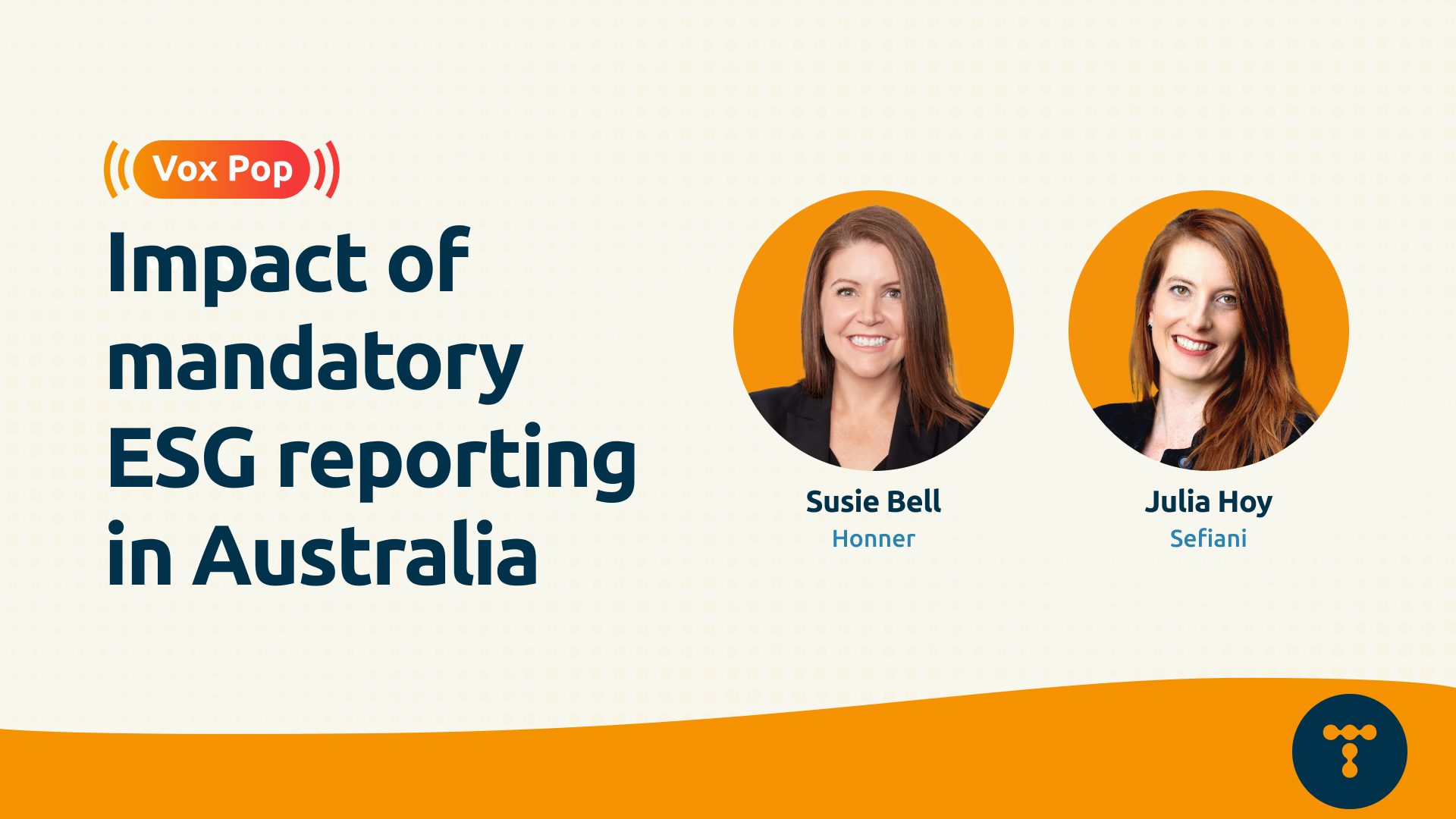
With environmental, social, and governance (ESG) reporting now mandatory in Australia, the role of financial communications in shaping a company's sustainability narrative has never been more crucial.
As businesses adapt to this evolving landscape, financial PR agencies face the challenge of building credibility and trust amid increasing market scepticism.
Telum spoke with financial PR professionals to uncover their strategies for fostering transparency, countering misinformation and strengthening corporate reputation.
How do you approach communicating ESG initiatives in a way that balances aspirational goals with the need for measurable, verifiable results?
Susie Bell, Managing Partner, Honner
Environmental sustainability may be a key theme of this century. A lot has changed in recent months, but there are still opportunities for ESG-focused initiatives even if global priorities have shifted. It's now perhaps even more critical that environmental claims go beyond feel-good marketing.
Wider scrutiny and mandatory ESG reporting for large entities mean the public is well-tuned to greenwashing.
Our approach to communicating ESG initiatives begins with our client company's beliefs and strategy. Communicating why ESG initiatives are being implemented, how they align with the corporate strategy, and how they will translate into action sets the scene and demonstrates credibility.
In any corporate communications, authenticity is key. We agree with the ACCC's principles for making environmental claims. Briefly, these are:
Julia Hoy, Associate Partner and Sustainability Communications Lead, Sefiani
Stakeholders demand tangible evidence of real-world impact. We are at a critical juncture where stakeholder trust has waned in companies with good intentions that have set ambitious, aspirational targets which have since been retracted in the face of market changes or challenges.
In our experience, it is critical that companies continue to set aspirational goals and provide stakeholders with clear visibility on how they are tracking on the path towards these.
This requires an open dialogue and regular evidence-based communication that is transparent and clearly articulates progress. By doing so, companies can cultivate trust among increasingly sceptical stakeholders.
Aspirational goals in 2025 extend well beyond climate targets; for example, there is growing demand for companies to demonstrate socially and environmentally responsible supply chains.
Achieving this requires leadership, collaboration, and investment. Companies that rise to these larger challenges don't just mitigate risks, they build long-term value and drive meaningful progress in the industry.
What role does financial communications play in helping clients respond to accusations of greenwashing, and how do you mitigate this risk upfront?
Susie Bell
Our view is that accurate and clear financial communications are critical, especially as climate change is a highly emotive topic.
Of course, companies need to do the right thing in the first place and back up any claims with measurable actions and results. If areas of concern do arise, they should be clearly identified, disclosed and rectified, where possible.
Greenwashing allegations can quickly spiral into reputational crises, making swift, accurate, and authentic communication essential. Attempts to downplay or sidestep the issue only heighten public distrust and prolong the negative spotlight.
Julia Hoy
Financial communications are critical to ensuring that all sustainability efforts are reported with transparency and integrity. This involves rigorous due diligence, as well as third-party verification, to maintain the credibility of any claims before they are made public.
This means communicators are playing the role of gatekeeping, in collaboration with sustainability and legal teams, to ensure that claims are both verifiable and compliant with regulations. It's essential to base narratives on solid evidence that ties directly to financial performance and sustainable impact.
Moreover, communicators must promote a culture of openness, transparency, and authenticity across the organisation, ensuring firm alignment in communication and reporting. By establishing these robust processes upfront, companies can confidently convey their sustainability efforts, safeguarding their reputation and preserving the trust that takes years to rebuild once lost.
As businesses adapt to this evolving landscape, financial PR agencies face the challenge of building credibility and trust amid increasing market scepticism.
Telum spoke with financial PR professionals to uncover their strategies for fostering transparency, countering misinformation and strengthening corporate reputation.
How do you approach communicating ESG initiatives in a way that balances aspirational goals with the need for measurable, verifiable results?
Susie Bell, Managing Partner, Honner
Environmental sustainability may be a key theme of this century. A lot has changed in recent months, but there are still opportunities for ESG-focused initiatives even if global priorities have shifted. It's now perhaps even more critical that environmental claims go beyond feel-good marketing.
Wider scrutiny and mandatory ESG reporting for large entities mean the public is well-tuned to greenwashing.
Our approach to communicating ESG initiatives begins with our client company's beliefs and strategy. Communicating why ESG initiatives are being implemented, how they align with the corporate strategy, and how they will translate into action sets the scene and demonstrates credibility.
In any corporate communications, authenticity is key. We agree with the ACCC's principles for making environmental claims. Briefly, these are:
- Be accurate and truthful
- Have evidence
- Don't hide important information
- Explain any conditions or qualifications
- Be specific
- Use clear, simple language
- Don't let visuals be misleading
- Be open about progress
Julia Hoy, Associate Partner and Sustainability Communications Lead, Sefiani
Stakeholders demand tangible evidence of real-world impact. We are at a critical juncture where stakeholder trust has waned in companies with good intentions that have set ambitious, aspirational targets which have since been retracted in the face of market changes or challenges.
In our experience, it is critical that companies continue to set aspirational goals and provide stakeholders with clear visibility on how they are tracking on the path towards these.
This requires an open dialogue and regular evidence-based communication that is transparent and clearly articulates progress. By doing so, companies can cultivate trust among increasingly sceptical stakeholders.
Aspirational goals in 2025 extend well beyond climate targets; for example, there is growing demand for companies to demonstrate socially and environmentally responsible supply chains.
Achieving this requires leadership, collaboration, and investment. Companies that rise to these larger challenges don't just mitigate risks, they build long-term value and drive meaningful progress in the industry.
What role does financial communications play in helping clients respond to accusations of greenwashing, and how do you mitigate this risk upfront?
Susie Bell
Our view is that accurate and clear financial communications are critical, especially as climate change is a highly emotive topic.
Of course, companies need to do the right thing in the first place and back up any claims with measurable actions and results. If areas of concern do arise, they should be clearly identified, disclosed and rectified, where possible.
Greenwashing allegations can quickly spiral into reputational crises, making swift, accurate, and authentic communication essential. Attempts to downplay or sidestep the issue only heighten public distrust and prolong the negative spotlight.
Julia Hoy
Financial communications are critical to ensuring that all sustainability efforts are reported with transparency and integrity. This involves rigorous due diligence, as well as third-party verification, to maintain the credibility of any claims before they are made public.
This means communicators are playing the role of gatekeeping, in collaboration with sustainability and legal teams, to ensure that claims are both verifiable and compliant with regulations. It's essential to base narratives on solid evidence that ties directly to financial performance and sustainable impact.
Moreover, communicators must promote a culture of openness, transparency, and authenticity across the organisation, ensuring firm alignment in communication and reporting. By establishing these robust processes upfront, companies can confidently convey their sustainability efforts, safeguarding their reputation and preserving the trust that takes years to rebuild once lost.
.png)