PR News
AI integration into PR and comms

Year in Review: AI’s integration into PR and comms in 2025

Over the past few years, mentions of AI within the industry haven't toned down - if anything, they've been ramping up. Looking back at Telum's 2024 Year Ahead and PR Tech in 2025 pieces, it's interesting to see how attitudes have shifted. What began as a period of experimentation - playing with prompts, dabbling in ideation, and speculating about job replacement - has solidified into a structural transformation within the profession.

AI has moved from a nice-to-have to a non-negotiable; from a fringe tool to a core strategic capability. 2025 is the year PR and comms practitioners stopped asking, “What can AI do?” and began asking, "How do we lead with it?”.

Integration of AI tools in the industry
Early adoption of AI centred around basic prompting and inspiration. In 2025, however, practitioners in the PR and comms space have unlocked more of its capabilities.

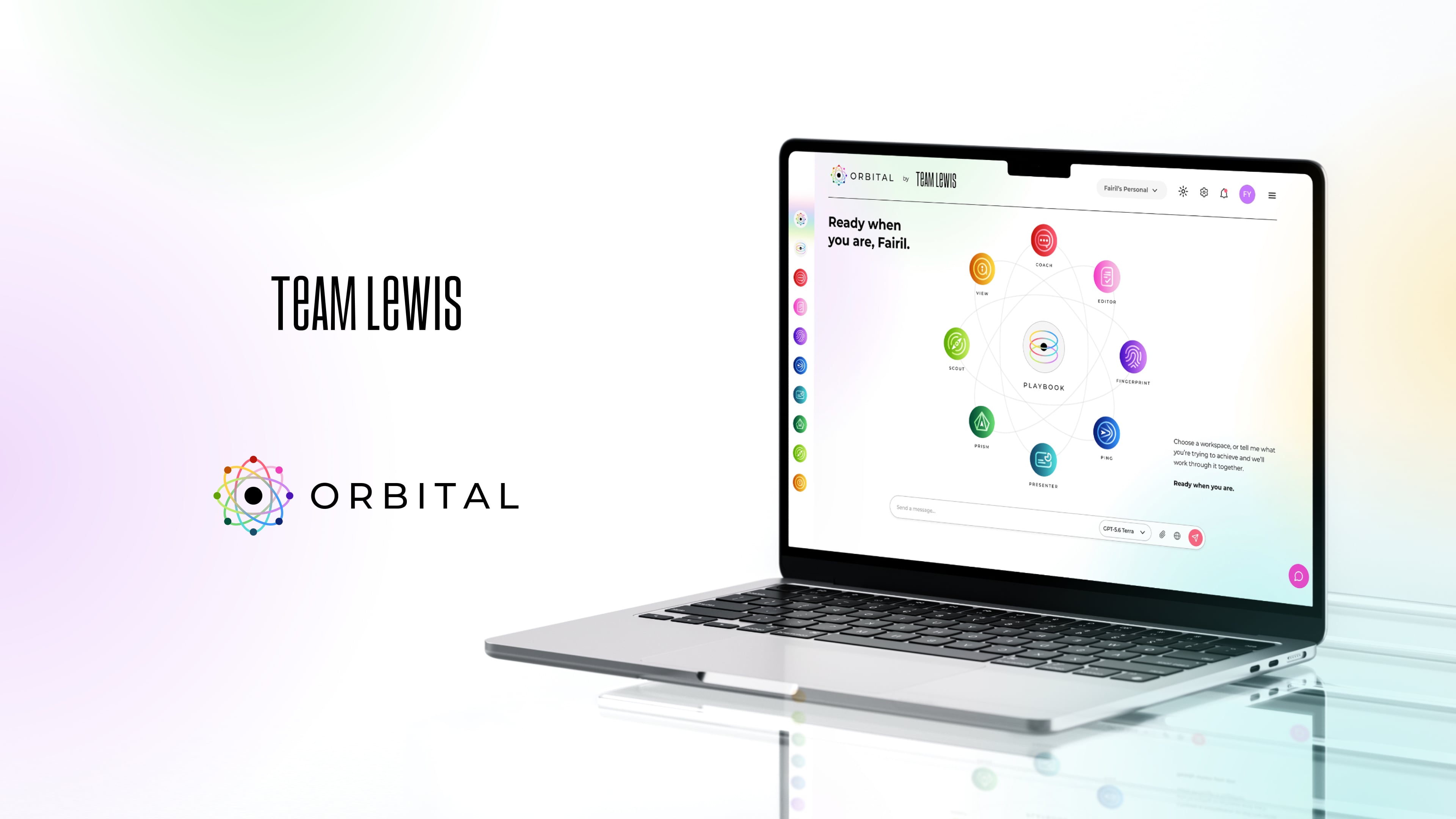
We saw many organisations develop their own AI offerings across APAC and the Middle East, ranging from AI visibility services and training tools to crisis solutions. These include PIABO GEO, Ogilvy ANZ’s Generative Impact, Golin’s First Answer, TEAM LEWIS' Training for Trust, and FINN Partners' CANARY FOR CRISIS.

The narrative around job replacement has also softened. Rather than replacing humans, the industry is now embracing AI as an enhancer.

As Natacha Clarac, Director General of Athenora Consulting in Brussels and former President of PRGN, said following PRGN's launch of Précis Public Relations: "The introduction of Précis Public Relations showcases the potential of AI to enhance rather than replace the strategic value PR professionals offer."

GEO / LEO and search transformation
One trend that we have seen in 2025 was the decline of traditional search behaviour. AI assistants, such as ChatGPT, Gemini, and Perplexity, increasingly replaced clicks with instant answers.

As Nichole Provatas, Executive Vice President and APAC Head of Integrated Marketing and Innovation at WE Communications, noted: "Around 69 per cent of Google news searches now end in zero clicks as AI Overviews rise."

This reality raises the stakes for inclusion in AI answers, as Rob van Alphen, Managing Director of Polaris Digital, warned: “…if your brand or leadership isn’t part of the AI answer, you’re invisible.”

Jack Barbour, EVP and AI Lead at Golin New York, and Nichole both highlighted how earned media is key in making brands discoverable, with at least 90 per cent of AI search results coming from earned citations. Brian Buchwald, Edelman’s President, Global Transformation and Performance, emphasised the same point: "You can't buy your way to the top of an AI-generated answer...brands must proactively shape how they appear in LLM outputs or risk being misrepresented, misunderstood, or missed entirely."

AI platforms are relying on reputable journalism, corporate blogs, and expert commentaries - flipping the paid-dominated marketing playbook on its head.

This shift fuelled the rise of GEO (Generative Engine Optimisation) and LEO (Language Engine Optimisation). In April, Celia Harding launched what she described as the world’s first LEO advisory firm, arguing: "While other agencies are looking at how AI can drive efficiencies in creativity and client service, they are all overlooking the real opportunity that lies ahead - shaping the data LLMs learn from."

If SEO defined the 2010s, GEO and LEO are shaping 2025 and beyond, with earned media at the core.

AI upskilling
As AI adoption surged throughout the year, professional development opportunities expanded rapidly, ranging from hands-on workshops and panel discussions to large-scale conferences.

These events spanned the region, including the Generative AI Bootcamp series by PRCA APAC and Sequencr AI, PRCA Thailand's first-ever conference in Bangkok on AI and communications, and Jakarta's “Shape the Future of Your Communications Strategy with AI” workshop hosted by ACE, APPRI and Reputasia Strategic Communications.

Telum Media also hosted its own list of AI-focused events, including workshops with Shaun Davies in Sydney and Melbourne, workshops with Rob Van Alphen in Singapore, a global webinar with Matt Collette, collaborations with the Kennedy Foundation for panels on AI and journalism in Australia, and joint sessions with SOPA on ethical AI use in publishing in Singapore and Hong Kong.

The scale of these events showed one thing - these sessions were no longer “optional extras”, they've become essential for teams wanting to keep pace with AI's evolution across the industry.

Human and ethical considerations
As AI adoption rose, so did the reminders that human oversight remains essential. Practitioners repeatedly stressed that AI cannot replace human judgement, empathy, or lived experience.

As Matt Cram, Head of Media and Communications at Orygen, put it: "AI can’t replace the way people connect through empathy, creativity, and lived experiences."

Rob van Alphen reinforced this: "…we must double down on our inherently human strengths, such as empathy, curiosity, ethical decision-making, and critical thinking."

And Zeno’s Head of Regional Business Development, Asia, Ekta Thomas, said: "People connect with people - not algorithms."

These sentiments were reinforced across industry events focused on responsible AI use. At the Jakarta workshop, Reputasia Co-Founder and Communications Strategist, Fardila Astari, emphasised the importance of ethical guidelines for AI use, noting that careless application can create reputational risks, as seen in cases where major companies faced credibility issues due to AI-generated inaccuracies.

Similar points were made at Telum Media and SOPA's sessions in Singapore and Hong Kong, where newsroom leaders stressed the importance of maintaining editorial oversight, transparent disclosure, and strong governance structures. The consensus is that while AI may accelerate workflows, humans safeguard credibility.

2026 and beyond
As we approach the new year, AI is shifting from experimental to foundational. Nichole Provatas urges teams to "publish for AI inclusion," treating owned channels as structured, plain-language reference hubs built for machine ingestion.

But the landscape is still evolving, as Matt Cram cautions: "AI doesn’t just surface information, it consumes it…and the best strategies today might look very different tomorrow." For communicators, adaptability becomes the differentiator.

Ultimately, the future isn't AI-led but AI-enabled. As Matt Collette notes, "Human + AI is the new paradigm." Success will come from pairing AI's scale and precision with the empathy, judgement, and contextual understanding only humans can bring.

Previous story

Burson appoints APAC CEO

Next story

TikTok welcomes new regional comms leader

You might also enjoy

Year

Year in Review: The evolution of earned in 2025

In a year marked by AI advancementspoly-permacrises, and global movements, earned media has emerged as a critical source of trust and authority. Its resilience is the result of ongoing evolution in definition, channels, and practice.

Right from the start, 2025 was set to be a year of change. Victoria Chang, former Head of Communications and Content, Asia Pacific at Christie’s, highlighted the evolving state of the public relations function. From where she stood in the luxury sector, she saw that the future of PR has shifted from managing public perception towards what she called "people relations," a perspective that’s held true throughout 2025.

Across Telum Media’s conversations with industry professionals, we followed this critical shift throughout markets and trends from teams balancing tech innovation and market shifts to a doubling down on the value of storytelling and authenticity. Within these tides and turns, one thing became clear: the emergence of earned media as a beacon amid fragmentation, artificial intelligence, and fractured trust.

In the age of AI, earned becomes everything
From traditional and social media to podcast feeds, the spaces through which earned travels have become increasingly diverse. With market shifts, the definition and scope of earned have continuously evolved.

For Addie Freyne, Weber Shandwick Australia’s Director of Earned Creative Strategy, everything is earned. "For a long time, 'earned' was shorthand for traditional press coverage. Then over the past few years, the industry has expanded the definition to include other channels like social, podcasts and even user-generated content."

In the reality of platform proliferation, she emphasised that earned should prioritise resonance over placement. "Earned isn’t about where your story lands - it’s about whether it cuts through, sparks conversation, and drives real engagement."

This focus is important for navigating today’s fragmented landscape, where the pressure for more adaptable earned programs has intensified and become further accelerated by AI’s rapid rise. Because beyond the traditional and social platforms, reputation and visibility are earned across a combination of social-first newsrooms, newsletters, podcasts, and now AI search.

As Nichole Provatas, Executive Vice President and APAC Head of Integrated Marketing and Innovation at We. Communications, put it: "Earned media is moving - and has moved - from a single, concentrated orbit of mastheads to a constellation of influence."

One of the biggest, emerging stars in this constellation is the machine.

As Nichole shared, LLMs love earned authority. With 95 per cent of LLM citations drawing from non-paid sources - journalism, corporate blogs, and expert commentary - "paid channels no longer drive discovery, creating a major opening for strong earned visibility."

This development has upended traditional marketing models. Going forward, it’ll be about how comms teams balance their earned strategies - navigating decentralised discovery, LLMs, social media, and AI-powered newsrooms - separately, together, all at once.

Earned in the newsrooms of today and tomorrow
In 2025, zero-click search, AI summaries, shifting consumption habits, and declining trust in traditional news have propelled media outlets towards new platforms and leaner teams.

In response, PR professionals have recalibrated their earned programs to meet journalists where they are, whether it’s at news desks or in journopreneurial spaces.

For Anhar Khanbhai’s team at Wise, this has meant shifting from transactional pitching to deeper media engagement. "These aren’t briefings," explained Anhar, Head of APAC PR, "they’re proper educational experiences that aim to provide reporters with deeper exposure to the company, the problem we’re solving, and the customers we serve."

Aanchal Agarwal, Associate Vice President at SPAG FINN Partners, shared this philosophy in healthcare comms. "A key strategy (which isn’t groundbreaking) is nurturing relationships with the right voices, providing them with timely access to experts and resources, without pushing a specific agenda," she said.

In the hospitality space, Wang Siew Leng echoed this nurture approach. "We approach media collaboration with a partnership mindset, taking our time to understand what each journalist or media outlet needs, then tailoring our messages accordingly," emphasised the Director of Public Relations & Marketing Communications at Momentus Hospitality.

As Eliza Marriott-Smalley of The MC Collective summed up, "it all comes down to relevance, respect, and building long-term credibility."

Because building stronger, more future-proof partnerships serves more than two industries. It reinforces what earned does best: building trust and credibility, especially in an age of misinformation and noise.

"It’s about delivering better information to a public that desperately needs clarity," said Ananda Shakespeare, Founder and CEO of Shakespeare Communications. "It’s about a media ecosystem driven by transparency, speed and accuracy. One that serves society as a whole."

In the face of tech advancements or market shifts, earned stays rooted in relationships, narratives, and trust - with journalists, audiences, and increasingly so, AI.

The ever-changing revolution of earned
In 2025, we’ve gotten a preview of earned’s authority in the future of information and trust.

Whether AI or human audiences, it remains the token to trust, confidence, and visibility. "Machines reward authoritative, transparent content,” said Nichole, “the same qualities that great earned programmes produce."

To amplify earned, industry professionals are paving pathways across platforms and spaces. One method is through integrated, cross-functional work. As Addie saw it, "if earned is the spark that ignites curiosity - paid, owned, and shared channels are what fuels a lasting fire." When different functions come together, it can sustain stronger movements, communities, and impact.

At the same time, earned has also never worked so hard. "Trust, reputation and authenticity have never been more important or harder to manage," she noted.

While this brings comms closer to business strategy, it also raises the stakes for how earned contributes to reputation and revenue. And in the face of channel fragmentation, "PR needs to work harder to create moments that resonate beyond the initial article," Anhar remarked.

2025 has shown that this new horizon is only beginning. In 2026, the revolution of earned will continue to gather momentum. Going forward, with AI acceleration, compounding crises, and market shifts, earned remains the human-focused backbone of the PR equation, grounded in people relations; earned narrative, reputation, and ;trust; and the resilience of earned.

Ruth
Moves

Ruth Heenan is appointed Head of Brand, Marketing & Communications

Ruth Heenan has joined Australasian life science venture capital firm, Brandon Capital, as Head of Brand, Marketing & Communications. Ruth has experience across agencies and has more recently worked in-house across the NFP, finance, biotech and pharmaceutical sectors.

S&P
Moves

S&P Global appoints APAC Communications Lead

S&P Global has welcomed Eri Amano as Communications Lead, APAC, S&P Global Market Intelligence.

Based in Tokyo, Eri leads external communications strategies, supports spokespeople and contributes to the creation and delivery of key messaging for media placements, thought leadership, and press materials. In addition, Eri collaborates closely with journalists across the APAC region, with a focus on Japan, Mainland China, Hong Kong, and Singapore.

Bringing close to two decades of experience to her latest appointment, Eri previously served in senior roles at companies including Mercer and EY.