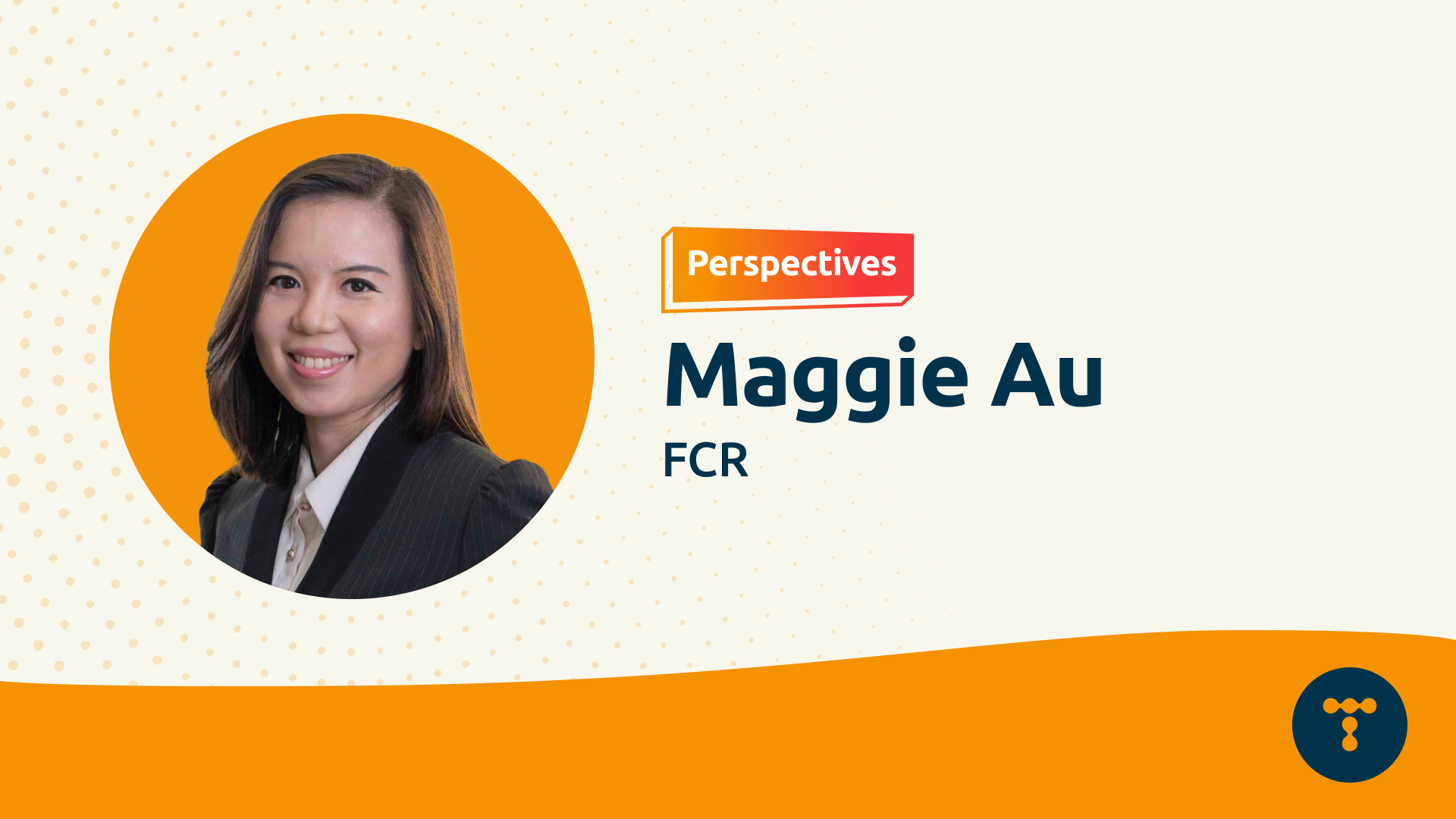
'Perspectives' is a Telum Media submitted article series, where diverse viewpoints spark thought-provoking conversations about the role of PR and communications in today's world. This Perspectives piece was submitted by Maggie Au, Head of Client Services at FCR.
With US tariff confusion rippling across global markets, communication leaders are stepping up - not just to manage messages, but to distil information about fast-moving geopolitical shifts into strategic insight, helping business leaders navigate risk and shape strategy.
This moment reinforces a critical truth: communication is not a soft skill; it's a strategic imperative.
From the C-suite down: Communications must start at the core
In an era of rising protectionism, where politics has greater influence over trade and markets, communication leaders must work closely with senior executives to understand the full scope of likely impacts on the business - from upstream supply chains to the end customer.
This isn't just about where a business operates - it's about where it's connected and how shifts in sentiment, policy, and pressure points can play out locally. Without this clarity, even the most well-crafted messaging can fall flat or risk misinterpretation.
Speak their language: Local nuance in a fragmented world
Nowhere is this more evident than across the APAC region. From Australia and Japan to Southeast Asia and Greater China, public sentiment, regulation, and cultural expectations vary widely. Messaging that works in one market may need to be reshaped entirely for another.
In this environment, a consistent overarching message about the business direction is essential - but precise localisation is non-negotiable. It requires deep cultural fluency, regional expertise, and the ability to speak not just the language - but the mindset - of local audiences. Staying neutral is harder than ever. What matters is staying credible and locally grounded. Engaging experts who understand these nuances isn't a cost - it's a strategic move to stay relevant and avoid disastrous missteps.
"S" in ESG: A strategic anchor in shifting markets
That's where the "S" in ESG becomes more than a check box. In a climate of fragmentation and rising nationalism, focusing on communicating the social impact of your business - on people, communities, and jobs - offers a way to build trust without being overtly political.
This includes understanding the communities in which your business has a presence and shaping narratives that reflect support, inclusion, and shared value. It's not just reputation - it's resilience.
Be ready - even if you don't take sides
Avoiding politics may feel safe, but silence isn't always neutral. Communication leaders must prepare - with aligned narratives, cultural awareness, and clarity about how trade, policy, and public sentiment intersect.
Even in investor communications, transparency around exposure and supply chain resilience is now essential to maintaining long-term confidence.
Because when pressure mounts - as it will - the best time to prepare is before the storm hits.
Maggie Au is Head of Client Services at FCR, an agency specialising in financial and investor communications, issues and crisis management, and corporate reputation. A seasoned communications professional, she's spent over two decades working across the APAC region, which include prior roles in Hong Kong at FleishmanHillard, Link Asset Management, and SPRG.
With US tariff confusion rippling across global markets, communication leaders are stepping up - not just to manage messages, but to distil information about fast-moving geopolitical shifts into strategic insight, helping business leaders navigate risk and shape strategy.
This moment reinforces a critical truth: communication is not a soft skill; it's a strategic imperative.
From the C-suite down: Communications must start at the core
In an era of rising protectionism, where politics has greater influence over trade and markets, communication leaders must work closely with senior executives to understand the full scope of likely impacts on the business - from upstream supply chains to the end customer.
This isn't just about where a business operates - it's about where it's connected and how shifts in sentiment, policy, and pressure points can play out locally. Without this clarity, even the most well-crafted messaging can fall flat or risk misinterpretation.
Speak their language: Local nuance in a fragmented world
Nowhere is this more evident than across the APAC region. From Australia and Japan to Southeast Asia and Greater China, public sentiment, regulation, and cultural expectations vary widely. Messaging that works in one market may need to be reshaped entirely for another.
In this environment, a consistent overarching message about the business direction is essential - but precise localisation is non-negotiable. It requires deep cultural fluency, regional expertise, and the ability to speak not just the language - but the mindset - of local audiences. Staying neutral is harder than ever. What matters is staying credible and locally grounded. Engaging experts who understand these nuances isn't a cost - it's a strategic move to stay relevant and avoid disastrous missteps.
"S" in ESG: A strategic anchor in shifting markets
That's where the "S" in ESG becomes more than a check box. In a climate of fragmentation and rising nationalism, focusing on communicating the social impact of your business - on people, communities, and jobs - offers a way to build trust without being overtly political.
This includes understanding the communities in which your business has a presence and shaping narratives that reflect support, inclusion, and shared value. It's not just reputation - it's resilience.
Be ready - even if you don't take sides
Avoiding politics may feel safe, but silence isn't always neutral. Communication leaders must prepare - with aligned narratives, cultural awareness, and clarity about how trade, policy, and public sentiment intersect.
Even in investor communications, transparency around exposure and supply chain resilience is now essential to maintaining long-term confidence.
Because when pressure mounts - as it will - the best time to prepare is before the storm hits.
Maggie Au is Head of Client Services at FCR, an agency specialising in financial and investor communications, issues and crisis management, and corporate reputation. A seasoned communications professional, she's spent over two decades working across the APAC region, which include prior roles in Hong Kong at FleishmanHillard, Link Asset Management, and SPRG.
-1.jpg)
-1.jpg)