PR News
<span id="hs_cos_wrapper_name" class="hs_cos_wrapper hs_cos_wrapper_meta_field hs_cos_wrapper_type_text" style="" data-hs-cos-general-type="meta_field" data-hs-cos-type="text" >Event wrap-up: Telum Talks to CNA</span>

Event wrap-up: Telum Talks to CNA

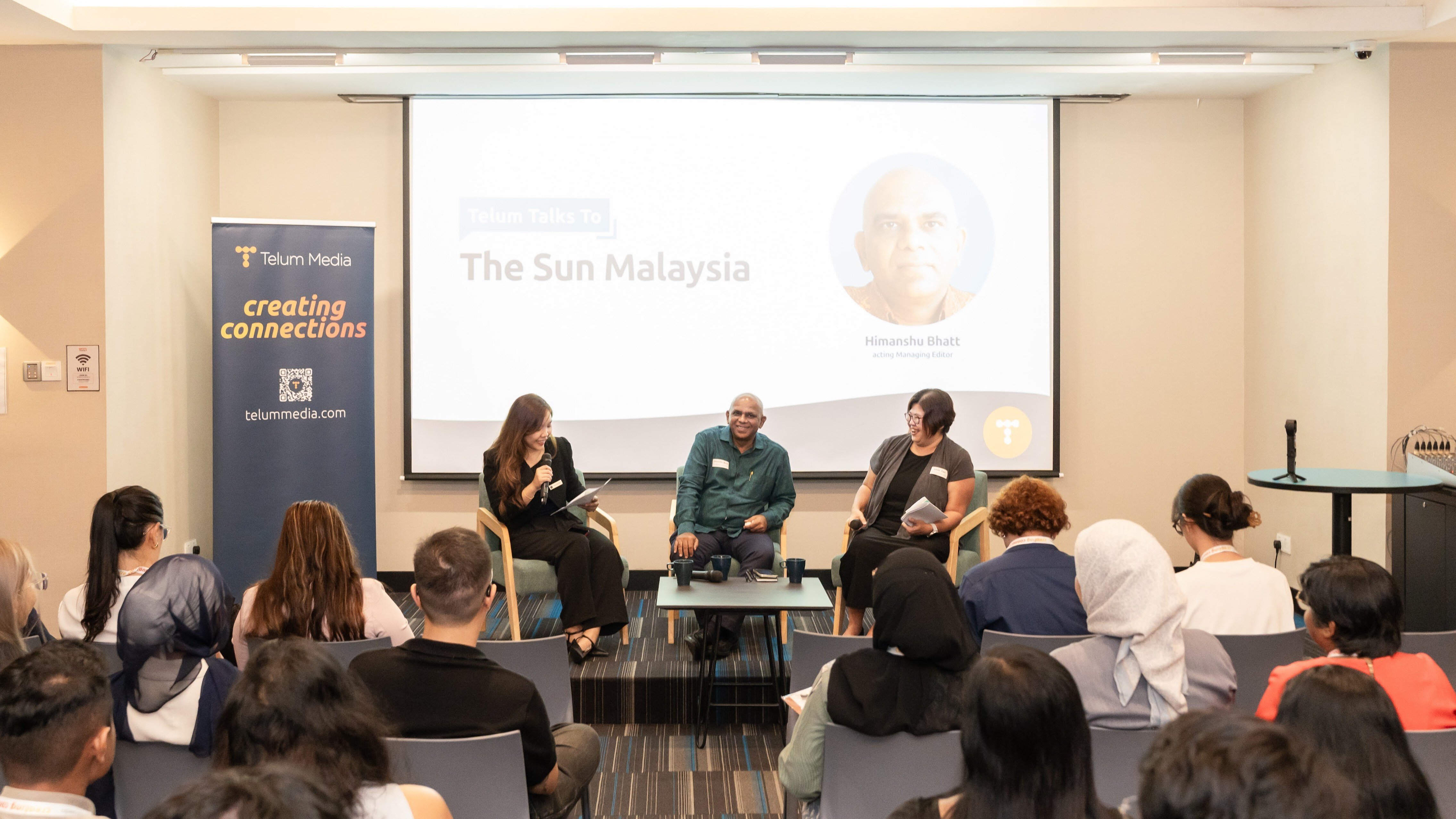
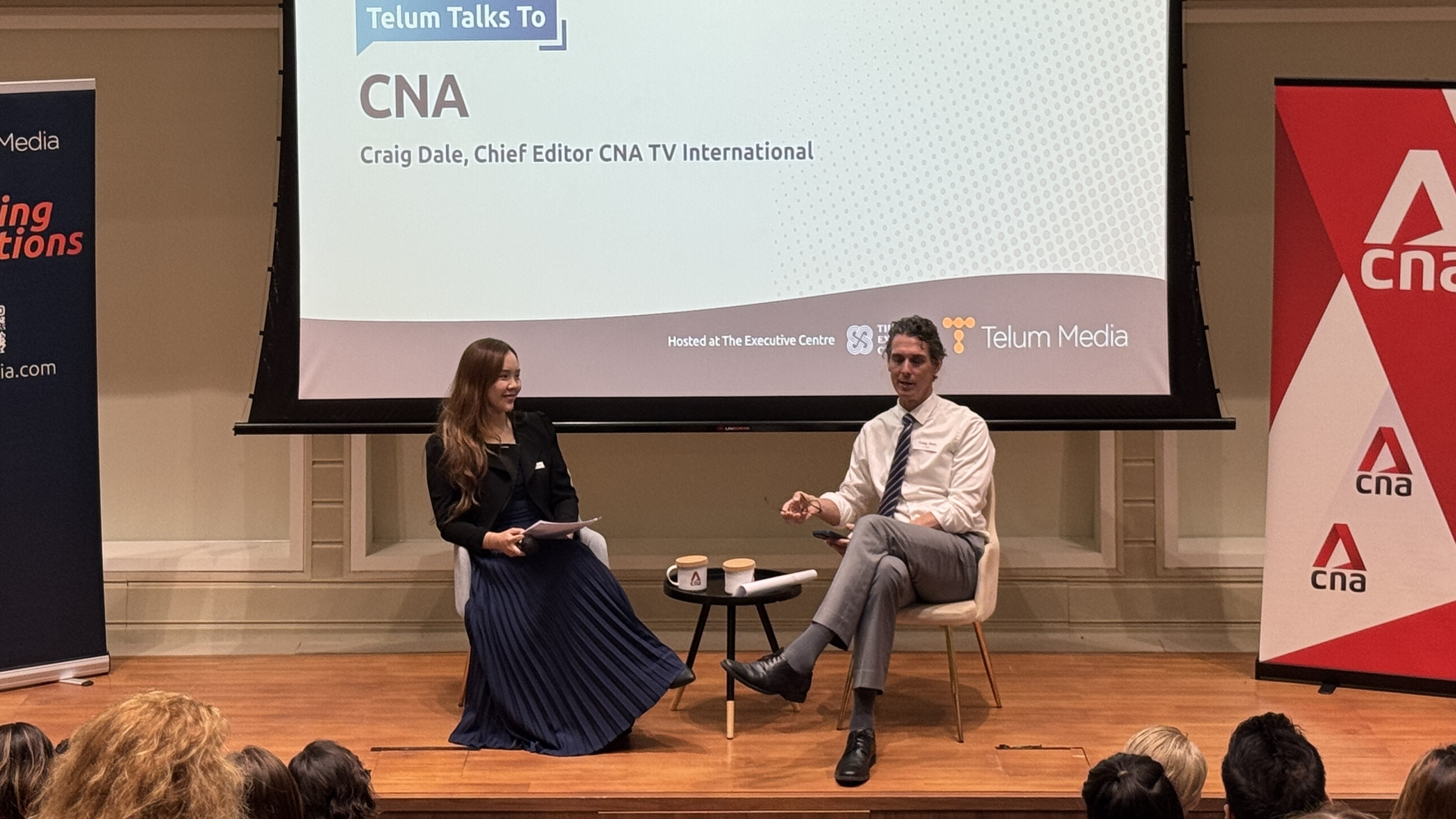
On 18th August 2026, Telum Media hosted an exclusive in-person discussion featuring Craig Dale, Chief Editor of CNA TV International at The Executive Centre in Singapore.

Moderated by Telum Media’s Mary-Jane Tan, the session provided communications and PR professionals with strategic insight into CNA’s editorial focus, audience breakdown, and the priorities shaping its international news coverage.
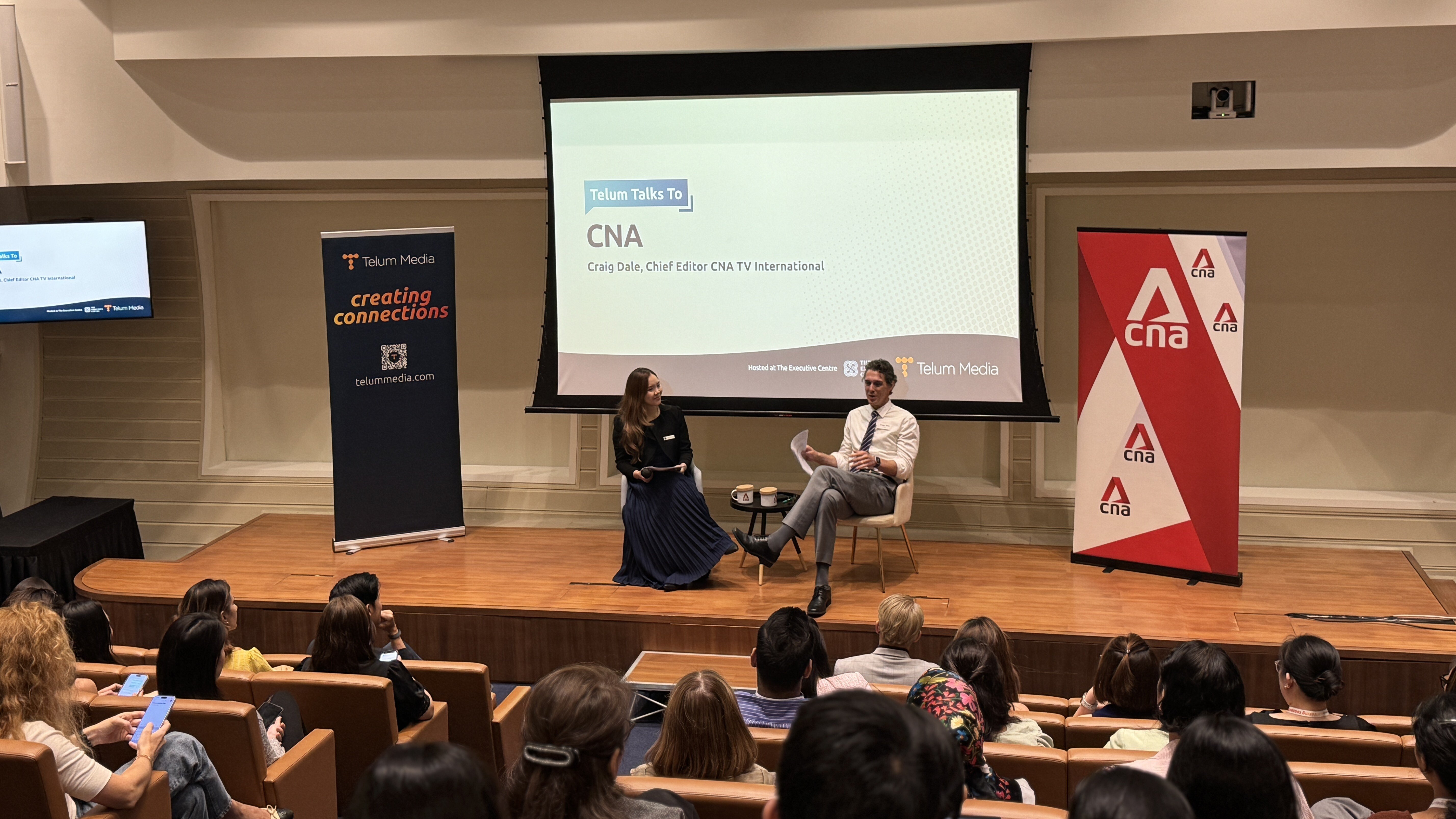
Picture 1

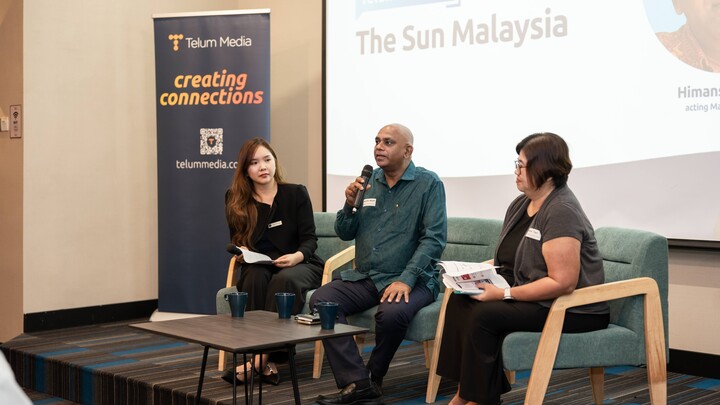
During the afternoon chat, Craig took a deep dive into the newsroom’s editorial positioning and priorities, sharing insights into the types of stories and pitches that catch the editorial team’s attention. He also highlighted the importance of relationship-building and understanding what CNA looks for when evaluating potential stories and pitches.
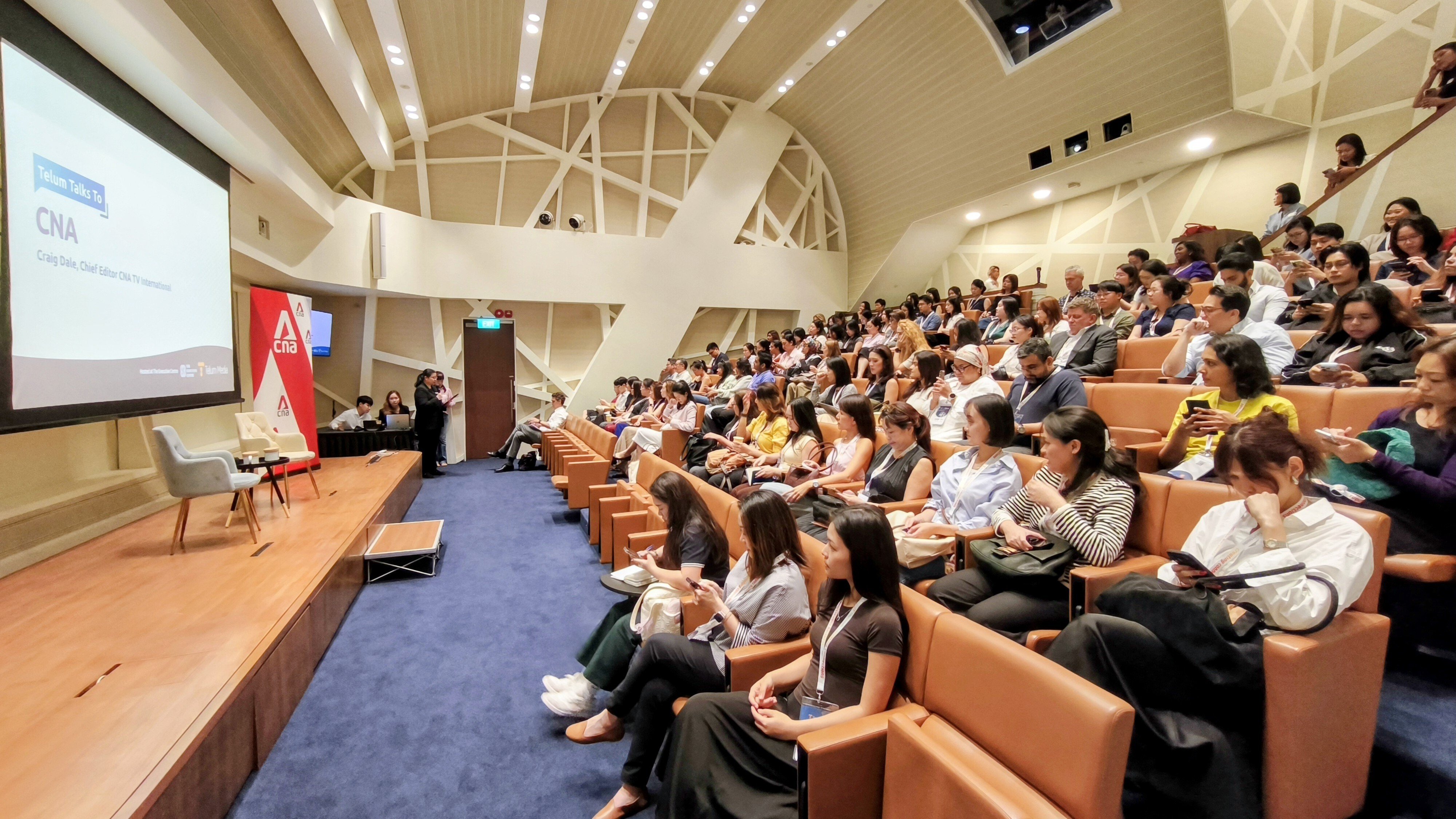
Picture 2

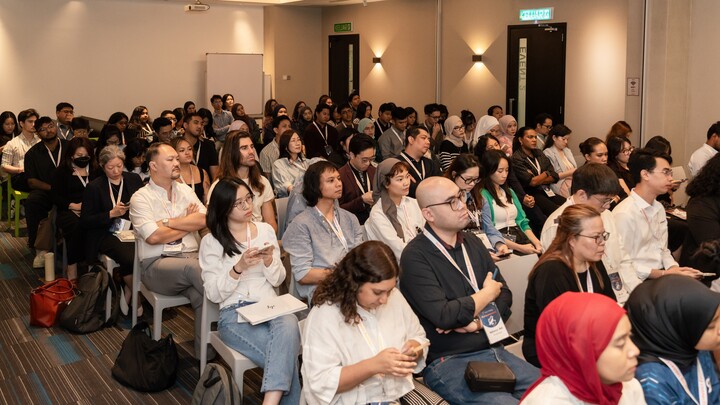
In the Q&A segment, attendees obtained practical guidance on how to develop relevant story angles for CNA’s regional and international audiences. The discussion covered how the definition of a relevant Asia story has evolved, business and regional themes that remain under-reported, and the developments in Asia that could generate demand for expert analysis and enterprise perspectives over the next six to 12 months.

Stay tuned for more Telum Media events by subscribing to our News Alerts for the latest updates.

The Executive Centre is Asia Pacific and the Middle East's premier flexible workspace operator, with 260+ centres across 15 markets.

From Private Offices and Coworking Spaces to Meeting Rooms and Virtual Offices, TEC delivers premium environments designed for how modern businesses work.

Discover TEC first-hand and redeem your exclusive offer using code telummediasgcw10: Book a Coworking Day Pass | Flexible Workspace - The Executive Centre

This offer is available only in Singapore until 18th September 2026.

Banner TM 1.jpg


Previous story

Adfactors PR acquires majority stake in Australian communications consultancy

Next story

Jessica Makin joins health tech company to lead APAC comms

You might also enjoy

Bud
Industry update

Bud Communications expands to Hong Kong, appoints regional lead

Bud Communications has expanded into North Asia with the launch of its Hong Kong office. To spearhead this regional growth, the agency has appointed communications veteran Cynthia Chan as Hong Kong & North Asia Lead.

Cynthia brings over two decades of experience in corporate positioning, reputation management, and change management to Bud. Before joining the agency, she served as Senior Vice President and Partner at FleishmanHillard Hong Kong, where she led corporate practice. Her background also includes an in-house role as Head of Communications for Greater China at Covestro in Shanghai.

This new hub will integrate with Bud’s established offices in Singapore, Australia, the Philippines, Malaysia and Indonesia, offering kinetic brands an immediate, scalable cross-border PR solution.

Oliver Budgen, Founder and CEO of Bud Communications, commented: "Hong Kong has been part of Bud's growth ambitions from day one. Given how significant this market is within the wider APAC picture, we always knew success would come down to two things: timing and talent. With the Government’s HK$35B Transformation Blueprint underway and clients increasing their focus on the region, the timing feels right. Most crucially, bringing in someone of Cynthia's calibre, with 20 years in reputation management and change leadership, gives us exactly the person to build this properly. She's the ideal partner to lead our North Asia expansion, and we're thrilled to welcome her to the team as we bring our believability-led approach to this market."

Cynthia added: "Joining Bud Communications at this pivotal moment in the region’s technology narrative is an incredible opportunity. The GBA-to-APAC corridor is brimming with world-class tech companies that require sophisticated, strategic storytelling to establish credibility and navigate complex multimarket landscapes. Our proprietary Believability Framework is a true differentiator - it turns trust into something structured and scoreable, to help disruptive brands to deliver measurable results to pursue real business growth. I look forward to establishing Bud as the go-to strategic communications partner for tech innovators in Hong Kong and North Asia.”

Every
The Earned View

Every crisis creates new facts. It should not require an organisation to invent a new identity.

In the first hours of a crisis, attention inevitably turns to the statement: What are we going to say? Who will say it? How will we syndicate it? How quickly can we get it out?

These questions matter, and by the time a crisis team is debating them, the groundwork for the answers should have already been laid.

Effective crisis messaging begins with something deeper than preparing a holding statement or a list of approved lines. It begins with defining the organisation’s ‘essence’: the central idea that defines what it stands for and connects everything it says and does.

The idea beneath the words

An essence is not a slogan. Nor is it necessarily something an organisation would use publicly.

It is the shortest truthful expression of why the organisation matters and the basis upon which it wants to build its relationships. The organisation’s key messages both contribute to and flow from that essence, providing credible and supportable expressions of what the organisation delivers.

Without an essence, messaging can become a collection of disconnected claims about service, people, innovation, leadership, and community. Each may sound perfectly reasonable on its own, but when taken together, may not tell a coherent story.

The essence provides that coherence; it is the hub from which the messages extend.

From essence to resonance

With an essence and key messages established, the next task is to map those messages against the organisation’s stakeholders.

Not every message will carry the same weight with every audience. Employees may respond most strongly to stability, opportunity, and leadership. Customers may be more interested in reliability, service, or innovation. Regulators may look for competence and compliance, while business partners may value capability and long-term commitment.

This process is a stable technique my firm employs to help organisations understand how stakeholders see them. It requires a deep dive into reviewing, at a human level, how every stakeholder perceives the organisation and why.

We once turned the process on Wrights itself. The essence we arrived at was “Ingenious”: the simplest expression of our promise to be clever, original, and effective.

Around that essence sat six dimensions of trust: human relationship, vision, stability, innovation, pragmatism, and competence. 

Each produced its own supporting messages. Human relationship was expressed through listening, reflecting, and acting decisively. Vision and innovation were about creating something extraordinary and ground-breaking. Stability drew upon experience and foresight, while pragmatism and competence combined driving the agenda with a systematic approach to creative work.

Those messages do not have equal resonance in every situation. A client confronting an immediate problem would probably place greatest value on listening, decisive action, pragmatism, and competence.

Someone seeking significant change might be more attracted by vision and innovation, while an employee would also look for the stability and human relationships behind the promise.

The emphasis could change according to the stakeholder and the circumstances, but every message remained connected to the same essence. If a crisis occurred, the facts would determine the specific words, but Wrights would not have to invent what the organisation stood for while responding.

The test was that a message should positively influence the stakeholder group for which it was intended without negatively affecting any other group. At worst, it should be neutral.

That discipline prevents an organisation from reassuring one audience while inadvertently alarming another. It also ensures that different divisions are not communicating claims that compete with or contradict each other.

This is not about manufacturing different truths for different people. It is about understanding which part, of the same story, matters most to each stakeholder.


When the crisis tests the essence

When a crisis occurs, the first requirement is to bring together the people who hold the relevant knowledge. Management, operations, legal, communication, and other affected areas need to establish what is known, what remains uncertain, and what decisions must be made. No division should be developing its own interpretation or a response in isolation.

Crisis management and crisis communication must move together. What the organisation says will be judged against what it does, while its decisions will shape the messages it can credibly deliver.

The essence does not provide a script for the crisis, and the established key messages cannot replace incident-specific facts. What the two provide is a framework for deciding how the organisation will respond, and how that response relates to already made commitments.

For an organisation whose essence is built around safety, for example, the crisis team must be able to demonstrate how safety is influencing its decisions. If transparency is an established message, that commitment will be tested when the information is uncomfortable or incomplete. If the organisation talks about strong relationships, stakeholders will notice whether it communicates with them directly or leaves them to learn about events elsewhere.

A crisis therefore does more than test the quality of an organisation’s messaging. It tests whether the essence and the messages built around it were ever genuine and exposes omissions.

Messages travel through circles of trust

Understanding stakeholder resonance has become more important as trust has fragmented.

The 2026 Edelman Trust Barometer describes people retreating into smaller and more familiar circles. At the same time, the Reuters Institute’s 2026 Digital News Report shows platforms becoming more prominent than television and news websites as sources of news globally.

An employee, customer, regulator, investor, or local resident is likely to hear about the same crisis through a different source and assess it through a different relationship. They are not simply separate audiences; they occupy different circles of trust.

Artificial intelligence can now draft and distribute countless variations of a statement with extraordinary speed. What it cannot do is replicate the stakeholder understanding that tells an organisation which messages have earned credibility within those circles. That understanding must be built before the pressure begins.

When a crisis arrives, an organisation will still have to establish the facts, make difficult decisions, and respond to circumstances it could not have predicted.

But the foundation for a response should already have been laid, with an understanding of the essence, key messaging, and where those messages resonate. Otherwise, the organisation will be trying to invent its identity and stakeholder relationships at the very moment both are being tested.

Douglas Wright is Chief Executive Officer of Wrights, providing strategic counsel to boards and executives navigating complex reputational, stakeholder, governance and public policy challenges.

With more than four decades experience, he has advised leading corporations, industry bodies, government agencies and not-for-profit organisations across Australia and internationally. Prior to establishing Wrights, he founded and led Ogilvy PR Australia.

Douglas is Deputy Chair and a Fellow of Communication and Public Relations Australia (CPRA), a Chartered Public Relations Practitioner (UK), a Fellow of the Australian Institute of Company Directors and a Certified Practising Marketer.

He combines commercial judgement, strategic insight and an ability to shape outcomes in complex environments.

Read more from our columnists in The Earned View

Darren
Moves

Darren Burns leaves APAC leadership role at Golin Ketchum

Darren Burns has stepped down from his role as President, Asia Pacific at Golin Ketchum to pursue new opportunities.

Darren led regional operations at the agency for more than six years, driving innovation and growth across key offices in Asia Pacific.

The change is part of Omnicom’s wider restructuring which started in early 2026, as previously reported by Telum Media.