Southeast Asia’s F&B scene is becoming increasingly competitive. Brands can no longer afford to focus solely on operations and products; they must also build strong brand identities while staying attuned to evolving consumer expectations, trends and emerging technologies.
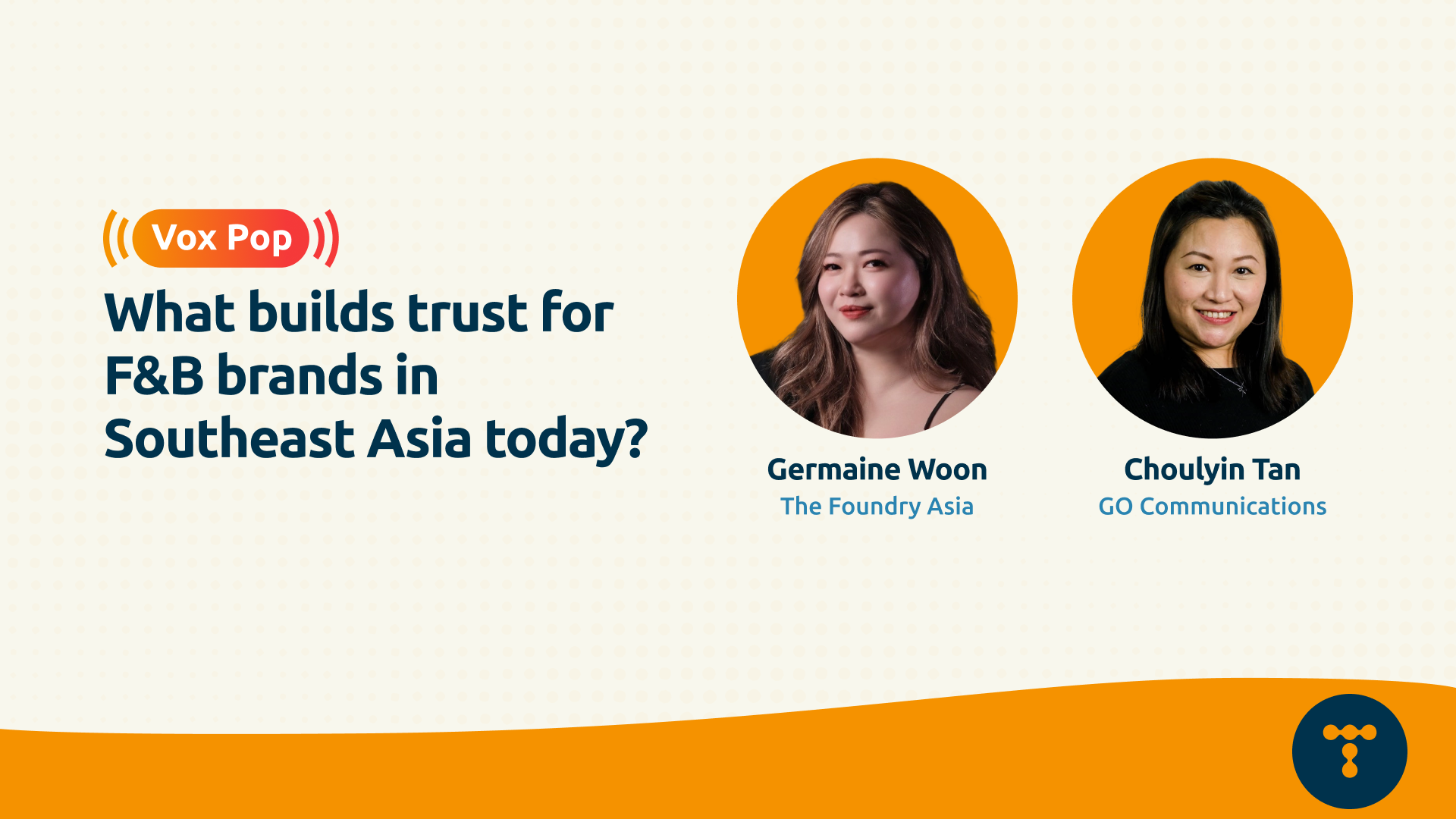
In this crowded landscape, communications practitioners play an increasingly strategic role in shaping how brands build trust, express authenticity and remain culturally relevant. Telum Media spoke with two communications agency leaders, Germaine Woon, Founder and Managing Director of The Foundry Asia, and Choulyin Tan, Chief Operating Officer at GO Communications, about how communicators can help F&B brands foster lasting consumer connections and turn trust into a long-term competitive advantage.
What builds trust and lasting brand equity for F&B brands in Southeast Asia today?
Choulyin: To build lasting brand equity in today’s F&B landscape, brands must move away from picture-perfect content towards more authentic communication. Trust is built when brands communicate with a “human” voice, ditching corporate jargon in favour of genuine transparency. This can be reflected when a brand openly addresses operational hiccups or supply chain challenges before they escalate into crises. When done right, this honesty and openness help consumers to become more accepting of a brand.
Additionally, as consumers increasingly link personal wellness to planetary health, brands must demonstrate an integrated conscious care model. This includes introducing products or initiatives that support health-conscious lifestyles, such as sugar-reduction efforts or nutrient-dense sourcing, alongside waste-mitigation strategies like circular packaging and zero-food-waste protocols. By positioning themselves as proactive partners in consumers’ ethical and physical well-being, brands can transform a simple meal into a shared value system, creating a competitive advantage that is far harder to replicate than a recipe.
Germaine: Beyond food and service, what builds trust for F&B brands in Southeast Asia is consistency and how present they are in people’s lives. It’s a fast-moving region where trends cycle quickly, but people remember how a brand shows up over time. The brands that last tend to be those that know who they are, stay close to their communities and internal stakeholders, and avoid trying to be everything at once.
As AI adoption continues to rise, hospitality remains one of the few industries that still relies heavily on authenticity and human touch. You can sense when something feels forced, whether it is the service, the concept, or the storytelling around it. People are not just coming in to eat; they return because they feel comfortable, understood, or connected in some way. That often comes down to the team, the energy in the room, and how consistently that experience is delivered.
With this backdrop, what role can F&B communicators play in turning these trust drivers into sustainable reputation and competitive advantage?
Germaine: With that in mind, the role of F&B communicators is less about pushing coverage and more about ensuring the right things are seen and understood. Much of what builds trust is not immediately obvious - it is reflected in how a brand behaves over time, the people behind it, and the relationships it builds internally and externally. Our role is to make those qualities visible without over-engineering them.
Communicators also need to safeguard cultural relevance, especially for brands with a multi-market presence. The challenge is ensuring a brand can speak to different markets without losing its identity. What works in one city does not always translate directly to another, but the brand’s core should remain intact. This requires a level of empathetic sensitivity not just to audiences, but also to the surrounding cultural context - which cannot be replicated at scale or automated through AI.
Ultimately, reputation is built gradually. It is not defined by one major moment, but by a series of small, consistent ones.
Choulyin: In a landscape where consumers are increasingly sceptical of brands’ authenticity, F&B communicators need to bridge the gap between back-end operations and front-end perception, turning abstract values into measurable competitive advantage.
Communicators must work closely with internal teams to translate complex terminology - such as Halal certifications, organic standards, and ESG metrics - into consumer-friendly content. At the same time, teams need to adopt a proactive social-listening approach to stay close to conversations on the ground. This enables communicators to identify potential friction points early, allowing brands to lead with vulnerability and take ownership of the narrative before a crisis escalates.
Furthermore, communicators play a vital role in internal advocacy by ensuring frontline staff are equipped and empowered as brand ambassadors who can authentically articulate the brand’s mission to consumers.
Ultimately, communicators can build a cohesive brand identity by ensuring every digital and physical touchpoint consistently reflects the brand’s ethical and wellness-driven commitments. This consistency moves the relationship beyond a transactional one, fostering a shared value system with consumers that can remain resilient amid market fluctuations.

Vox Pop: What builds trust for F&B brands in Southeast Asia today?
Telum Media creating connections
Get in touch to learn more
Belle Taylor begins as Principal Media Advisor
You might also enjoy
Hans Trees has been appointed as Global Head of Communications, Senior Vice President and member of the Extended Executive Committee at Lonza, effective 1 September 2026.
He succeeds David Carter, who has led the company's communications function since 2019.
Hans joins from Roche, where he most recently served as Global Head of External Engagement. During his 11 years with the pharmaceutical company, he held a number of leadership roles across its Pharmaceuticals Division and Group functions.
Prior to Roche, Hans worked in management consulting at Aon and investment banking at Rothschild.
Sequencr AI has launched Stratum, a full-stack AI agent platform built for communications and marketing teams and agencies. Through working with thousands of communications and marketing professionals, the company has identified a consistent set of needs that generic AI tools do not adequately address, including producing consistently quality outputs, accessing real-time data relevant to each organisation, and protecting sensitive information.
Stratum is built around Sequencr AI's principle that AI should scale understanding and impact, while humans continue to scale judgement, trust and meaning, using agents to handle signal detection, information synthesis and workflow execution, while keeping people in control of strategy, interpretation and accountability.
The platform brings these capabilities together in one system, combining AI agents, domain-specific models, and live data to help teams move from information to insights faster and more effectively.
“Stratum was built to help teams deliver smarter communications and smarter marketing,” said Matt Collette, Founder and CEO of Sequencr AI. “We’re moving beyond the productivity-first mindset of most AI tools to harness the technology’s real strengths for communications and marketing teams: its ability to scale insight, surface meaningful signals, and drive outcomes that matter to brands and their audiences and stakeholders.”
“Unlike general-purpose tools like ChatGPT or Gemini, Stratum was built for communications and marketing experts, by experts,” Matt added. “Stratum’s agentic layer was designed specifically for professionals who need AI that adds values, not just respond to prompts.”
“Technology can scale insight and execution. Trust, judgement and relationships remain human. The most successful communications teams will be the ones that combine both,” said David Gallagher, Co-Founder and Partner at Folgate Advisors and Non-Executive Director of Sequencr AI.
“We’re entering a new phase of AI adoption where the winners won’t be the organisations with the most tools, they’ll be the ones that successfully embed AI into how decisions get made and work gets done. Stratum’s approach to combining agents, organisational context, and real-time data reflects where I believe the market is headed,” said Jennifer Granston, Chief Growth Officer at Zignal Labs and Non-Executive Director of Sequencr AI.
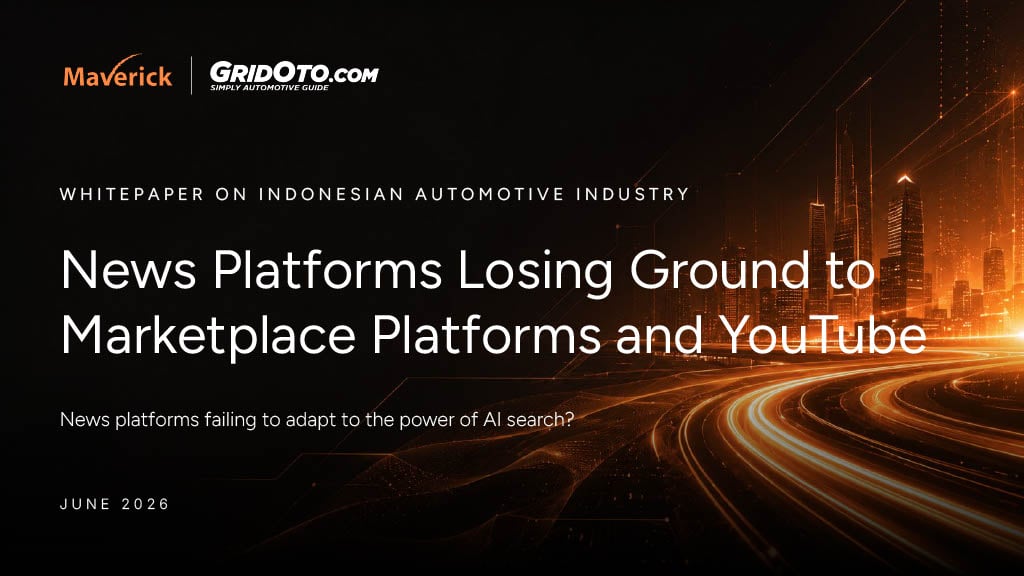
Maverick Indonesia and GridOto have released a new whitepaper examining how AI search engines are changing the way they cite sources when answering automotive-related questions in Indonesia.
The report, News Platforms Losing Ground to Marketplace Platforms and YouTube, argues that AI search visibility is no longer shaped mainly by traditional news coverage. Instead, platforms that help consumers compare, evaluate and make purchase decisions, including automotive marketplaces and YouTube channels, are becoming more influential in AI-generated answers.
Key findings from the report
Marketplace platforms have overtaken news media as a major AI citation source. According to the report, marketplace became the most-cited category, rising from 25.8 per cent to 31.5 per cent, while news media declined from 32.8 per cent to 29.7 per cent. The findings suggest that AI engines are increasingly favouring transaction-oriented content, such as product listings, price ranges, comparisons and specifications, over broad editorial information.
Social media also recorded significant growth, largely driven by YouTube. The report found that YouTube is becoming a more prominent source in AI answers, particularly where videos provide structured answers to specific consumer questions. Long-form videos, comparison content and buying guides were more likely to be cited than short-form content.
The study also highlights a shift in who AI trusts on YouTube. Individual creators now account for nearly half of YouTube citations in the dataset, while YouTube channels owned by news media have declined. Maverick Indonesia and GridOto suggest this may be because individual creators often frame content from a user or buyer perspective, making it more relevant to consumer decision-making prompts.
News media still matters, but AI appears to be more selective in how it cites publishers. Only six of the top 20 news domains tracked in the report increased their citation share. Suara.com saw the strongest proportional increase, with most of its growth coming from ChatGPT.
The report also points to crawler access as an important, but not sufficient, factor in AI visibility. Media that allowed AI crawler access saw mixed results, while outlets that restricted access often recorded citation share declines. After GridOto opened access to AI crawlers in June 2025, its AI referral traffic showed an upward trend, with ChatGPT emerging as the main driver.
Why it matters for communications professionals
For PR and communications teams, the study suggests that AI search is becoming a reputation channel in its own right. Visibility is no longer only about search rankings, media coverage or owned websites. Brands need to understand which third-party sources AI engines trust and cite when consumers ask questions.
For automotive brands, this means marketplace listings, KOL reviews, YouTube explainers and structured news content can all influence how AI describes a brand or product. The report notes that brand-owned visibility is weakening, with official car brand pages and dealer sites both declining as citation sources.
For publishers, the findings point to the need for “AI-readable” editorial formats. Maverick Indonesia and GridOto recommend structured headlines, ranked lists, comparison tables, FAQs, evergreen explainers, updated buying guides and open crawler access to improve the likelihood of being cited by AI engines.
For communicators more broadly, the lesson is that generative search requires an ecosystem view. AI visibility should be tracked by source type, prompt, platform and competitor, rather than treated as a website or SEO metric alone.