Festivals like Diwali are more than a moment for greetings. They’re a chance for brands to connect authentically with audiences across Southeast Asia’s diverse markets. For Jeninder Kaur Gill, PR Head at Sambal Lab, true festive engagement goes beyond messaging; it’s about understanding how people connect and celebrate at present.
Understanding authenticity in festive storytelling
As the saying goes, every opportunity comes with its risks - festive campaigns are no exception. These are delicate moments where brands feel the pressure to stand out, but in the rush to do so, it's easy to overstep. Jeninder has seen it time and again: brands trying so hard to assert their relevance that they lose sight of what's truly authentic.
“Brands want to connect and stay top-of-mind. You want to show up because your absence means someone else's or your competitor's gain. But sometimes, you might end up trying a little too hard and it becomes forced. And that's when you lose that authenticity."
Some campaigns might opt to delve deep into cultural rituals or symbolism, assuming that's the key to authenticity. Jeninder notes, however, that in doing so, "brands need to be mindful to not overlook the diversity within an ethnic group. If it doesn't resonate with the wider audience, all that effort risks missing the mark." Her takeaway is simple: authenticity isn't about ticking every cultural box; it's about understanding people and their tradition within the context of current trends. Go too far, and a meaningful message can end up contrived.
Focusing on connection over commercialism
According to Jeninder, the primary challenge during festive periods is resisting what she calls 'the transactional impulse', the temptation to 'monetise the moment' rather than cultivating the spirit of the celebration. "Anchoring campaigns with universal emotional truths like connection, gratitude, and togetherness, while remaining culturally sensitive, is what truly resonates," she explains. "Successful brands understand this."
Beyond seasonal greetings and sales, Jeninder highlights that the most meaningful festive engagement happens when brands create those moments where people can genuinely connect. "When people feel connected, not just to the celebration but to each other, that’s a powerful form of brand utility, and it ensures the influence is lasting," she says.
Thus, she continues, festive storytelling becomes a powerful conduit for building reputational equity, even for brands outside the direct consumer space.
"When a consumer-facing event isn't feasible, the brand can communicate its commitment to core societal pillars - trust, progress, and nation-building. When people see that your brand contributes to their lives, even indirectly, that’s when credibility grows."
Finding fresh meaning in traditions
One challenge Jeninder sees every year is how to keep recurring campaigns fresh. Festive messaging tends to be cyclical and risk feeling stale. To keep recurring campaigns fresh, she says that it comes down to understanding your audience - what matters to them at this point of their lives, what brings them joy, and even what challenges they're facing. “When brands connect timeless values with timely insights, that’s when campaigns continue to feel relevant and authentic,” she says.
For brands with multi-market operations, balancing global consistency with local relevancy can be tricky. “When you give local teams the freedom to express the brand truth in their own way, it doesn’t dilute the message, it deepens it,” Jeninder notes.
She also points to the power of authentic community engagement. When brands show genuine care for local communities, they demonstrate that they're involved in something bigger than festive moments. “That kind of presence and empathy builds trust and connection far more effectively than any promotional push ever could."
For Jeninder, the heart of festive storytelling is simple: rather than marketing the season, create moments that genuinely bring people together. When brands put people at the centre by honouring culture, diversity, and shared experiences, they don’t just celebrate a festival, they leave lasting impressions.
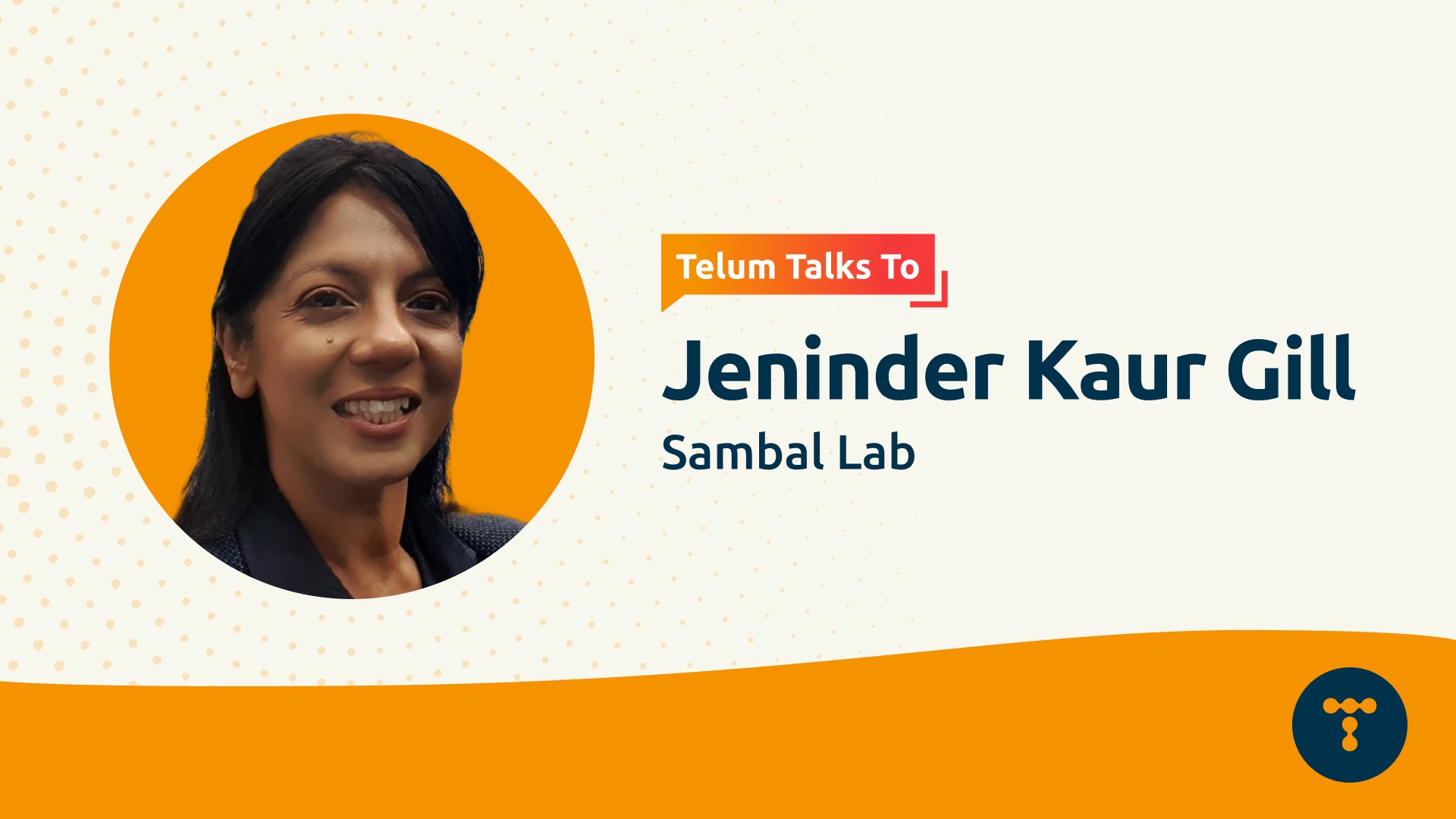
Telum Talks To: Jeninder Kaur Gill from Sambal Lab
Telum Media creating connections
Get in touch to learn more
You might also enjoy
Eric Lim has been elevated to Head of Marketing Strategy & Communications at Blueshark, a partner of PETRONAS Group in green mobility. Based in Malaysia, he spearheads brand communications, public relations, content creation, collaborations, and marketing for the electromobility company and its sub-brand, SoloEra.
Eric has accumulated more than 25 years of communications, marketing, and related experience across the automotive, technology, and property development sectors, and was most recently Senior Manager of Brand and Communications at Blueshark.
Anggini Setiawan has stepped into the role of Head of Communications for Southeast Asia at TikTok. Based in Jakarta, she oversees the social media brand's overall communications activities and reputation across the region.
Anggini brings more than a decade of comms experience across agency and in-house roles at Beyond Communication, Ruangguru, and ByteDance.
Over the past few years, mentions of AI within the industry haven't toned down - if anything, they've been ramping up. Looking back at Telum's 2024 Year Ahead and PR Tech in 2025 pieces, it's interesting to see how attitudes have shifted. What began as a period of experimentation - playing with prompts, dabbling in ideation, and speculating about job replacement - has solidified into a structural transformation within the profession.
AI has moved from a nice-to-have to a non-negotiable; from a fringe tool to a core strategic capability. 2025 is the year PR and comms practitioners stopped asking, “What can AI do?” and began asking, "How do we lead with it?”.
Integration of AI tools in the industry
Early adoption of AI centred around basic prompting and inspiration. In 2025, however, practitioners in the PR and comms space have unlocked more of its capabilities.
We saw many organisations develop their own AI offerings across APAC and the Middle East, ranging from AI visibility services and training tools to crisis solutions. These include PIABO GEO, Ogilvy ANZ’s Generative Impact, Golin’s First Answer, TEAM LEWIS' Training for Trust, and FINN Partners' CANARY FOR CRISIS.
The narrative around job replacement has also softened. Rather than replacing humans, the industry is now embracing AI as an enhancer.
As Natacha Clarac, Director General of Athenora Consulting in Brussels and former President of PRGN, said following PRGN's launch of Précis Public Relations: "The introduction of Précis Public Relations showcases the potential of AI to enhance rather than replace the strategic value PR professionals offer."
GEO / LEO and search transformation
One trend that we have seen in 2025 was the decline of traditional search behaviour. AI assistants, such as ChatGPT, Gemini, and Perplexity, increasingly replaced clicks with instant answers.
As Nichole Provatas, Executive Vice President and APAC Head of Integrated Marketing and Innovation at WE Communications, noted: "Around 69 per cent of Google news searches now end in zero clicks as AI Overviews rise."
This reality raises the stakes for inclusion in AI answers, as Rob van Alphen, Managing Director of Polaris Digital, warned: “…if your brand or leadership isn’t part of the AI answer, you’re invisible.”
Jack Barbour, EVP and AI Lead at Golin New York, and Nichole both highlighted how earned media is key in making brands discoverable, with at least 90 per cent of AI search results coming from earned citations. Brian Buchwald, Edelman’s President, Global Transformation and Performance, emphasised the same point: "You can't buy your way to the top of an AI-generated answer...brands must proactively shape how they appear in LLM outputs or risk being misrepresented, misunderstood, or missed entirely."
AI platforms are relying on reputable journalism, corporate blogs, and expert commentaries - flipping the paid-dominated marketing playbook on its head.
This shift fuelled the rise of GEO (Generative Engine Optimisation) and LEO (Language Engine Optimisation). In April, Celia Harding launched what she described as the world’s first LEO advisory firm, arguing: "While other agencies are looking at how AI can drive efficiencies in creativity and client service, they are all overlooking the real opportunity that lies ahead - shaping the data LLMs learn from."
If SEO defined the 2010s, GEO and LEO are shaping 2025 and beyond, with earned media at the core.
AI upskilling
As AI adoption surged throughout the year, professional development opportunities expanded rapidly, ranging from hands-on workshops and panel discussions to large-scale conferences.
These events spanned the region, including the Generative AI Bootcamp series by PRCA APAC and Sequencr AI, PRCA Thailand's first-ever conference in Bangkok on AI and communications, and Jakarta's “Shape the Future of Your Communications Strategy with AI” workshop hosted by ACE, APPRI and Reputasia Strategic Communications.
Telum Media also hosted its own list of AI-focused events, including workshops with Shaun Davies in Sydney and Melbourne, a workshop with Rob Van Alphen in Singapore, a global webinar with Matt Collette, collaborations with the Kennedy Foundation for panels on AI and journalism in Australia, and joint sessions with SOPA on ethical AI use in publishing in Singapore and Hong Kong.
The scale of these events showed one thing - these sessions were no longer “optional extras”, they've become essential for teams wanting to keep pace with AI's evolution across the industry.
Human and ethical considerations
As AI adoption rose, so did the reminders that human oversight remains essential. Practitioners repeatedly stressed that AI cannot replace human judgement, empathy, or lived experience.
As Matt Cram, Head of Media and Communications at Orygen, put it: "AI can’t replace the way people connect through empathy, creativity, and lived experiences."
Rob van Alphen reinforced this: "…we must double down on our inherently human strengths, such as empathy, curiosity, ethical decision-making, and critical thinking."
And Zeno’s Head of Regional Business Development, Asia, Ekta Thomas, said: "People connect with people - not algorithms."
These sentiments were reinforced across industry events focused on responsible AI use. At the Jakarta workshop, Reputasia Co-Founder and Communications Strategist, Fardila Astari, emphasised the importance of ethical guidelines for AI use, noting that careless application can create reputational risks, as seen in cases where major companies faced credibility issues due to AI-generated inaccuracies.
Similar points were made at Telum Media and SOPA's sessions in Singapore and Hong Kong, where newsroom leaders stressed the importance of maintaining editorial oversight, transparent disclosure, and strong governance structures. The consensus is that while AI may accelerate workflows, humans safeguard credibility.
2026 and beyond
As we approach the new year, AI is shifting from experimental to foundational. Nichole Provatas urges teams to "publish for AI inclusion," treating owned channels as structured, plain-language reference hubs built for machine ingestion.
But the landscape is still evolving, as Matt Cram cautions: "AI doesn’t just surface information, it consumes it…and the best strategies today might look very different tomorrow." For communicators, adaptability becomes the differentiator.
Ultimately, the future isn't AI-led but AI-enabled. As Matt Collette notes, "Human + AI is the new paradigm." Success will come from pairing AI's scale and precision with the empathy, judgement, and contextual understanding only humans can bring.