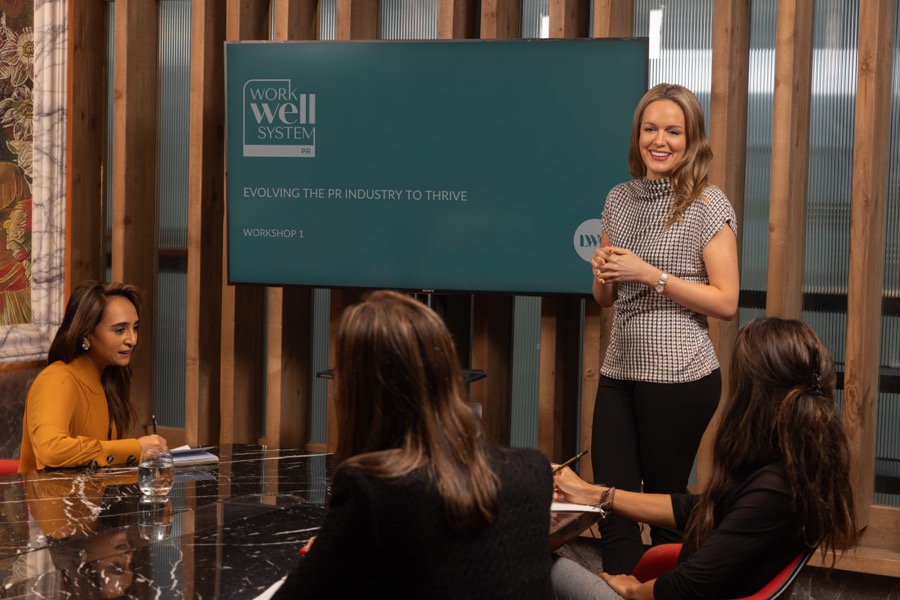
We spoke with former PR agency leader Lynda Williams about her new initiative - the WorkWell Academy, a coaching and training platform specifically for the PR industry. Through monthly MasterClasses, bespoke workshops, and coaching sessions, Lynda helps teams and individuals improve productivity, mental fitness, and resilience, while equipping them with modern PR training to help both individuals and agencies thrive.
What is the WorkWell System, and why did you set it up?
At its core, it’s about equipping people with the tools they need to thrive - not just survive - in the demanding PR environment. It’s a unique coaching and training platform, designed to help teams and individuals improve productivity, build resilience, and prioritise mental health.
In a 2024 PRCA report, 91 per cent of PR professionals reported experiencing poor mental health, and a quarter are currently diagnosed with a mental health condition. Additionally, 58 per cent cited an overwhelming workload as the main reason for workplace stress. These statistics need to change and that’s what I’m trying to achieve.
The WorkWell Academy is our flagship programme, a yearly membership designed to help PR agencies excel through layering modern PR training, mindset and well-being strategies to foster a balanced and productive workplace. Members have access to live monthly MasterClasses as well as past workshops and downloadable resources.
In addition to the Academy, we offer bespoke coaching sessions and workshops, both in-person and online. The feedback so far has been fantastic, and it’s incredibly fulfilling to make a positive impact on an industry that left me burnt out more than once.
What inspired you to set up the WorkWell System?
Having worked in the PR industry for many years, I witnessed the relentless pace and constant demands that take a toll on teams. While PR can be incredibly rewarding, it often comes with high stress levels, long hours, and a culture of “always being on.”
Over time, I saw this lead to burnout, disengagement, and talented individuals leaving the industry. I wanted to create a space where professionals could learn to manage these pressures effectively while still delivering great results.
The Academy is unique in that it bridges the gap between professional development and personal well-being. When people feel supported and empowered, they’re not only happier - they perform better too.
What makes the WorkWell Academy Yearly Membership unique?
Unlike traditional PR training, well-being and mindset workshops that work in silos, my MasterClasses layer everything together. Whether it’s an agency looking to boost team productivity or an individual struggling with impostor syndrome, we focus on actionable solutions. While many programmes focus solely on skill-building, we ensure mental fitness is central to the conversation.
Who is the WorkWell Academy for, and what types of MasterClasses do you offer?
The WorkWell Academy is for all PR agency professionals who want to take their agency and work-life to the next level, without burning out.
Our next MasterClass is called Building Resilience in PR on Wednesday 26th March at 4pm SGT and covers strategies to handle stress, recover from setbacks, and stay focused under pressure. Attendees will understand their unique stress blueprint, learn how to channel pressure into peak performance, and develop concrete daily practices that stick.
Other MasterClass examples include:
We focus on both prevention and recovery.
For prevention, we teach professionals how to set boundaries, manage clients better, and optimise both their energy and time. For instance, we guide participants on structuring work schedules around natural energy peaks and dips, which can drastically improve productivity and well-being. We also emphasise creating clear frameworks for managing client relationships, helping teams avoid the “yes-man” mentality and feel more in control.
For recovery, we help individuals recognise the signs of burnout early and take steps to recharge. Our goal is to create a culture where work and well-being are balanced, and burnout is seen as preventable - not inevitable.
Can you share some top tips to help PR agencies thrive?
I’ve just released a downloadable eBook called ' 7 Ways For the PR World to THRIVE…Not Just Survive'. It’s packed with actionable insights, and it’s easy to follow and implement - perfect for agencies looking to make meaningful change. You can download it here. You can also follow us on Instagram, as we have lots of tips on there: @workwellsystem
What is the WorkWell System, and why did you set it up?
At its core, it’s about equipping people with the tools they need to thrive - not just survive - in the demanding PR environment. It’s a unique coaching and training platform, designed to help teams and individuals improve productivity, build resilience, and prioritise mental health.
In a 2024 PRCA report, 91 per cent of PR professionals reported experiencing poor mental health, and a quarter are currently diagnosed with a mental health condition. Additionally, 58 per cent cited an overwhelming workload as the main reason for workplace stress. These statistics need to change and that’s what I’m trying to achieve.
The WorkWell Academy is our flagship programme, a yearly membership designed to help PR agencies excel through layering modern PR training, mindset and well-being strategies to foster a balanced and productive workplace. Members have access to live monthly MasterClasses as well as past workshops and downloadable resources.
In addition to the Academy, we offer bespoke coaching sessions and workshops, both in-person and online. The feedback so far has been fantastic, and it’s incredibly fulfilling to make a positive impact on an industry that left me burnt out more than once.
What inspired you to set up the WorkWell System?
Having worked in the PR industry for many years, I witnessed the relentless pace and constant demands that take a toll on teams. While PR can be incredibly rewarding, it often comes with high stress levels, long hours, and a culture of “always being on.”
Over time, I saw this lead to burnout, disengagement, and talented individuals leaving the industry. I wanted to create a space where professionals could learn to manage these pressures effectively while still delivering great results.
The Academy is unique in that it bridges the gap between professional development and personal well-being. When people feel supported and empowered, they’re not only happier - they perform better too.
What makes the WorkWell Academy Yearly Membership unique?
Unlike traditional PR training, well-being and mindset workshops that work in silos, my MasterClasses layer everything together. Whether it’s an agency looking to boost team productivity or an individual struggling with impostor syndrome, we focus on actionable solutions. While many programmes focus solely on skill-building, we ensure mental fitness is central to the conversation.
Who is the WorkWell Academy for, and what types of MasterClasses do you offer?
The WorkWell Academy is for all PR agency professionals who want to take their agency and work-life to the next level, without burning out.
Our next MasterClass is called Building Resilience in PR on Wednesday 26th March at 4pm SGT and covers strategies to handle stress, recover from setbacks, and stay focused under pressure. Attendees will understand their unique stress blueprint, learn how to channel pressure into peak performance, and develop concrete daily practices that stick.
Other MasterClass examples include:
- Mastering Client Management: Tools for building stronger relationships, delivering consistent value and how to evolve into ‘trusted advisor’ status.
- Productivity Know-How: Aligning work with energy rhythms to manage time effectively.
- Overcoming Impostor Syndrome: Practical methods to challenge self-doubt and boost confidence to lead meetings, present new ideas and share issues.
- Prioritising Mental Health: Simple, effective practices to foster a culture of openness and well-being.
We focus on both prevention and recovery.
For prevention, we teach professionals how to set boundaries, manage clients better, and optimise both their energy and time. For instance, we guide participants on structuring work schedules around natural energy peaks and dips, which can drastically improve productivity and well-being. We also emphasise creating clear frameworks for managing client relationships, helping teams avoid the “yes-man” mentality and feel more in control.
For recovery, we help individuals recognise the signs of burnout early and take steps to recharge. Our goal is to create a culture where work and well-being are balanced, and burnout is seen as preventable - not inevitable.
Can you share some top tips to help PR agencies thrive?
I’ve just released a downloadable eBook called ' 7 Ways For the PR World to THRIVE…Not Just Survive'. It’s packed with actionable insights, and it’s easy to follow and implement - perfect for agencies looking to make meaningful change. You can download it here. You can also follow us on Instagram, as we have lots of tips on there: @workwellsystem
-1.jpg)
-1.jpg)