

Does a friction-less, fail-proof entry into the Chinese market exist? When does localisation no longer suffice? How can comms teams contextualise Chinese media landscapes and policy risks for HQs far away?
These questions present critical issues for foreign players looking to establish their presence in this region, often having to meander through rapidly evolving editorial priorities, policy updates, and consumer behaviour. In this, communications team play integral roles in navigating these complexities.
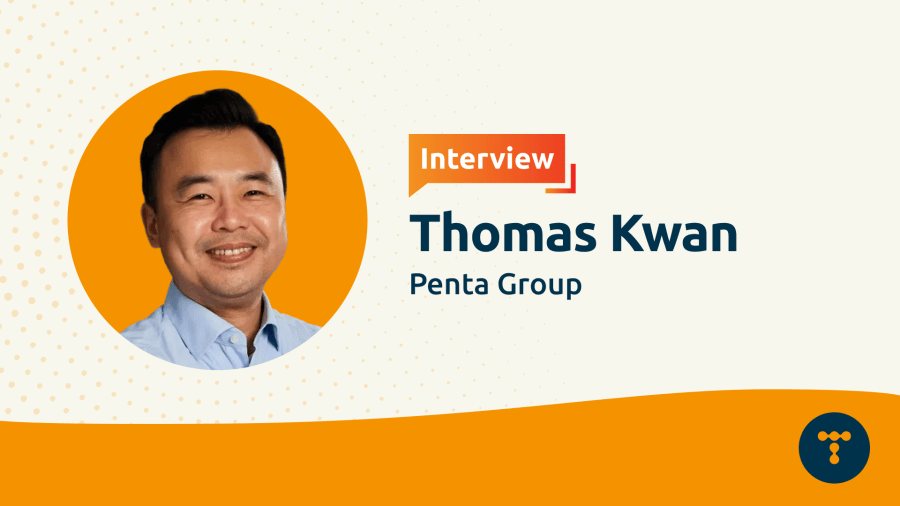
To explore what this looks like in practice, Telum Media spoke with Thomas Kwan, the Hong Kong-based Managing Director at Penta Group, as he shared insights into engaging the Chinese market with coherence, consistency, and foresight.
Is there such a thing as a friction-less, fail-proof entry into the Chinese market? What common missteps have you seen firms - from established multinationals to scaling SMEs - make in preparing for a market entry in this region?
In our experience, there is no such thing as a friction-less or fail-proof entry into the Chinese market. Friction is inherent to operating in an environment where policy direction, regulatory interpretation, media narratives, and stakeholder expectations are closely intertwined and can shift over time. Problems arise when organisations underestimate this reality and realise it too late.
A common misstep we see is approaching the Chinese market primarily as an execution challenge rather than a strategic one. Companies may focus on operational readiness or surface-level localisation without first aligning internally on what their presence in Mainland China represents - commercially, politically, and reputationally.
To quote a recent news article I’ve read about foreign retailers shrinking their presence in the Chinese market, some of them still have the mindset of “selling on the mainland” rather than “creating for the mainland,” which is a reason why they are losing out to domestic players.
Another recurring issue is treating policy considerations as something to manage reactively, rather than as a factor that shapes messaging, engagement, and risk appetite from the outset.
What tends to work better is accepting that entry into Mainland China is less about eliminating risk and more about managing complexity well. That means setting realistic expectations internally, investing in local insight early and using the right intelligence tools, and building the internal processes needed to navigate uncertainty.
How can comms leaders rethink message development that situates Mainland China as a priority market instead of a peripheral one? At what point should comms teams stop trying to "localise" a global narrative and build one that is "China-first"?
For many organisations, the challenge is recognising when localisation is no longer sufficient. Localising a global narrative assumes that the core story already works everywhere. In the Chinese context, that assumption often breaks down once the market becomes strategically significant or politically sensitive.
A China-first narrative does not mean discarding global positioning, but it does require starting from a different place. Instead of asking how a global message can be adapted, communications leaders should ask what relevance looks like in the Chinese context, and how the organisation’s presence aligns with local priorities and expectations.
The news story I mentioned went on to talk about the mismatches between some international brands’ business models and mainland consumers’ fast-evolving lifestyle and market dynamics. It attributes these businesses’ gradual retreat from this region to a lack of local market awareness.
In practice, we usually see the need for a China-first approach once exposure becomes meaningful - whether through regulatory scrutiny, public visibility, or reliance on the market for growth.
At that point, communications cannot simply follow global templates. It needs to be developed alongside policy engagement and stakeholder strategy, with local realities informing global messaging decisions.
What’s the most difficult thing for non-local clients to understand about the Chinese media landscape? How is the evolving state of the media industry changing media relations on the ground?
One of the most difficult things to grasp is that media engagement in this market is rarely just about storytelling or visibility. Editorial priorities are shaped by broader policy and social considerations, and corporate credibility is built over time rather than through one-off coverage.
Companies are often surprised by how much emphasis is placed on framing, tone, and context. A message that is acceptable - or even positive - in another market may require significant adjustments to be appropriate in the Chinese context.
There is also less room for speculative commentary, particularly in regulated sectors or around forward-looking claims. A good example is the Chinese government now requiring social media influencers to have the right credentials to speak on professional topics like medicine, finance, law, and education to manage misinformation and content quality.
As the media environment continues to evolve, with tighter oversight alongside a more fragmented digital ecosystem, our approach has become more deliberate. Media relations today is less broad outreach and more precision - choosing the right platforms, engaging at the right moment, and ensuring that coverage supports longer-term trust rather than short-term exposure.
How integrated should the PR and public affairs functions be? And how do you help comms leaders explain China-related policy risk to global HQs that may not be used to operating in this environment?
A high degree of integration between public relations and public affairs is usually essential in this market. Media narratives, policy signals, and regulatory developments often move in parallel, and treating them as separate workstreams can result in blind spots.
A more delicate aspect of this work is helping communications leaders explain China-related policy risk to global headquarters. Policy risk here does not always present itself through formal announcements or rule changes.
More often, it emerges through shifts in emphasis, enforcement, or narrative tone, which can be difficult for non-local teams to interpret.
We typically encourage comms leaders to frame policy risk in practical terms - how it might affect reputation, market access, or stakeholder relationships - rather than as an abstract political issue.
Clear, structured explanations supported by scenarios tend to resonate more with global decision-makers who are less familiar with the operating environment.
What does credible, non-performative policy alignment look like? How can communicators help organisations communicate commitment, so it resonates with regulators, media, and other Chinese stakeholders while maintaining global values and alignment?
Credible policy alignment is usually quiet and cumulative. It is demonstrated through consistency between what an organisation says and what it does, rather than through highly visible statements or symbolic gestures.
In our experience, performative alignment - where messaging runs ahead of substance - can be counterproductive. Chinese stakeholders, including media and regulators, tend to place greater weight on track record, contribution, and intent over time.
Communicators can support this by grounding messages in concrete actions and avoiding language that overstates alignment or intent. At the end of the day, it’s all about walking the talk.
Maintaining global values doesn’t require uniform expression across markets. It requires clarity about those values internally, and the judgment to refine and communicate them in locally intelligible and credible ways.
That balance is rarely achieved through formulaic messaging and often requires articulation and a degree of localisation.
Comms risk is increasingly cross-border and fast-moving. How can firms structure their corporate communications and issues management to respond credibly to China-related issues without triggering unintended political, regulatory, or reputational consequences elsewhere?
China-related communications risks rarely stay confined to one market. Messages can travel quickly across borders, often stripped of context - especially on social media - and impacted by AI-driven searches, which increases the likelihood of unintended consequences.
To manage this, organisations need structures that combine local insight with global coordination. That includes clear escalation protocols, early involvement of China specialists in global discussions, and regular narrative stress-testing across markets.
With AI now influencing people’s consumption of news and information, it is also important for companies to understand what is driving how generative engines talk about them - what are these new search tools saying, and how can we impact them? Employing solutions that can answer these questions can yield tangible, practical, and actionable insights.
We often advise a shift from thinking purely in terms of crisis response to thinking about narrative resilience. By anticipating where sensitivities may arise and building flexibility into communications strategies, firms are better placed to respond quickly and credibly when issues emerge.
Penta uses intelligence solutions that can inform companies of what’s next by analysing large datasets and highlight the fastest-growing narratives based on real content trends (and the context behind each of them), not just keyword volume.
In a cross-border environment, coherence, consistency, and foresight into future trends and issues matter as much as speed to market.
Previous story
Kirsty Clinton commences new chapter in aged care sector
Next story
Jollibee Philippines appoints PR leader
You might also enjoy


-Sep-23-2026-02-32-38-6871-AM.png)