PR News
<span id="hs_cos_wrapper_name" class="hs_cos_wrapper hs_cos_wrapper_meta_field hs_cos_wrapper_type_text" style="" data-hs-cos-general-type="meta_field" data-hs-cos-type="text" >Interview: Richard Brett on communications that build belief</span>

Interview: Richard Brett on communications that build belief

Trust has long been a cornerstone of brand communications. As organisations face growing pressure to demonstrate business impact, communicators must consider how to build brand belief in ways that align with operational reality and commercial outcomes.

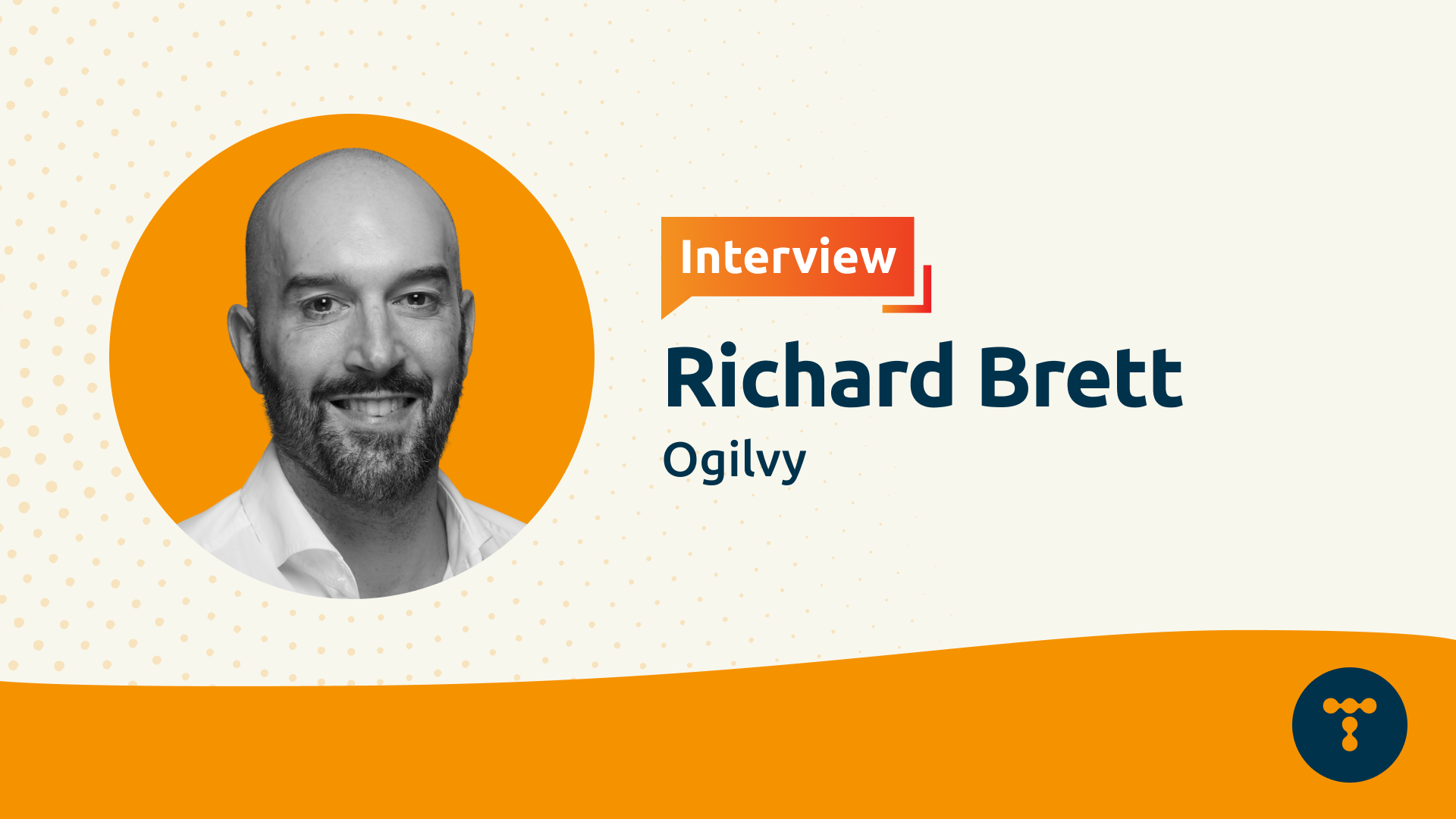
According to Ogilvy's latest Believability Index, earning belief requires a more nuanced approach across Asia Pacific. In this interview, Telum Media speaks with Richard Brett, President, Ogilvy PR & Influence, Asia Pacific and ANZ, and Chief Client Officer, Ogilvy Australia, about why credibility has become a commercial imperative, how brands can adapt their communications strategies to different markets, and why operational delivery matters just as much as the messages they communicate.

The recent report from Ogilvy suggests that trust is built differently across Asia Pacific, rather than through a one-size-fits-all communications approach. What do you think is the biggest misconception brands still have about building trust today?
Trust is just one metric for communications, and it is a long-term, abstract feeling. By contrast, believability is a hard, transactional reality that is made in the moment.

In a post-truth world flooded with misinformation, our research shows that consumers don’t have the bandwidth to ‘trust’ implicitly anymore. They run every brand claim through a believability filter. If you fail that filter, it directly drives customer churn and has a direct impact on revenue. Our work clearly shows that believability is a commercial metric that business leaders can no longer ignore in today’s social media age.

The second major misconception is relying on social listening dashboards alone to monitor consumer sentiment. By doing this, brands are only managing the vocal minority. The vocal complaint is just the exhaust fumes of a lost sale. By the time someone posts on social, the revenue is already gone. Brands need to be more proactive in measuring believability early and take the right action – not just monitor noise.

The study finds that consumers in institutional-trust markets such as Singapore, Hong Kong and Mainland China place greater weight on official and credentialed sources. When planning a campaign, how do you determine the right mix of media relations, creators, community voices and paid amplification to balance between credibility and business objectives?
The most important thing is to have a localised proof strategy. The core truth about a brand remains the same across markets, but the messenger and the channel ecosystem must adapt.

For instance, if you are launching a new healthcare initiative, the core message might be ‘better patient outcomes’. In an institutional-authority market like Singapore, you would lead that campaign with your Chief Medical Officer, government partnerships, using mainstream media relations and corporate channels best suited to that credentialed mix. In a relational-authority market like Australia, you lead the same campaign with the same message but with patient testimonials, community creators and frontline nurses, using peer-to-peer and organic delivery channels. Same truth, different proof – and a fit-for-purpose media mix.

It may also be useful to do what we call a ‘Believability Gap Audit’ before undertaking a major new campaign across markets, which can measure where your brand sits on the believability scale, and identifies how to bridge the gap between your communications and operations. It protects a brand’s bottom line by ensuring it never makes a public promise that its operations cannot deliver.

In markets where consumers place greater trust in lived experience and peer recommendations, how does the role of mainstream media change? What unique value can it still provide in building brand belief?
For proactive communications campaigns, the role of mainstream media doesn’t change as much as the use of spokespeople alters. For instance, Australia is the most evidence-demanding market in the region. Our research shows that 54 per cent of Australians demand ‘lived experience’ – they want unvarnished truth from a peer or customer. In a market like that, mainstream media is still crucial as a channel to deliver the message at scale, but the messenger or spokesperson needs to shift from a subject expert to a peer.

It also plays a crucial role in helping brands recover from a mistake and rebuild brand belief. Consumers wary of performative corporate empathy still demand a public apology for an organisational error (50 per cent in Australia), but also an active, operational correction (58 per cent). That gap is so narrow that it means consumers expect both simultaneously. On that basis, mainstream media can still play an important role in providing the channel for an apology – but organisations must recognise it must also be backed by corporate action.

The report suggests that social media sentiment can overlook "silent disengagement". How should communicators identify these hidden reputation risks, and what signals should they pay closer attention to?
Firstly, they need to stop relying on lagging indicators. Social sentiment merely tells you who is already angry. Most dashboards are only tracking the approximate 5.5 per cent of people already complaining, not the 92 per cent who are quietly taking their money to your competition.

To predict the silent exit, communicators need to instead start measuring their ‘Say-Do-Gap’. This is where Corporate Affairs data (what you are promising) is measured against your CX and operational data (churn rates, app uninstalls, cart abandonment, and frontline friction). When the two data streams are mapped together, the behavioural friction-building patterns can be identified before the customer leaves. Much like the Believability Diagnostic Tool we built here at Ogilvy, which helps C-suite leaders to predict and prevent silent customer churn through analysis of corporate messaging and verified customer and employee sentiment.

What should regional communications teams stop doing if they want to build genuine brand belief?
First, stop relying solely on traditional sentiment metrics. Social media listening tools only scrape the internet for keywords to tell you if people are happy or not. As a lagging indicator, this does not help build brand belief; it only tracks the vocal minority who might be voicing concerns.

Second, stop relying on communications measurements as the only way of testing whether consumers believe your brand. Operational efficiency must match a brand and its organisational promise. If delivery fails, so does believability, regardless of what is being said in a communications campaign. A more proactive, early intervention to ensure the ‘Say-Do-Gap’ is reduced is a better way of building long-term brand belief.

Third, communicators must also understand that while publicly communicated organisational purpose, such as environmental, social, and governance, is still important, it does not protect a brand during a crisis or product failure. Cognitive science shows us that consumers suffer from ‘Belief Bias’. If your core product fails, consumers instantly label the brand as incompetent. Once that happens, their ‘Belief Bias’ causes them to actively reject ESG or purpose claims as inauthentic.

Finally, it’s important to reject a one-size-fits-all approach to communications across multiple APAC markets. Segmenting communications architecture both across different markets and different generations needs to become the new norm. Credibility has become a premium currency across the region, with every brand communication a transaction. Both channel and messenger need to be adjusted to match the specific requirements of each market and each age group.

Previous story

MSL Group Middle East brings in new Senior Manager in Riyadh

You might also enjoy

Love
The Earned View

Love the one you're with

Growing revenue starts with keeping and super-pleasing existing clients

When I was a younger man, in my 20s, and indeed when I had hair, I used to love going to a certain hairdresser in North Sydney.

The hairdresser Michelle (not her real name, which was Ondine) would flirt with me outrageously. They knew my coffee order and had it ready. The music was super cool. I coveted the 45 minutes I spent there every two months, and for 10 years. Oh  - and the haircut? It was 'okay'.  

And that's the point. It was the service experience that kept me loyal, year after year. The 'product' was okay, but the overall experience was exceptional. I was completely loyal. I even kept going there when all I needed was an all-over electric razor trim! 

The message for agency leaders is this: delivering a solid 'product' is not enough. It needs to be wrapped in an outstanding, value-adding experience. One without the other will not do.

Growth starts with retaining existing clients

Remember this: you've got a one in two chance of selling something to an existing client; a one in four chance of selling to a former or dormant client, even if they fired you; and a one in 12 chance of selling something to a cold outreach prospect. 

But before we can work on growing revenues with existing clients, we need to make sure we retain these relationships. How many of you agency leaders moan about the 'leaky bucket', where growth is ambushed by a constant trickle of revenue leaving the agency? 

This is truer today than ever before, with clients increasingly going project based with agencies. And they have become promiscuous - often having several agencies on board at once.

Keeping existing clients, Pleasing, is the second of The Savage Company’s Seven (used to be five) Doors to Revenue Growth. I've added two new Doors since last month’s column: Planting (as in the act of sowing crops, ie. growing existing relationships. If only Farming started with a P).  I’ve also added Pricing to the original Five Doors - Positioning, Pleasing, Profile, Pipeline, Pitching (converting). 

My last column covered Positioning. Today, I'll cover Pleasing (a.k.a. keeping clients) in depth.

The magnificent seven actions to retaining existing clients

1. Remember the three critical 'Moments of Truth'

There are three moments in a client / agency relationship when the way we react to each is absolutely fundamental to how the client views us, and to the continuation of the relationship. Get our response wrong to any one of these moments, and the client rarely forgives us. It's usually terminal.  

That's why I have made it numero uno on the list (the rest of the order is not prioritised, but this one is). It's that important. All our great work can be blown up by getting this wrong. 

So, agency leaders, share these three moments with staff. Make a rule that if any of these happen, your team elevates the issue to you or a senior, immediately. We simply have to respond brilliantly whenever one of these three 'Moments of Truth' occur: 

  • We have made a mistake / stuff up

  • The client has made a mistake / stuff up

  • The client is unhappy, for whatever reason 

2. Bring hope and optimism

Okay - I kind of fibbed. Numero uno is 'Moments of Truth'. But numero due, in order of priority, is the imperative for us to bring positive energy to client interactions. 

For many of our clients, their relationship with the agency is one of the most exciting parts of their roles. Imagine spending your professional life obsessing about window sealants, nappy rash, or strata insurance underwriting? In that world, the agency is 'Hollywood'.  

Most importantly, we need to remember the words of Napoleon: "Leaders are dealers in hope." 

We need to bring the right 'can do' energy to our interactions with clients. When clients leave a phone call, virtual meeting, or - dare I say it - 'in real life' meeting with us, they need to have a spring in their step, a lightness in their hearts, and a deep sense that 'it is all going to be okay.'

3. Do great work

Dammit. You caught me out again! Yes numero tres is also in priority order. Maybe it should be first? Let’s say the first three are all equal. Deal? 

If you want a thriving relationship, do great work. Do work that works. Nothing you will do will have more positive impact with a client than doing work that moves the dial in their favour.

We don't do great work all the time. You know that. And so does the client. Agency life is frantic. Oftentimes we're just hanging in there managing to keep the work flowing to get the job done.

If you feel the relationship really needs an injection of positivity, put your very best resources and give it proper time to develop a really powerful, effective next piece of work. 

Make it a priority. Give that next piece of work the very, very best the agency can bring. Love will abound.


4. Know the client’s business

90 per cent of the reason why clients stop working with us is because we simply do not know their business well enough.

We used to - when we first won the account. Then we got busy. Senior people drifted away, the account team changed, and soon the client is being serviced by newbies who don't know their business. 

Every three months, do three things to keep current with the client and their market:

  • Have a team member research and present to all involved a summary of media coverage and of relevant stock market reports about the client, its market, and its competitors.

  • Ask the client for a 30-minute Q&A meeting for the team to ask questions about the head and tail winds the client is dealing with.

  • If relevant, visit their store, travel on that airline, or go through the call centre application process for that insurance policy. Use the product or service if you can. Get gritty. 

5. Stay one step ahead of the client

Clients want us to 'look around corners' for them. They want to feel we're thinking harder about their brand and success than their team is. How do we do that consistently over time? 

It starts with one word, but it’s not the magic. The one word is: Proactivity.

But only if you put another, more critical word in front of it. Drumroll... that word? Relevant. 

Read that again. Relevant proactivity. 

Nothing annoys clients more than us taking ideas to them that are simply not relevant to their most critical business issues. But take a proactive idea that helps solve something they're losing sleep about, and they'll dream positive dreams about you. 

Have a brainstorm once a month. What are their most urgent business issues? What can we do to help solve or add value to the solution to these? Then take ideas to them.  

They might not action those ideas. It does not matter. What they will do is talk loudly around their corridors about the ideas, and you'll be mentioned favourably in despatches.

6. Get feedback, often

Remember, feedback is the food of champions. It really is.

We need to get feedback from clients, often. Not emailed surveys. Rather, do the Savage Six Monthly Health Check.

That’s when someone not involved on the account goes to the key client executives and has a live conversation about 10 aspects of the relationship. Each is 'scored' by the client against a simple traffic light scoring system of Red, Amber, Green.

Here’s the 10 questions:

  • Do we provide good value?

  • Are we easy to work with?

  • Do we prove excellent client service?

  • Do we think beyond the brief/are we relevant proactive?

  • Are we delivering creativity/sharp thinking?

  • Do we do what we say we will do/are we reliable?

  • Do we treat your money lime it was out own?

  • Do we have the right team working with you?

  • Is the quality of our work consistently good?

  • Are you happy with us as your agency?

Then ask the Net Promoter Score question. How likely are you to proactively recommend us to colleagues and other marketers. A score here of 1-10. A score of 8+ is a positive result.

You get authentic feedback on what's what. You can then move with pace. Meet with the team, and get very clear plans in place to quickly move Ambers to Greens, and Reds at least to Ambers. You can follow up with the client and outline those actions, and agree a check in six weeks later to ensure progress is being made.

These health check audits have done more to build momentum and strength in client relationships than most things. Clients love them. It helps ensure they don't drift to a competitor winking at them, and avoids the temptation to do a pitch on that next project. Get feedback, often!

7. Become a trusted advisor

I’m running out of words on the wordcount score and the Telum editors are frowning at me. I'll be concise.

Agencies talk about having 'partnerships' with clients. What rubbish. I have never in 40 years had a client who saw me as a partner. They only ever saw me as a supplier.

How do I know that? Because I always knew that if I stuffed up two times in a row, maybe three times max, I'll be fired. Kaboom! Now, at home, apparently, I stuff up at least five times every morning before I leave for work. And I haven't been fired yet. Because that's a partnership - with bigger things at stake.

For clients, we need to become their most valuable, most indispensable supplier. And the way you do that is by becoming a trusted advisor. 

Here's the Trusted Advisor model that David Maister developed. The acronym: CRIS. I adore it, and use it every day with clients. I'll also then suggest what you can do next to bring it to life in your agency.

To become a trusted advisor, we need to build perceptions with clients around three characteristics, and squash and minimise perceptions around a fourth.

So, build positive client perceptions around these three characteristics:

  • Credibility: Clients need to perceive us as being credible about what we say we are experts in. They must be able to believe and trust our counsel and approach because they know we are seriously qualified in what we're talking about.

  • Reliability: That we are perceived as reliable to deal with. They don't need to worry whether we'll deliver on what we say we will do.

  • Intimacy: That we are not simply order takers. We have developed a deeper connection with the client executives we deal with. 

And we have to minimise any perception that we are self-oriented. It is never about us or our success. It is always about them and their triumphing. The reason we hop out of bed in the morning with energy in our blood is all about their success.

So be cautious about beating our chests and showing off our success. Leave the Rolex at home. Drive the company Hyundai rather than that vintage Merc. Clients want is us to do okay, but not too okay. 

Next step: have a series of lunch time fun and highly interactive sessions with staff. Break them into teams. Each team comes up with 20 ideas on how we build credibility with clients. Share and discuss. The next session, do reliability. Then intimacy. Then self-orientation (and how to avoid it). 

On key clients, do a Trusted Advisor assessment every three months, through the lens of each key executive you're dealing with. How does each exec perceive us on the CRIS scale? Develop plans against each, on how to strengthen wherever you're weak on the CRIS scale. 

Oh, and because I am so self-obsessed, I changed Maister’s CRIS model to the CHRIS model. The 'H'?  Heart. Be absolutely passionate about your clients. Never tell a client you're passionate. Just show them!

There you have it. The Magnificent Seven strategies and actions to client service excellence.

To grow revenues, we have to first plug that leaky bucket. Retaining existing clients is vital to revenue growth. Surround them with outstanding client service, and we can then move on to our next of the Seven Doors to Revenue Growth. That’s covered in my next Telum column: all about Planting (as in sowing seeds to grow, as in growing client revenues and as I said, I wish Farming started with a P).

Chris Savage is one of Asia Pacific’s pre-eminent creative communications industry leaders. Following a highly successful 25-year career in public relations, Chris launched The Savage Company in 2015, focused on helping business leaders energise growth. He has built and led some of the region’s biggest PR companies and groups, including as Australia CEO and Vice Chairman Asia Pacific of Burson-Marsteller, CEO of Ogilvy PR Australia, and COO of marketing content and communications group, STW Group (now WPP ANZ). Chris is also a shareholder and chairman of eight communications agencies.

Read more from our columnists in The Earned View
 

Adhesive
Industry update

Adhesive adds UNSW College to client roster

Independent communications agency, Adhesive, has been appointed by UNSW College to support the launch of its new Applied Degrees offering.

The agency’s remit spans media relations, corporate profiling, event management, and influencer engagement and AI optimisation.

Adhesive MD and Founder, Mike Maurice, said: "Adhesive has spent years crafting and sharing stories about skills, employability and the changing world of work, making this partnership with UNSW College a natural fit. It’s an incredible opportunity to help this education-leader launch Applied Degrees, a category disrupting offering that is creating new pathways to meaningful careers at a time of enormous change.”

Adhesive’s work with UNSW College will also engage their GEO product offering, which integrates AI intelligence with strategy and storytelling.

Mike added: “We are passionate about the importance of continuously learning, always being curious and prepared for what’s next, something shared by UNSW College. In this complex and critical conversation, taking a full-channel and AI-informed communications approach has never been more important. We’re looking forward to working together to raise the profile of this unique offering for Australia’s upskillers, career changers and school leavers.” 

Camp
Industry update

Camp COMCO Mentorship Program Cycle 24 welcomes applicants

In celebration of COMCO Mundo's year-long 10th anniversary celebration - Decada de COMCO - COMCO School of Communications, the communication training and education arm of integrated communications group COMCO Mundo League of Enterprises, opens its doors to applicants across the Philippines for Cycle 24 of the Camp COMCO Mentorship Program.

Camp COMCO is currently seeking the next generation of storytellers, creative individuals, and future leaders to join COMCO Mundo's agencies and program as apprentices. Selected applicants will have the opportunity to work across COMCO Mundo League of Enterprises, COMCO Southeast Asia - Pilipinas, TARO AOX Inc., COMCO Middle East & Africa, COMCO Southeast Asia - Singapore, SEA Wave & Spice with Purple Alab, COMCO School of Communications, Citizen COMCO, SEA CAN Alliance by COMCO Mundo, and Sundaica Shared Services & Enterprise Community.

Students and fresh graduates of communications, journalism, marketing, multimedia arts, or related disciplines will gain real-world experience, sharpen their skills, and learn directly from COMCO Mundo's pool of industry experts through Camp COMCO. As a talent incubation initiative, industry linkage course, and apprenticeship program, Camp COMCO equips participants with the knowledge, experience, and character-building program, with the aim of participants mastering the best practices in brand storytelling and thriving in the communications industry.

The deadline for the Camp COMCO Mentorship Program Cycle 24 is 15th August 2026.