Why 'great chat' is critical to revenue growth (but only sometimes)
Okay, you have to use your imagination. It's 40 years ago. I'm 6 foot 6, a Hugo Boss model, ponytail down to the bum crack. I walk up to the girl standing next to the bar and start engaging with her. What do I want to get her to start doing, immediately?
Get her talking. An absolutely key to selling is this: when you are talking, your prospect is critiquing you. When they're talking, you're selling!
So, I hope you never have to give your elevator pitch for your business. Rather, ask questions, listen like a thief (listen to what is being meant, not just what is being said), probe the issues most on their minds, and propose solutions.
Occasionally, though, there is no escape. The prospect asks you directly: "So, tell me, in no more than two minutes: who are you, what do you do, how are you different, why should I hire you, and what will I get if I do? Give me your elevator pitch."
In my last column, I outlined how Profile is critical to building new business pipeline.
Done well, it can differentiate your business, keep it front and centre on the 'top-of-mind' radar, and lead to powerful incoming new business phone calls. Done averagely, and - like my Grandma's chicken soup - 'it might not do you any good, but it won't do you any harm.'
Now, today, I am going to cover Patter - our own Narrative (as in sharp, compelling narrative about who we are and how we are different, special, and a genuine value-adder).
This is the new second in the order of the The Savage Company's now 10 (used to be five, then seven, then eight, wait for it, yes! Then nine) Doors to Revenue Growth .
I've added another door since last month’s column, Pilot (as in Ph-earless leadership. If only Fearless started with a P) to the other nine doors - (Positioning, Patter, Pleasing, Ph-arming, Profile, Pipeline / Prospecting , Pitching / converting, Push-Back, and Pricing.)
But today, it's all about brilliant Patter.
How to nail a powerful elevator pitch
Here's the magic. It's simple. It works. But you have to follow my flow:
1. Nail the client's biggest issue they want solved
Start by nailing the client's biggest issue or problem, showing you are crystal clear as to what's at stake and the challenge they have. Then give one powerful statement on how your agency is ideally (uniquely?) positioned to solve it.
"The biggest issue facing your growth in Australia is ensuring your brands are top of mind with consumers when they're at supermarket shelves. Our track record of driving sales success at point-of-sale is unrivalled in the Australian market - we're acknowledged as setting a new standard on conversion success."
2. Core message pillars (four to five of them)
Now, you start by planting a flag. Flagging is critical for your audience to follow your story flow, and to remember your messaging.
"There are five key differentiating points about us that I want to emphasise. First...Second...etc."
So, flag the four to five key differentiators "There are fine key differentiators...". Then, with each differentiator, break it into three parts.
-
The Sparkler: Imagine a darkened room and you light a fireworks sparkler. The light buzzes and stands out massively. That's the 'sexy' headline you give the differentiator. "We have an unrivalled track record of success." "Our people are the Super A league of talent in the industry."
-
Supporting points: Now add, say, two supporting points that reinforce the Sparkler claim.
-
Example: And now give an example of how this differentiator helped another client with a similar problem kick their desired goals
That's it. For each differentiator or key theme, start with a flag, for example frist, second, third, then The Sparkler, supporting points, and an example.
3. Powerful summary
"So, in summary. The biggest issue facing your growth in Australia is ensuring your brands are top of mind with consumers when they're at supermarket shelves. Our track record of driving sales success at point-of-sale is unrivalled in the Australian market- we're acknowledged as setting a new standard on conversion success.
"The five key differentiators to remember about us are Sparkler one, followed by Sparkler two, three, four, five..."
4. Don't forget the acronym
It's vital your entire leadership team - indeed entire team - is all aligned on our elevator pitch, and can rattle it off clearly, on message, powerfully, persuasively, and consistently.
And it helps if you have an acronym that makes it super easy for everyone to remember it.
When I was CEO of Ogilvy PR in Australia 25 years ago, we developed a strong elevator pitch. But how were we going to help our 175 staff remember it? Aha! Via the acronym 'I BIS PR'.
I'll tell you what it stands for. The magic is I remember it 25 years later.
Point is, every time a staff member was asked to "tell me about Ogilvy PR", they could think 'I BIS PR' and dive into our elevator pitch around six themes: Influence, Best Brands (we work with them!), Ideas, Specialised, People, and Results.
5. Make it real within the team
Once you've nailed your elevator pitch, bring it to life within your team. Make it real. Make it a 'thing'.
Start every internal meeting or virtual call with someone giving the pitch. Do that for three months. Start staff meetings by getting three people to pitch it. Give feedback. Make the acronym part of your language.
Oh, and don't forget Prince Harry
When Prince Harry secured his blind date with Meghan Markle, he showed a photo of her to his brother. "Crikey," said Prince William. "You'd better have some good chat ready."
Today's column has been all about how to structure your 'good chat' in a way that cuts through, resonates, differentiates, and is memorable. I've kept this month's column deliberately short, because we hate talking about ourselves. Right?
The real key to 'Patter' is to get them talking about the stuff they are losing sleep over: the big burning issues in their business.
The more they are talking, the more you are opening new doors to revenue for your business.
Buckle up for next month's column
I am super excited about next month's column.
It will be the first of several, around my favourite two doors to revenue growth: Pipeline and Pitching.
Get excited. Make sure you're well rested. This is going to be a roller coaster ride. Promise! (AHA - another word starting with P. A new door to revenue growth? Let's see...)
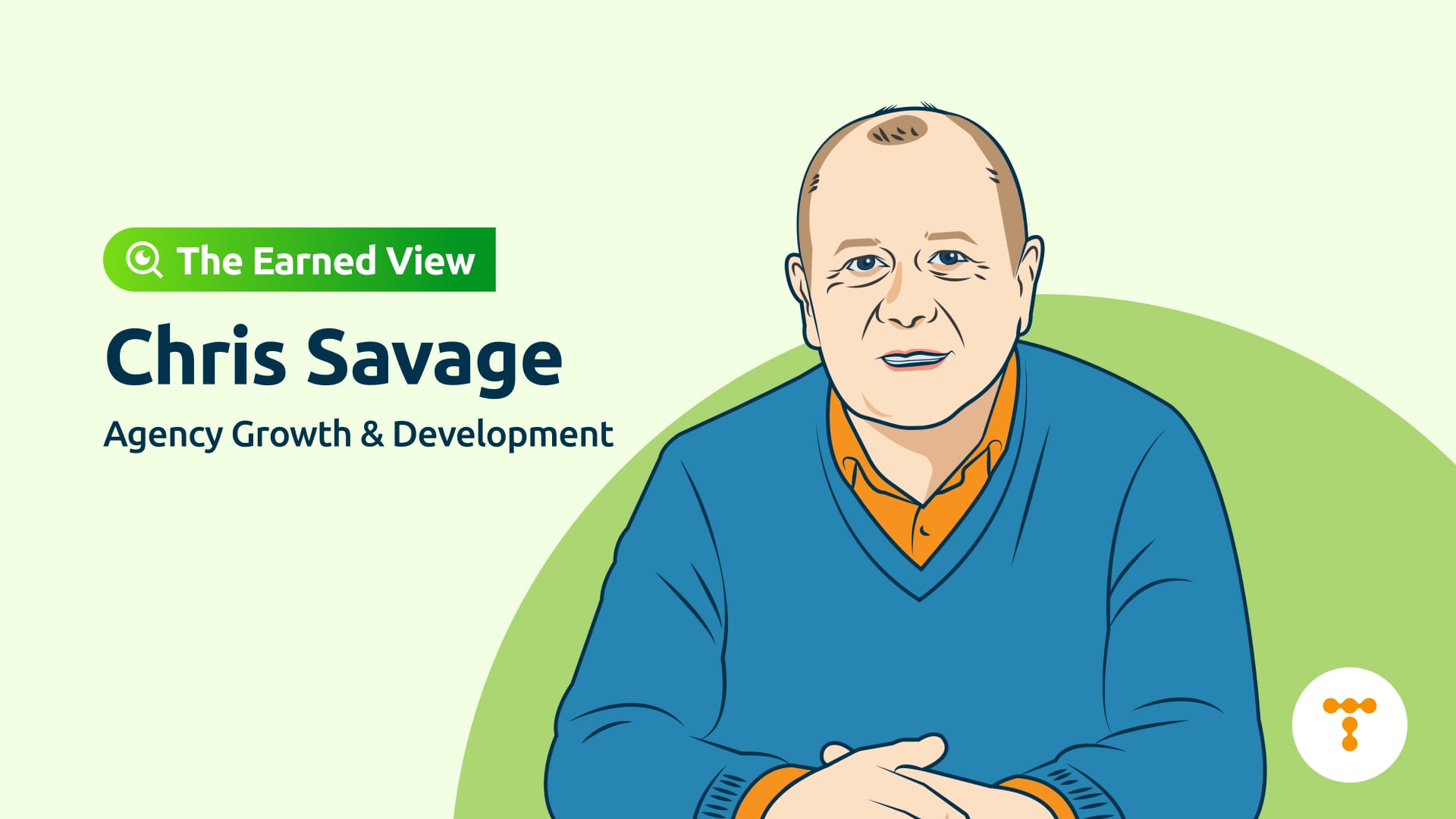
Chris Savage is one of Asia Pacific’s pre-eminent creative communications industry leaders. Following a highly successful 25-year career in public relations, Chris launched The Savage Company in 2015, focused on helping business leaders energise growth. He has built and led some of the region’s biggest PR companies and groups, including as Australia CEO and Vice Chairman Asia Pacific of Burson-Marsteller, CEO of Ogilvy PR Australia, and COO of marketing content and communications group, STW Group (now WPP ANZ). Chris is also a shareholder and chairman of eight communications agencies.
Read more from our columnists in The Earned View