PR News
As halal tourism gains momentum across Asia and beyond, the way destinations communicate Muslim-friendly offerings is undergoing a quiet but significant transformation. Once centred on certifications and labels, halal tourism communications today has moved beyond surface-level claims to speak to travellers’ faith while remaining relevant to wider audiences.   Telum spoke with Chatrine, Senior Advisor at Vero, and Joanne Yue, Director of Communications at The Mira Hong Kong, to explore what is changing in halal tourism communications and how earned media is shaping credibility in this space.    From niche to norm: faith as a design principle in travel  Insights from Vero’s Halal Tourism study conducted in 2025 offer a glimpse into this shift. Indonesian Muslims, who make up 12.7 per cent of the global Muslim population, are increasingly redefining halal tourism as a lifestyle movement rather than a standalone travel segment.   Reflecting on the findings, Chatrine observed: “Faith is no longer a niche filter - it has become a design principle shaping how modern travellers engage with the world.”  Rather than foregrounding religious markers, she explained that effective communications integrate faith-informed values into experience design, using broadly resonant themes such as empathy and connection. This reframing positions halal tourism as an organising principle for experience design, not a specialised product.  Chatrine also highlighted the rise of “soft-faith signalling”, particularly among Indonesian travellers. Subtle cues such as inclusive imagery or culturally familiar dining rituals signal welcome without overt religious labelling, enabling destinations to communicate inclusion without narrowing their audience.   Turning values into experiences  At the execution level, hotels are beginning to translate these principles into visual storytelling and immersive experiences.   Joanne shared that communications efforts at The Mira are guided by openness, inclusivity, and diversity. Promotional content mirrors authentic, on-the-ground experiences, guided by an Arabic-speaking guest ambassador, while also highlighting nearby halal dining options that are relevant to all travellers.  Offline moments have also become an extension of this strategy. The hotel’s first Ramadan Iftar Dinner, co-organised with Miramar Travel and the Consulate General of Türkiye in Hong Kong, brought together consuls general from Middle Eastern and Asian countries, Muslim community leaders, and tourism officials. Coverage extended beyond the event through social media, allowing the experience to travel across markets.  The hotel’s initiatives, she explained, balance faith awareness with broad appeal. “By showcasing authentic flavours and cultural exchange through contemporary formats, content can feel aspirational yet relatable - resonating with Muslim travellers while remaining accessible to global audiences.”   Why earned media matters more than ever  Alongside storytelling, earned media has emerged as a cornerstone of credibility-building in halal tourism.    “For emerging Muslim-friendly destinations, third-party validation from journalists, cultural commentators, or trusted digital creators - is what transforms perception into belief,

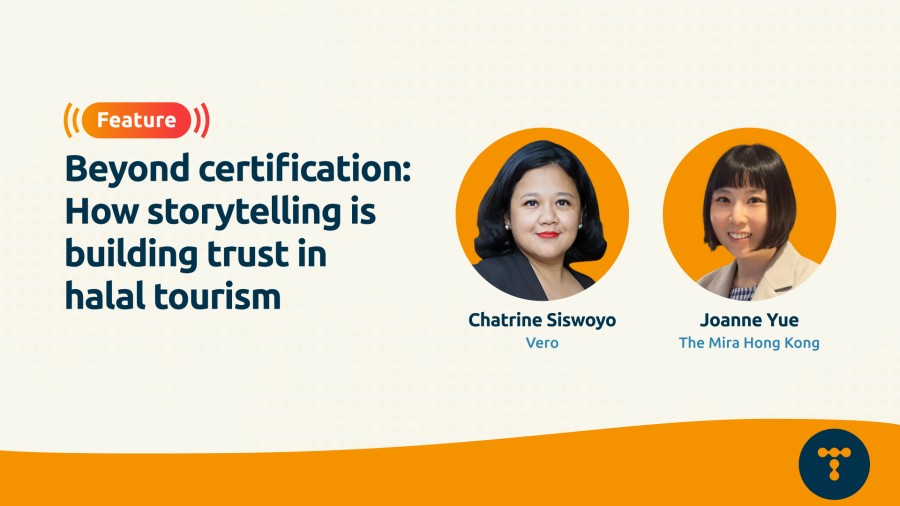
Beyond certification: How storytelling is building trust in halal tourism

As halal tourism gains momentum across Asia and beyond, the way destinations communicate Muslim-friendly offerings is undergoing a quiet but significant transformation. Once centred on certifications and labels, halal tourism communications today has moved beyond surface-level claims to speak to travellers’ faith while remaining relevant to wider audiences. 

Telum spoke with Chatrine, Senior Advisor at Vero, and Joanne Yue, Director of Communications at The Mira Hong Kong, to explore what is changing in halal tourism communications and how earned media is shaping credibility in this space.
 
From niche to norm: faith as a design principle in travel 
Insights from Vero’s Halal Tourism study conducted in 2025 offer a glimpse into this shift. Indonesian Muslims, who make up 12.7 per cent of the global Muslim population, are increasingly redefining halal tourism as a lifestyle movement rather than a standalone travel segment. 

Reflecting on the findings, Chatrine observed: “Faith is no longer a niche filter - it has become a design principle shaping how modern travellers engage with the world.”

Rather than foregrounding religious markers, she explained that effective communications integrate faith-informed values into experience design, using broadly resonant themes such as empathy and connection. This reframing positions halal tourism as an organising principle for experience design, not a specialised product.

Chatrine also highlighted the rise of “soft-faith signalling”, particularly among Indonesian travellers. Subtle cues such as inclusive imagery or culturally familiar dining rituals signal welcome without overt religious labelling, enabling destinations to communicate inclusion without narrowing their audience.
 
Turning values into experiences 
At the execution level, hotels are beginning to translate these principles into visual storytelling and immersive experiences. 

Joanne shared that communications efforts at The Mira are guided by openness, inclusivity, and diversity. Promotional content mirrors authentic, on-the-ground experiences, guided by an Arabic-speaking guest ambassador, while also highlighting nearby halal dining options that are relevant to all travellers.

Offline moments have also become an extension of this strategy. The hotel’s first Ramadan Iftar Dinner, co-organised with Miramar Travel and the Consulate General of Türkiye in Hong Kong, brought together consuls general from Middle Eastern and Asian countries, Muslim community leaders, and tourism officials. Coverage extended beyond the event through social media, allowing the experience to travel across markets.

The hotel’s initiatives, she explained, balance faith awareness with broad appeal. “By showcasing authentic flavours and cultural exchange through contemporary formats, content can feel aspirational yet relatable - resonating with Muslim travellers while remaining accessible to global audiences.”
 
Why earned media matters more than ever 
Alongside storytelling, earned media has emerged as a cornerstone of credibility-building in halal tourism.  

“For emerging Muslim-friendly destinations, third-party validation from journalists, cultural commentators, or trusted digital creators - is what transforms perception into belief," Chatrine remarked. 

In fact, Vero’s study revealed that only 11 per cent of surveyed Indonesian Muslim travellers consider formal halal certification essential when booking travel, suggesting that lived experiences and trusted narratives hold greater influence than official labels.

Chatrine explained that as a result, earned media strategies are increasingly designed around building “trust equity” over sheer coverage volume - prioritising narratives that humanise destinations and show, rather than tell, how Muslim travellers are welcomed. 

At The Mira, earned media exposure across local and international outlets has helped place the hotel on the regional radar, including recognition in TimeOut Hong Kong’s Halal Guide, co-curated with the Hong Kong Tourism Board.

However, Joanne emphasised that impact comes less from visibility alone and more from context. Coverage on Muslim-friendly efforts, she noted, should articulate broader purpose and intent, which could be achieved by inviting journalists to experience offerings first-hand, through behind-the-scenes access to halal kitchens and interviews with senior leadership. 

At the same time, Chatrine highlighted the rise of values-driven journalism, which has created new opportunities to position Muslim-friendly destinations within broader conversations around inclusivity, sustainability, and cultural understanding. This re-framing helps halal tourism communications move beyond a “special interest” lens and into the mainstream travel narrative. 
 
Signalling belonging, not just compliance 
As halal tourism communications continue to evolve, Chatrine offered a clear direction: “Faith-based storytelling today isn’t about religion alone. It’s about reassurance, making travellers feel that their beliefs and identities can travel with them freely, seamlessly, and joyfully.” 

Built on a foundation of compliance, communications in this space are most effective when they articulate a sense of belonging for Muslim travellers while tapping into universal values that resonate across cultures and faiths - with earned media acting as the catalyst that moves perception into trust. 

Previous story

Adora Sarah Chou steps up to CMO at F&B brand

Next story

Eman Marhoon takes on new role at airport company

You might also enjoy

Navender
Moves

Navender Kaur picks up new senior comms role

Hilton has appointed Navender Kaur as Director of Public Relations and Communications (National Marketing Office). Based in Malaysia, she leads integrated PR and communications across Hilton’s portfolio, driving brand visibility, media engagement, and storytelling.

Navender brings industry experience from her previous roles at A Famosa Resort Melaka, Swiss Garden Hotel & Residences Melaka, Swiss-Garden International and Big Bad Wolf Books.

She transitioned from a legal background into public relations more than a decade ago, and has since built a track record in strengthening brand presence and ensuring Hilton’s communications remain confident, consistent and aligned with its brand identity.

CTF
Moves

CTF Services promotes Senior Manager, Group Corp Comms

Investment holding conglomerate, CTF Services, has promoted Gladys Lam to Senior Manager, Group Corporate Communications. In her new role, she serves as a key partner to the Group’s executive leadership on strategic communications and oversees corporate affairs spanning corporate narrative development, issues and crisis management, media relations, event management, and stakeholder engagement.

Gladys brings two decades of communications experience. Based in Hong Kong, her career spans roles at Hang Lung Properties, Link REIT, and non-profit organisations in the city.

Raffles
Industry update

Raffles Hotels & Resorts appoints regional PR agency for Asia

COMPANION COMMUNICATIONS has been appointed as the regional agency for Raffles Hotels & Resorts. The mandate encompasses public relations, marketing communications, strategic advisory, storytelling, partnerships, content creation, and crisis support for Raffles Hotels & Resorts in the Asian region.

This announcement comes after key hospitality wins at COMPANION in recent months, including the launch of Capella at Galaxy Macau in Macau, the launch of Andaz One Bangkok in Thailand, and the global retainer for Island Shangri-La in Hong Kong. In addition, the agency has held the regional PR retainer account for Fairmont Hotels & Resorts for the past two years. 

Commenting on the news, Dominique Backhouse, Managing Director of COMPANION, remarked, "COMPANION leverages local knowledge and deep industry insights to give clients a competitive edge. We are thrilled to be appointed by Raffles Hotels & Resorts, a leader of hospitality globally, as we continue to work with some of the best brands within the sector."