
PR News
<span id="hs_cos_wrapper_name" class="hs_cos_wrapper hs_cos_wrapper_meta_field hs_cos_wrapper_type_text" style="" data-hs-cos-general-type="meta_field" data-hs-cos-type="text" >2025 MEPRA Awards winners revealed</span>

2025 MEPRA Awards winners revealed

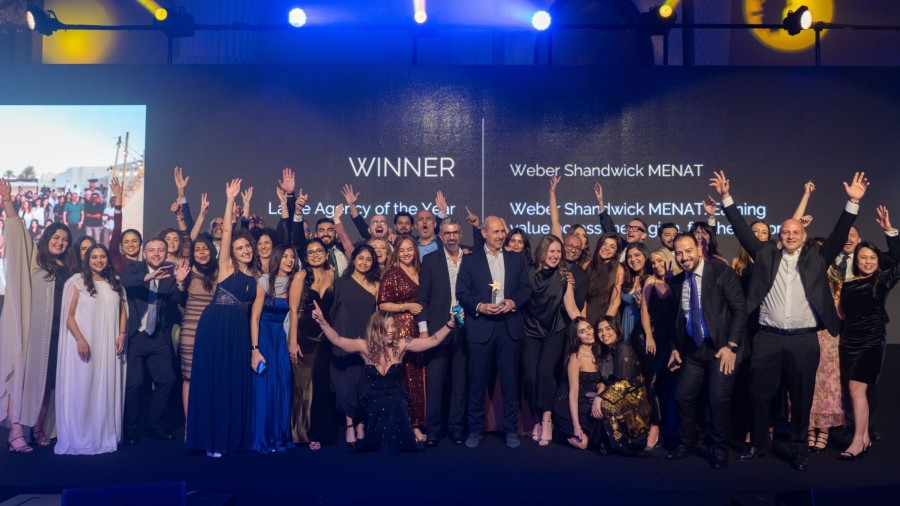
The 17th edition of the MEPRA Awards announced its 2025 winners on 27 November, recognising work demonstrating strategic thinking, creativity, effective storytelling and measurable impact. The awards highlighted achievements in brand reputation, integrated communications and strategic narrative development, reflecting how agencies are adapting to a rapidly changing communications landscape.

Agency winners
Weber Shandwick MENAT dominated the evening with 26 wins, followed by Gambit Communications with 18 awards, securing their positions as leaders across popular categories. Weber Shandwick MENAT also claimed Large Agency of the Year, while Current Global MENAT was named Medium Agency of the Year, and The Romans took home Small Agency of the Year.

Individual honours
The Chairperson’s award was conferred upon Scott Armstrong (founder, Mentl) for accelerating mental health advocacy, whereas Brian Lott of Mubadala Investment Company won the Best Communicator of the Year. Tala Majzoub of HAVAS Red ME won the ‘Dave Robinson’ award for Outstanding Young Communicator of the Year, and Fathimath Nooha of Murdoch University won the Outstanding Student Campaign.

Kate Midttun, MEPRA Chairperson, commented, “MEPRA Awards has become a vital benchmark for recognising PR brilliance and exceptional talent in the Middle East’s PR and communications sector.  This has been a standout year for creative resilience, and work across the communications spectrum has been truly astounding. The honorees have showcased the power of PR to inform and engage, elevating the art of an insightful communications approach. Congratulations to all the winners tonight, and we would like to thank them for redefining excellence benchmarks, motivating the entire fraternity to gear up for the upcoming year.”

The 2025 awards were supported by Gambit Communications (Diamond Partner), TAQA (Platinum Partner), Weber Shandwick MENAT and CARMA (Gold Partners), along with Mubadala, Kibsons, SEC Newgate Middle East, Telum Media, Burson, Place Communications, First and Ten Productions, Current Global MENAT, Matrix Public Relations and AMEC.

View the full list of  2025 MEPRA winners here.

Previous story

ACID brings in new Associate Partner

Next story

Year in Review: How market shifts redefined PR landscape in 2025

You might also enjoy

Francesca
Moves

Francesca Talevski moves into education sector with senior comms role

Francesca Talevski has been welcomed at Keypath Education as Senior Manager, Communications & Brand. She has wrapped up close to a decade at Vanguard Australia, most recently as Senior Public Relations Specialist.  

Rethinking
Feature

Rethinking healthcare comms around trust, information, and the public good

Health information has long moved beyond medical journals or the doctor’s office. Today, patients can access medical and healthcare advice via social media feeds, online communities and increasingly, AI-powered search tools - even if the credibility of such information is not always clear.

For healthcare communicators, this shift has expanded the role of communications beyond brand visibility. Increasingly, it involves helping audiences navigate complex health decisions while continuing to foster trust through credible information.

Telum Media spoke with Aaron Dowling, Director of Global Corporate Communications at Cochlear, and Gareth Trickey, Director of Communications, Asia Pacific at Vantive, about how healthcare communicators can establish credibility in the digital age, balance stakeholder expectations, and keep communications work close to the heart of the practice.  


Communications that drive impact
Healthcare communications does more than generate visibility - it helps people make better-informed decisions about their health.

“It starts with the principle that you earn trust through clarity, not necessarily volume,” said Aaron.

One way to do so, he shared, is to approach campaigns with a more analytical mindset: define the problem, identify behavioural goals, and measure whether communications can bring about meaningful change.

Gareth also sees the need for communications to go beyond visibility and align with broader organisational and societal objectives.

“You don’t want to confuse movement with momentum,” he said. “Movement is running up and down on the spot, but momentum means you’re actually moving forward - and that’s what you want communications to achieve.”

In contributing to conversations around patient support, healthcare policy, and innovation, communicators can ensure their work benefits stakeholders across the ecosystem.

Safeguarding credibility in the digital age
The digital information landscape has led to more complex healthcare communications, with misinformation and AI-driven platforms increasingly shaping how people search for and interpret health advice.

This has also resulted in significant changes to the relationship between patients and healthcare professionals. Aaron noted that what was once a largely one-way flow of information has become a more collaborative process, with patients increasingly seeking information and participating in decisions about their care.

“You have to lead with accuracy first, speed second, but always be transparent,” he said.

Credibility, he added, comes from clearly explaining the evidence behind health information, including expert input, the limitations of research, and the reasoning behind medical guidance.

Gareth echoed the importance of evidence-based messaging. Today, communications teams often work closely with medical affairs specialists and clinicians to ensure messages are grounded in robust research.

Despite the shifts and innovations, he highlighted the continued importance of earned media.

“If you land a successful story in a tier-one newspaper, it’s more likely to be referenced by AI platforms than content published on a company website or through paid channels.”

Balancing multi-stakeholders and uncertainties
In an increasingly volatile digital and information landscape, healthcare communicators must also navigate a complex web of internal and external expectations, balancing the need to project brand confidence while communicating responsibly about uncertainty.

To that, Gareth’s approach is to have a balanced story championing both the voices of the clinicians and patients, not of the companies.

Meanwhile, Aaron brought up the importance of tone and values in external communications. “Healthcare is a very personal thing, hence it's impossible to take the emotion out of healthcare.” When relaying uncertainties, communicators should fall back on values, showing empathy and respect while staying proactive to engage.

As for internal communications, both leaders emphasised the importance of alignment, particularly early, frequent, and collaborative alignment.

Every campaign should begin with a kick-off meeting that involves cross-functional teams from communications to legal, medical affairs as well as the senior management team. Aaron believes communicators play a unique role in acting as the glue between internal departments, aligning teams around a common purpose while drawing on each function’s expertise.

He also pointed out the increasing need for communicators to understand the bigger picture and how to fit within it.

“If you understand the business, its purpose, and the strategy, you're much better off having a more effective campaign because you know what you're trying to achieve.”

The role of communicators beyond brand
Reflecting on the evolving role of healthcare communicators, both Aaron and Gareth concluded that their work, at the centre of it all, involves much more than brand reputation.

“Overall, you're working towards better public health outcomes, whether that's improving health literacy, reducing stigma, or encouraging innovation,” said Aaron. “That impact goes beyond commercial outcomes.”

For Gareth, the focus is on the people of the industry, and communicators should work towards championing the voice of the hidden heroes.

“The voice of the patient and the voice of the clinician are the most powerful voices in healthcare communications,” he said. “They're more powerful than a global CEO's voice in the media.”

Whether it’s channelling the focus towards the bigger picture or the people who are at the heart of it all, both believe the core mission of healthcare communications remains unchanged.

As the healthcare landscape continues to evolve alongside shifting technology and expectations, the communications function is here to continue building towards long-term trust and helping people make better-informed decisions about their health.  

Deandra
Moves

Deandra Shivana steps up into new role

Kempinski Hotel Muscat has promoted Deandra Shivana to Assistant Director of Marketing Communications. In this role, she continues to lead the hotel's marketing and communications efforts, overseeing brand positioning, digital performance, PR, and revenue-driving campaigns across rooms, F&B, spa, and events. 

Deandra joined the hotel chain in 2024, moving from Anantara Hotels, Resorts and Spas, where she spent close to four years based in Abu Dhabi and Bali. She also brings experience from Jumeirah Bali.

Deandra reports directly to Karim ElBerkchi, Hotel Manager. On the promotion, he said, "What sets Deandra apart is her ability to find the magic in every project she touches. It is one thing to manage a brand, but quite another to make people feel something through a campaign. As she steps into the role of Assistant Director, I am excited to see her bring that same creative wonder to our wider strategic vision."

Deandra said, "I’m thrilled to take on this new challenge. My time in the marketing department has always been driven by a simple goal. One of them is to match our creative storytelling with the world-class experience our guests deserve. As Assistant Director, I’m ready to push those boundaries further, ensuring our voice is as sophisticated and authentic as the stay itself."