PR News
The Qode makes strategic partnerships, enters Egypt

The Qode makes strategic partnerships, enters Egypt

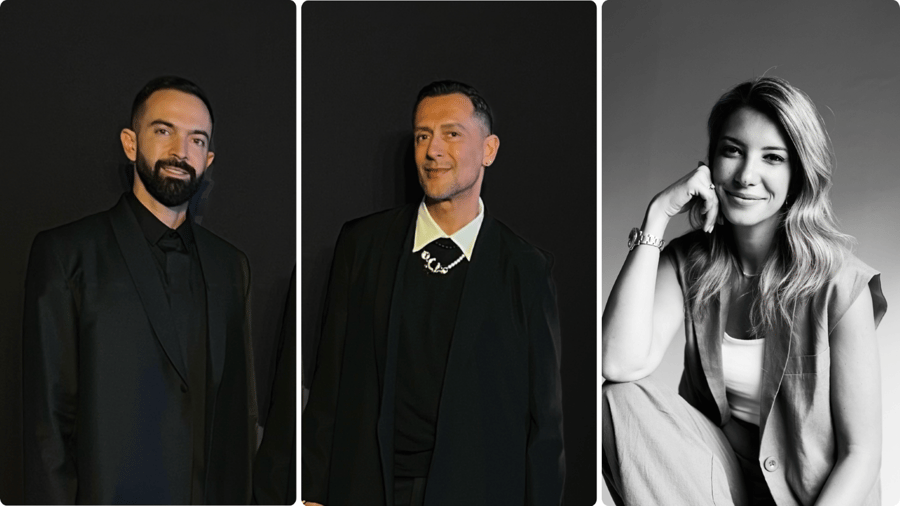
The Qode, the Dubai-headquartered communications agency specialising in luxury fashion, watches & jewellery, beauty, hospitality, automotive, and lifestyle, has announced a strategic partnership with Egypt-based agency Flare PR, founded by Ingy Yousri Ismail. 

The partnership with Flare PR is primarily driven by growing demand from The Qode’s existing portfolio of regional and global clients, many of whom are increasingly looking to activate within Egypt as part of their broader Middle East strategies. With this collaboration, The Qode will extend its services into Egypt seamlessly, delivering on-the-ground execution, deeper local insight, and closer access to key media, partners, and cultural stakeholders.
 
By combining Flare PR’s local expertise and media relationships with The Qode’s regional and international network, the partnership aims to deliver consistently while adapting to the Egyptian market, helping brands engage effectively and authentically. As part of this integrated approach, the partnership also provides brands with access to a growing pool of Arab talent based in Egypt, supporting culturally relevant collaborations that complement broader communications strategies.
 
Dipesh Depala, Managing Partner and Co-Founder of The Qode, said, “We are seeing increasing demand from our clients to expand their presence into Egypt, as the market continues to evolve and attract significant regional and international investment. Partnering with Flare PR allows us to respond to that demand with the right local expertise and on-the-ground presence.”
 
Ayman Fakoussa, Managing Partner and Co-Founder of The Qode, added, “Egypt represents an important strategic market for many of our clients today. This partnership allows us to better support their ambitions within the country, while ensuring that our approach remains locally relevant and culturally informed.”
 
Ingy Yousri Ismail, Founder of Flare PR, commented, “This collaboration allows us to support brands entering or expanding within Egypt in a more strategic and impactful way, while also connecting them with the country’s rich and influential talent landscape. Egypt has always been a cultural hub for the region, and there is a strong opportunity today to align brands with the right voices and narratives in a way that feels both authentic and commercially meaningful.”

Previous story

Meriel Killeen moves in-house

Next story

Shraddha Bhuyan is named Director, Corporate Affairs & Marketing

You might also enjoy

Nicole
Industry update

Nicole Reaney to head IPREX, Asia Pacific

Global communications group, IPREX, has named Nicole Reaney as its new Asia Pacific President. She succeeds Anu Gupta of APRW in Singapore.

This announcement comes as part of a series of leadership changes to the group's global board, which includes the recent appointments of Heidi Otway as IPREX Global President and David Rudd as Americas Regional President.

Nicole, who is also CEO of InsideOut PR, will continue in her role, adding the IPREX leadership remit to her portfolio.

Nicole said: "I'm thrilled to take on this role and help strengthen APAC region's visibility on a global front." 

The Earned View

The hidden cost of seeing risk everywhere

There is a particular psychological condition that develops in senior communications leaders over time, and nobody talks about it because it looks too much like competence.

It rarely appears in job descriptions or competency frameworks. But it quietly shapes how organisations think, behave, make decisions, as well as how we think about ourselves.

Our profession trains us to anticipate failure. We are taught, often implicitly and through hard experience, to read the room before the room knows it has a temperature. To feel the tremor before the quake. But the organisations we serve still need us to be capable of belief, momentum and possibility, and somewhere in the gap between those two truths, a lot of us have quietly lost our footing.

The competency nobody questions

Modern communications leadership has always revolved around institutional threat interpretation.

  • What if this leaks?

  • What if this offends people?

  • What if activists organise around it?

  • What if the media reframes it in ways we cannot control?

For senior communicators, this kind of thinking is not paranoia. It is a core competence, and in many ways, it has rightly been rewarded as such.

But there is a point at which healthy vigilance begins to distort institutional behaviour in ways that are difficult to see from the inside, because from the inside it still looks like diligence.


Spun out

Institutional trust was already eroding before many of us arrived at the table. The scepticism was real, the scrutiny was justified, and the pressure on organisations to protect themselves from an increasingly unforgiving public environment was entirely understandable. But as the Edelman Trust Barometer continues its steady annual decline, I sometimes wonder how much of that erosion we have since built ourselves. Whether the old art of spin has, quietly and over time, spun the web we now find ourselves increasingly caught in.


We are what we rehearse

Ultimately, organisations become what they rehearse. And organisations that rehearse fear long enough eventually struggle to distinguish discomfort from danger, criticism from crisis, and the raised eyebrow from the burning building.

I want to be honest here: I don’t have clean answers to this, and I’m not writing from the outside looking in. I have been and continue to be rewarded for exactly this kind of thinking, incentivised to find the risk, name the threat, and walk into rooms as the person who could see what others couldn’t. I understand its seductiveness, because it works. It earns us a seat at the table in a way that few other professional postures do, and that feeling of being genuinely useful to leaders navigating real pressure is one of the main reasons I get up to go to work.

Which is perhaps why it is so difficult to notice when the thing that made us valuable has begun to make us and the organisations we serve, smaller.


The case for genuine accountability

When avoiding exposure becomes the primary organisational reflex, accountability starts to erode. Not through any conscious decision to evade responsibility, but because genuine accountability requires a willingness to be clearly and publicly wrong, and clarity has become precisely what these organisations fear most.

What emerges instead is the language of accountability without its substance: acknowledgement without admission, review without consequence, apology without change.

Into that vacuum our profession has enthusiastically poured the concept of authenticity. We have advised organisations to be more human, more genuine, more real. And they have listened, briefed agencies, approved strategies, and published content that performs authenticity with considerable production value while remaining perfectly, carefully, and strategically safe. Which is not authenticity at all. It is its most sophisticated impersonation, and audiences know the difference in their bones even when they struggle to articulate it.

The result is not dramatic scandal. It is something slower and more damaging: campaigns that lose their personality through endless risk management until what remains is technically inoffensive and completely forgettable, public statements nobody inside actually believes and nobody outside actually trusts, and organisations so focused on avoiding negative attention that they have been stripped of the distinctiveness that made them worth paying attention to in the first place.

It doesn’t happen often, and most leaders we work with are genuinely trying to do the right thing in genuinely difficult environments. But we recognise it when it does. Those moments when the organisation is so focused on managing the perception of a decision that the decision itself becomes secondary, and we are brought in to help bridge that gap rather than to challenge it. It is a role that can flatter our craft while quietly diminishing our purpose, and most of us who have been in this profession long enough have felt that tension from the inside.


Us at our best

Our role is not to eliminate risk from institutions. That is impossible, and the pursuit of it is its own kind of damage. Our role is to help organisations navigate uncertainty without becoming psychologically captive to it, and sometimes that means being the person in the room who says that the greater risk is not the one everyone is currently afraid of.

That takes judgement, perspective and the kind of confidence that comes not from certainty, but from experience. And it is, I think, the most valuable thing our profession has to offer when we are at our best.

An organisation that optimises exclusively for reputational safety may well protect itself from backlash.

But it will also, quietly and incrementally, protect itself from relevance.


Matthew (Matt) Thomas is Founder and Chief Catalyst at Stake: The Reputation Company, a Melbourne-based consultancy working across brand, reputation, communications, and public affairs. He has advised some of Australia’s largest private companies and has worked extensively with global organisations localising their storytelling and narratives for Australian audiences. His experience spans consumer, government, health, infrastructure, technology, and corporate reputation, including advisory work at all levels of government in Australia.

Matt’s work sits at the intersection of communications, behaviour change, and institutional strategy. He is also a contributor to the The Oxford Handbook of Social Purpose, writing on reputation, legitimacy, and the growing gap between organisational messaging and operational reality.

Read more from our columnists in The Earned View

Welcome
The Earned View

Welcome to The Earned View

Telum Media is all about creating connections between journalists and PR / comms practitioners. Key to that are the connections we forge with media outlets and newsroom leaders on the ground in each of our markets, and with PR leaders and industry bodies.

Today we launch The Earned View - a curated collection of senior industry figures, sharp operators, and KOLs from across the Middle East and Asia Pacific, who have earned the right to pen regular columns on their chosen areas of expertise.

From Acorn Strategy’s Kate Midttun in Dubai to The Savage Company’s Chris Savage in Australia, Ashbury CommunicationsAdam Harper in Singapore to PRINZ CEO Susanne Martin in New Zealand, each of our 12 columnists will bring a thought-provoking mix of analysis, opinion, and practical advice to Telum Media’s PR News pages.

We kick things off with Matt Thomas, Founder and Chief Catalyst of Stake: The Reputation Company, writing on the hidden cost of risk in his strategic communications and reputation column.