The festive season has become a communications battleground, with organisations across sectors - especially tourism - rolling out campaigns designed to capture consumer attention during one of the year's most competitive periods. For destinations and tourism brands, the challenge lies in standing out when every market is promoting its unique strengths to attract local and international travellers alike.
In the season of festive messaging, communicators in this space face the annual questions of: How do you communicate your destination differently this year? How do you spotlight local identity and experiences without losing global relevance? And as traveller motivations evolve, how can you take into account the trends shaping festive tourism?
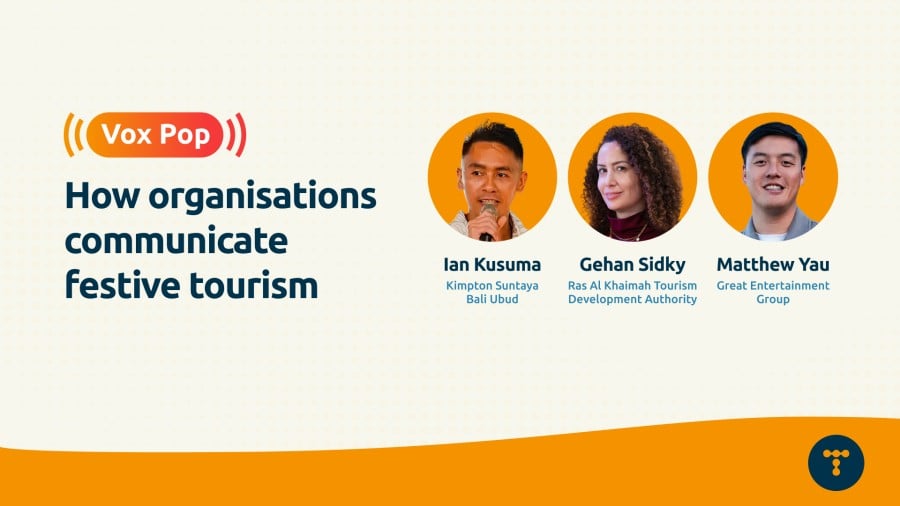
To explore how hospitality and tourism organisations are tackling these questions this year, Telum Media spoke with Gehan Sidky, Assistant Director, Destination PR & Communications at Ras Al Khaimah Tourism Development Authority; Matthew Yau, Group Marketing Director at Great Entertainment Group; and Ian Kusuma, Director of Marketing & Communications at Kimpton Suntaya Bali Ubud.
The Christmas and New Year period is one of the most competitive periods for global tourism. How does your organisation shape communications around festive travel - balancing local identity and offerings with international appeal?
Gehan Sidky, Assistant Director, Destination PR & Communications, Ras Al Khaimah Tourism Development Authority
Our festive communications are built on a dual promise: celebrating authentic Emirati heritage while offering globally meaningful experiences. We position Ras Al Khaimah as a destination where tradition meets innovation, showcasing fireworks and drone displays set against beaches, mountains, and desert landscapes.
Our approach to creative storytelling is to blend spectacle with soul. Last year's fireworks and drone show were inspired by Ras Al Khaimah's natural landscapes and cultural heritage, weaving motifs such as pearl diving and date farming traditions into modern displays. This year, we're building on that approach with a more spectacular production that continues to honour the Emirate's roots.
For international markets, we adapt our festive messaging to cultural nuances. Commonwealth of Independent States (CIS) travellers value multi-generational family stays and gala dining, while Chinese audiences respond to nature escapes and family-centric activities rather than overt Christmas themes. Across all markets, we emphasise immersive experiences, from luxury resorts to beachside glamping, mountain adventures, and wellness retreats.
For domestic and regional visitors, we position Ras Al Khaimah as the ideal year-end escape, offering a short drive to reconnect with nature and loved ones. Known as the Nature Emirate, its celebrations draw from the surrounding sea, desert, and mountains. We highlight these through multilingual content, influencer partnerships, and visual storytelling. Our festive communications aim to encourage travellers to slow down, reflect, and connect with their surroundings.
Matthew Yau, Group Marketing Director, Great Entertainment Group
The AIA Carnival and Hong Kong Observation Wheel are both iconic festive attractions, each appealing to slightly different audiences. The Carnival has been a cherished event for the Hong Kong community. Thanks to a stronger focus on overseas communications and targeted outreach in recent years, we've also seen a steady increase in international visitors. Meanwhile, the Observation Wheel has always been a favourite among tourists with its view of Victoria Harbour and central location.
Over the years, the Carnival has evolved from what was a traditionally European-style event into something uniquely Hong Kong. While it still features classic European rides, the experience has been reimagined to resonate with local audiences. This year's theme, "Hong Kong Classic," pays tribute to the city's rich cultural heritage. It provides a blend of timeless carnival fun with local elements such as Hong Kong's neon signage, nostalgic photo opportunities, street food, and performances on our community stage that showcase Hong Kong's vibrant performing arts scene.
We position both attractions as essential festive experiences - rather than standalone events, they're embedded in the city celebrations, as part of Hong Kong's seasonal events calendar. To paint a fuller picture of Hong Kong as a dynamic and festive holiday destination, our campaigns highlight not only what's happening on-site, but also what visitors can explore throughout the Harbourfront and Central areas.
Ian Kusuma, Director of Marketing & Communications, Kimpton Suntaya Bali Ubud
From a strategic standpoint, festive communications during this season needs to be done as early as possible. Festive holidaymakers, which are oftentimes families, require lead time to prepare for their end of year trips, which will usually include flight and hotel planning.
For hotels, a main selling point would be its festive F&B and activity offerings. We often receive festive menu enquiries from as early as July. Competition is high as most festive happenings in Bali cater to not just hotel residents, but non-residential guests as well, so it's important for us to have this 'ammunition' ready early in the year.
In terms of balancing identity with festive tourism efforts, previously when I worked at Hotel Indigo, we were very lucky that the brand was known for reflecting the locality of the property. As part of our holiday planning, we would make full use of our culinary offerings, such as Makase for Southeast Asian flavours and SugarSand for Japanese cuisine, for our festive F&B happenings. These were then complemented by local entertainment and performances for more immersive experiences.
Traveller motivations during the festive period continue to evolve across demographics and regions. What trends are influencing the way your organisation is communicating and creating festive tourism experiences this season?
Gehan Sidky
People now travel during festive times not just to party, but to find meaning and connect with others. Many are choosing experiences that mix celebration with wellness, such as adventures in nature or trips focused on spending quality time with family.
Economic caution is leading to shorter booking windows and a stronger focus on value, flexibility, and authenticity. People still want to travel but are making more intentional choices, prioritising meaningful stays that align with their values. Wellness and "slow adventure" are particularly strong themes, with nature-based and restorative experiences redefining celebration.
Technology and social media are transforming how inspiration turns into travel decisions. AI-driven personalisation, immersive digital content, and virtual previews enable destinations to create emotional connections before booking. TikTok, in particular, has become a powerful travel platform that is inspiring where people go, how they plan, and even how they book. This shift calls for short-form, engaging content that blends storytelling with seamless conversion.
Ultimately, festive tourism is about balancing excitement with reflection, luxury with authenticity, and innovation with nature.
Matthew Yau
Understanding and monitoring where our visitors are coming from has never been more important. We work closely with Online Travel Agency (OTA) partners such as Klook, Trip.com, and KKday to ensure we reach potential visitors at the key moments they're planning their trips.
For events like ours, there is consistently high demand for visually engaging, shareable experiences. That's why we dedicate significant effort to creating curated photo moments that not only enhance the on-site experience, but are also designed for social sharing. This year, we've partnered with RedNote (Xiaohongshu) to develop installations that double as ready-made content for KOLs and influencers, amplified further through targeted digital advertising and paid media boosting.
Our communications strategy is fully integrated, combining digital storytelling with on-the-ground engagement. We work with both local and international media, strategic influencer partnerships, and invite select regional press to experience our events in person.
We understand that travellers come to Hong Kong seeking experiences they can't find elsewhere. Hong Kong's unique culture, vibrant energy, and relatively cooler festive-season weather (especially for visitors nearby from Southeast Asia) make it a top seasonal destination. One of our objectives is to highlight these advantages while positioning our events as must-visit, uniquely Hong Kong experiences that bring the festive spirit to life.
Ian Kusuma
I have seen a lot of digital and social media influences going into purchasing decisions these days - within hospitality and festive programming included. During the festive period, we continue to amplify the power of visual content to attract future and returning guests, and showcase our offerings and annual themes for our festive happenings.
In the hotel space, we reach different demographics via multiple channels, including our website, digital booklets, phone enquiries, and email communication handled by reservations teams.
Furthermore, for a destination like Bali, a strong annual theme for festive happenings is very important. Here on the island where every single corner will be celebrating and every property and outlet providing offers and experiences, we need to make sure that we are staying true to our brand and providing a suitable festive theme to accompany our happenings annually.
Telum Vox Pop: How organisations communicate festive tourism
Telum Media creating connections
Get in touch to learn more
You might also enjoy
Emma Lowde has started as Senior Communications Manager at Diraq, a Sydney-founded quantum computing company developing silicon-based technology to make quantum computers scalable, economical, and widely accessible. She joins from Intuit, where she was most recently Senior Communications Manager for the APAC region.
Emma has built up 15 years’ experience as a communications professional, including leadership roles at eBay Australia and New Zealand, following agency roles in Australia and the UK.
Every few years, someone declares the death of the media release.
Today, the arguments sound familiar. Journalists don't read them anymore. Everything is social-first. AI is replacing traditional media outreach. It's all about the pitch. Press releases are becoming little more than AI-generated filler.
And yet, when we speak with journalists across Asia Pacific and the Middle East, a different picture emerges.
Media releases aren't dead, but expectations around them have changed significantly.
We've analysed more than 10,000 Journalist Interest Survey responses in the Telum Media platform collected over the past five years, alongside insights gathered from conversations with editors, reporters, and producers across the region.
Key takeaways:
- Journalists still value useful PR content
- Relevance matters more than reach
- The pitch and the release serve different roles
- The best releases reduce friction for journalists
- Modern releases need to support multiple platforms
The conclusion is clear: journalists still value media releases, but they value them for different reasons than they once did.
The media release has evolved from a distribution tool into something far more strategic.
The media release is no longer the story
For decades, many PR professionals treated the media release as the centrepiece of media relations activity.
Write the release. Send it widely. Hope for coverage - “spray and pray”.
That approach was far from perfect, but you could get away with it in an era when newsrooms were larger, competition for attention was lower, and journalists had more time to evaluate incoming information.
Today's reality is very different.
Journalists are producing content across multiple platforms, often with smaller teams and tighter deadlines. Their inboxes are flooded with pitches, announcements, thought leadership submissions, and increasingly, AI-generated content.
As a result, journalists have become far more selective about what earns their attention.
The modern media release is no longer just about news stories. It has become a source-of-truth asset, a newsroom resource, and a content hub that supports broader communications activity.
The best PR teams understand this shift.
“The strongest message from journalists can be summarised in a single phrase: ‘Understand what I cover’. Relevance remains the most important factor in successful media engagement.”
What journalists are actually rejecting
One of the most revealing findings from our analysis is that journalists are not rejecting PR content altogether.
What they're rejecting is low-value outreach.
Across thousands of responses, the same frustrations appeared repeatedly:
- Irrelevant pitches
- Generic outreach
- Mass distribution
- Weak story angles
- Excessive follow-ups
In other words, this is less a rejection of media releases and more a rejection of poor media relations practice.
The strongest message from journalists can be summarised in a single phrase:
"Understand what I cover."
Relevance remains the most important factor in successful media engagement. In fact, our journalist surveys over the past two years have seen a sharp increase in a desire for both relevance and personalisation in pitches.
Journalists increasingly assess pitches within seconds. If the connection to their beat, audience, or current priorities isn't immediately obvious, the opportunity is often lost before the email is even opened.
The pitch and the release have different jobs
One of the biggest misconceptions in modern media relations is treating the pitch and the release as the same thing.
They are not.
The pitch exists to earn attention; the release exists to support the story.
The best pitches are:
- Brief
- Human
- Relevant
- Contextual
- Conversational
The best releases are:
- Structured
- Factual
- Complete
- Reusable
- Easy to reference
At a recent Telum Media event, a senior journalist described the fastest way to kill a pitch with a single word: “Respect”. Or a lack thereof.
A generic greeting. A story unrelated to their beat. A mass-produced email that demonstrates no understanding of their audience.
All signal a lack of respect for the journalist's time and expertise.
High-performing PR teams increasingly write pitches and releases for different audiences. The pitch is written for the journalist. The release is written for the journalist's audience.
That distinction matters.
Why journalists still value media releases
Despite predictions of their demise, journalists continue to actively request media releases.
But they want releases that help them work more efficiently.
The most common requests include concise writing, clear headlines, strong news angles, supporting data (with downloadable images and assets), spokesperson access, and easy-to-use formats.
These preferences reveal the modern role of the release: it functions as a workflow tool.
A strong release helps journalists:
- Understand the story quickly
- Verify information
- Access supporting materials
- Build content efficiently
The best releases reduce friction. And in today's newsroom environment, reducing friction is often more valuable than generating hype.
Think beyond media coverage
Another major shift is that media releases are increasingly serving multiple audiences.
A modern release doesn’t just support journalists; it might also support clients and prospects, employees, investors and analysts, partners, and search visibility.
Rather than creating a single-use document, leading communications teams are building content ecosystems.
The release becomes the foundation for:
- Media outreach
- Newsroom content
- Executive communications
- Social media content
- Email campaigns
- Sales collateral
- Thought leadership activity
This approach not only improves consistency but also increases the return on investment from every announcement.

The role of the modern media release
Not every story needs a release
Perhaps one of the most important lessons is recognising when a media release is the wrong tool.
Releases tend to perform best when there is:
- Genuine news value
- Multiple stakeholder audiences
- A need for factual consistency
- Strong supporting assets
- Broader business significance
They are often less effective for internal milestones framed as major news (or self-congratulatory announcements), generic thought leadership, and untargeted mass outreach.
In some situations, a targeted pitch, LinkedIn strategy, executive commentary programme, or direct relationship-based outreach may be more effective.
Good communications strategy isn't about defaulting to a media release; it's about choosing the right tool for the objective.
A framework for modern media releases
If there is one word that captures what journalists are asking for today, it is respect.
At Telum Media, we summarise this through the RESPECT framework:
R – Relevance
Make it relevant to the journalist, their audience and the moment.
E – Efficiency
Help journalists work faster through clear, concise, and usable content.
S – Substance
Provide genuine value through expertise, data, insight, or access.
P – Personalisation
Demonstrate that you've done your homework.
E – Ecosystem
Think beyond the release and consider how it supports broader communications goals.
C – Clarity
Make the key message immediately obvious.
T – Timing
Reach out at the right time, not simply any time.
What journalists are asking for in a pitch / media release: RESPECT
The future of the media release
The debate over whether media releases are dead misses the point.
The more useful question is how do we make releases work better in today’s media environment?
Journalists still value relevant information, credible sources, strong story angles, and efficient communication. Media releases continue to play an important role in delivering those things.
But success today depends less on the existence of the release itself and more on how strategically it is used.
The media release remains a valuable communications tool.
Just not in the way many of us were taught to use it.
FAQs
Are media releases still useful in 2026?
Yes. Journalists still value media releases, but these days want targeted outreach, relevance to their beat, alignment with their audience, and contextual pitching.
What makes a media release useful to journalists?
Journalists are looking for releases in a format that helps them work efficiently. Which means releases that are concise, factual, with a clear angle, contain usable quotes, and come with downloadable assets and supporting data.
What is the difference between a pitch and a media release?
A pitch earns the journalist’s attention in their cluttered Inbox. A media release supports the story by providing structured, factual, and reusable information relevant to their audience.
With more than 30 years’ experience spanning journalism, corporate communications and media intelligence, Reuben Aitchison is Telum Media’s Head of Insights and Communications.
Explore Telum Media tools that help PR teams pitch with precision.
PR and communications agency, Wrights, has promoted Rika Rufina to Communication Manager, strengthening the agency’s integrated communications, issues management, and Asia Pacific capabilities.
Rika will help steer corporate and consumer retainer accounts, bringing together PR, social, and creative campaigns. She will also work with Chief Executive Officer Douglas Wright and General Manager Reena Llanillo to develop and implement issues management strategies.
Rika joined Wrights in August 2025 as a Senior Communication Consultant, bringing experience from PR agencies, as well as from in-house roles across APAC, particularly in the Singapore market.
Douglas said Rika’s promotion reflected the contribution she had made to the agency and its clients.
“Rika has delivered strong results. I look forward to working closer with her and the Wrights team as we continue to deliver ingenious and impactful communications, anchored in authenticity and positive change,” he said.
“Our secret sauce is simple: ingenious thinking, brought to life by a talented and ambitious team. Rika’s promotion is another important step in strengthening our team and setting Wrights up for its next phase of growth.”
The promotion forms part of a broader period of growth for Wrights, with the agency also promoting Charlotte Dickson to Communication Consultant and will welcome Annabel Chambers as PR and Social Coordinator.