

In FinTech, PR isn’t just about visibility - it’s about driving adoption and trust in technologies that reconfigure and introduce new consumer knowledge and habits. Across Asia Pacific, this challenge is amplified by its evolving media industry and its cultural and behavioural diversity. With this in the foreground, the role of PR and comms is to shape and transform consumer perception, adoption, and trust for FinTech payment solutions in the background.
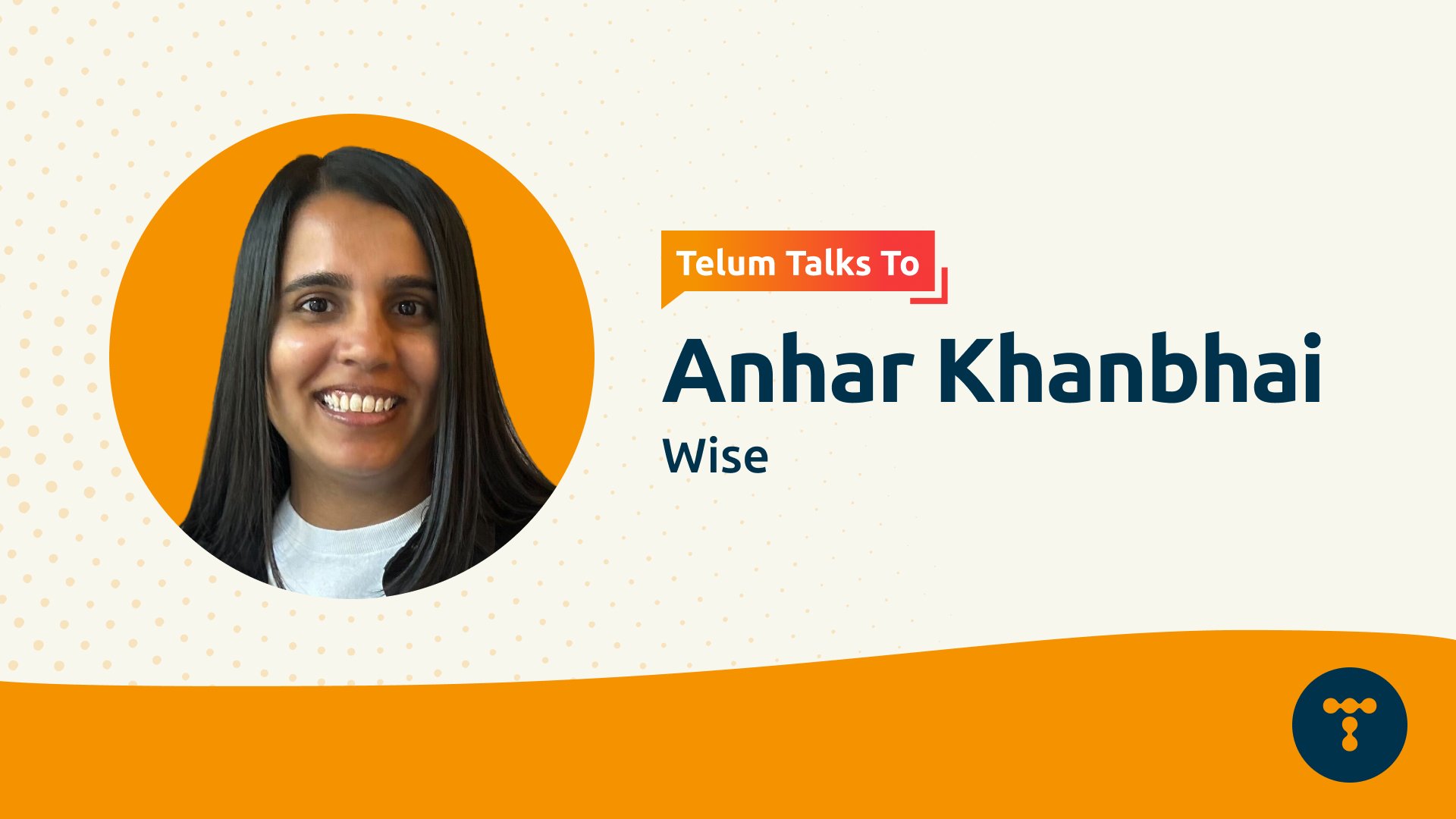
To explore this further, we spoke with Wise’s Head of APAC PR, Anhar Khanbhai, as she shares how strategic localisation, education-led media relations, and genuine transparency have helped the FinTech platform scale awareness, influence behaviour, and built trust across the region’s complex comms landscape.
In today’s FinTech landscape, what insights can you share about the role of PR in shaping the consumer journey?
PR’s role has fundamentally shifted from driving awareness to actively moving people through the entire consideration journey.
One thing that I’ve learned at Wise is that building category understanding is just as important as building brand awareness. In some markets, awareness sits quite high while consideration lags, which tells us people know who we are, but they don’t understand what problem we could be solving for them.
As a response, our approach to PR is to use it as an educational tool rather than something that is purely a coverage numbers game. Our focus as a comms team is on making the invisible visible - literally exposing the hidden fees in exchange rates and demystifying international payments. This isn’t just good storytelling; it’s creating the foundational understanding that makes adoption possible.
Over the years, we’ve evolved our approach to prioritise shareability and social amplification in addition to traditional media coverage. The consumer journey today is fragmented across channels, so PR needs to work harder to create moments that resonate beyond the initial article.
What are the key challenges to driving behavioural changes in markets that are unfamiliar or resistant to new tech adoption?
The biggest challenge isn’t resistance to technology - it’s competing against deeply ingrained financial habits and trust structures. In markets where we’re building foundational awareness, people default to what they know, even when it costs them money. Banks have had decades to establish themselves as the only option for people to move and manage their money in another currency.
Breaking through requires patience and localisation at a level most brands underestimate. In the Philippines, for example, we discovered that journalists themselves needed foundational education about the platform before they could effectively cover us. So, we took a step back and invested in relationship-building and education sessions rather than jumping straight to product pitches. It’s slower, but it builds the right foundation which results in stronger message penetration in the coverage.
In Malaysia, there is an ingrained deal-seeking culture, where consumers are conditioned to chase promotional offers rather than evaluate true value. This insight drove our 2025 campaign: our first experiential pop-up in Kuala Lumpur timed around Malaysia’s biggest travel fair. This “Siapa Wise” campaign wasn’t aimed at introducing a new product but was instead framed around challenging the mental math people use to evaluate financial decisions.
In these vastly different strategies, the timing is critical. We’ve learned to anchor our stories to moments when the pain point is most acute, such as the university enrolment season in India for study abroad remittances or the peak travel periods across Southeast Asia and Australia.
For multimarket campaigns and launches, how do you tailor messaging for different demographics or levels of FinTech familiarity to drive adoption?
The Wise APAC PR team is a lean (but truly exceptional!) team of four - myself included. We operate across nine markets, where strategic approaches vary. We use an investment framework that categorises markets into three stages: reactive presence for awareness-building, proactive presence for growing markets, and full-stack support for priority markets. This determines not just resource allocation but the entire communications strategy.
In full-stack markets like Singapore and Australia, where awareness, consideration, and product fit are strong, we can run sophisticated campaigns with the messaging focused on use cases and value demonstration - like positioning the platform as a comprehensive cross-border solution rather than just a money transfer app.
A market like Indonesia requires a different approach because the media landscape there is increasingly pay-to-play, so we concentrate on what generates genuine news value.
Internally, our team structure reflects this, too. We have dedicated full-time resources in priority markets, but use freelancers in markets like Japan, where cultural and language requirements demand local expertise. Each market requires its own playbook.
What technologies or innovative strategies have you implemented to improve consumer communications, and how have they influenced adoption or engagement?
We’ve had to fundamentally rethink what earned comms means. It’s no longer enough to rely solely on the traditional press release and media briefing model, especially with younger audiences that consume news primarily through social platforms rather than publication websites.
One shift has been embracing experiential and visual storytelling. Our Fleece Free FX pop-up in Bondi in Sydney wasn’t a traditional PR play - it was designed to be inherently shareable and social-first. We’re learning that creating these physical experiences that translate to digital moments can have more impact than a dozen traditional press placements.
On the technology front, we’re piloting AI tools to streamline the production side to accelerate draft reviews and localisation, which frees up the team to focus on creative strategy.
Our approach to journalist relationships has also evolved a lot - we’ve moved beyond transactional pitching to running immersive media engagement sessions in most of our markets. These aren’t briefings; they’re proper educational experiences that aim to provide reporters with deeper exposure to the company, the problem we’re solving, and the customers we serve.
For most companies, this kind of comms implementation is resource-intensive, but we’ve seen it translate to more sophisticated, accurate coverage and genuine inbound story requests. For instance, when UK Prime Minister, Keir Starmer, referenced our India card launch at the Global Fintech Fest, the media buzz was amplified because journalists already understood the context and significance.
Your journey with Wise has gone through consumer unfamiliarity to widespread adoption. As the global FinTech landscape becomes increasingly complex and saturated, what does the future of consumer comms hold - and how can communicators balance the interplay of trust, reputation, and innovation in this space?
After eight years at Wise, I’ve watched the industry evolve from having to explain what FinTech is to now operating in an incredibly crowded space where everyone claims to be disrupting banking. The future isn’t about shouting louder - it’s about earning attention through transparency and proof.
Trust is the scarcest resource in financial services, and it creates both a challenge and an opportunity. The challenge is that scepticism is the default consumer position. The opportunity is that demonstrating genuine transparency becomes a competitive advantage. Focusing on our mission and problem awareness around ending hidden fees only works because we do this and prove it through our products. The comms strategy must ladder back to tangible proof points, not just brand promises.
The media landscape consolidation compounds this. With fewer journalists covering more ground, breaking through requires creating genuinely newsworthy moments rather than incremental updates. We focus on three core areas: maximising company news by finding creative angles, creating news through research and campaigns, and strategic newsjacking when relevant conversations emerge.
Looking ahead, I think successful consumer communications will require three things: radical localisation that respects each market’s unique context, a shift toward social-first storytelling that meets audiences where they actually consume content, and a relentless focus on education over promotion.
The brands that will win are the ones that can authentically earn attention and have the product or service experience to back it up.
To explore this further, we spoke with Wise’s Head of APAC PR, Anhar Khanbhai, as she shares how strategic localisation, education-led media relations, and genuine transparency have helped the FinTech platform scale awareness, influence behaviour, and built trust across the region’s complex comms landscape.
In today’s FinTech landscape, what insights can you share about the role of PR in shaping the consumer journey?
PR’s role has fundamentally shifted from driving awareness to actively moving people through the entire consideration journey.
One thing that I’ve learned at Wise is that building category understanding is just as important as building brand awareness. In some markets, awareness sits quite high while consideration lags, which tells us people know who we are, but they don’t understand what problem we could be solving for them.
As a response, our approach to PR is to use it as an educational tool rather than something that is purely a coverage numbers game. Our focus as a comms team is on making the invisible visible - literally exposing the hidden fees in exchange rates and demystifying international payments. This isn’t just good storytelling; it’s creating the foundational understanding that makes adoption possible.
Over the years, we’ve evolved our approach to prioritise shareability and social amplification in addition to traditional media coverage. The consumer journey today is fragmented across channels, so PR needs to work harder to create moments that resonate beyond the initial article.
What are the key challenges to driving behavioural changes in markets that are unfamiliar or resistant to new tech adoption?
The biggest challenge isn’t resistance to technology - it’s competing against deeply ingrained financial habits and trust structures. In markets where we’re building foundational awareness, people default to what they know, even when it costs them money. Banks have had decades to establish themselves as the only option for people to move and manage their money in another currency.
Breaking through requires patience and localisation at a level most brands underestimate. In the Philippines, for example, we discovered that journalists themselves needed foundational education about the platform before they could effectively cover us. So, we took a step back and invested in relationship-building and education sessions rather than jumping straight to product pitches. It’s slower, but it builds the right foundation which results in stronger message penetration in the coverage.
In Malaysia, there is an ingrained deal-seeking culture, where consumers are conditioned to chase promotional offers rather than evaluate true value. This insight drove our 2025 campaign: our first experiential pop-up in Kuala Lumpur timed around Malaysia’s biggest travel fair. This “Siapa Wise” campaign wasn’t aimed at introducing a new product but was instead framed around challenging the mental math people use to evaluate financial decisions.
In these vastly different strategies, the timing is critical. We’ve learned to anchor our stories to moments when the pain point is most acute, such as the university enrolment season in India for study abroad remittances or the peak travel periods across Southeast Asia and Australia.
For multimarket campaigns and launches, how do you tailor messaging for different demographics or levels of FinTech familiarity to drive adoption?
The Wise APAC PR team is a lean (but truly exceptional!) team of four - myself included. We operate across nine markets, where strategic approaches vary. We use an investment framework that categorises markets into three stages: reactive presence for awareness-building, proactive presence for growing markets, and full-stack support for priority markets. This determines not just resource allocation but the entire communications strategy.
In full-stack markets like Singapore and Australia, where awareness, consideration, and product fit are strong, we can run sophisticated campaigns with the messaging focused on use cases and value demonstration - like positioning the platform as a comprehensive cross-border solution rather than just a money transfer app.
A market like Indonesia requires a different approach because the media landscape there is increasingly pay-to-play, so we concentrate on what generates genuine news value.
Internally, our team structure reflects this, too. We have dedicated full-time resources in priority markets, but use freelancers in markets like Japan, where cultural and language requirements demand local expertise. Each market requires its own playbook.
What technologies or innovative strategies have you implemented to improve consumer communications, and how have they influenced adoption or engagement?
We’ve had to fundamentally rethink what earned comms means. It’s no longer enough to rely solely on the traditional press release and media briefing model, especially with younger audiences that consume news primarily through social platforms rather than publication websites.
One shift has been embracing experiential and visual storytelling. Our Fleece Free FX pop-up in Bondi in Sydney wasn’t a traditional PR play - it was designed to be inherently shareable and social-first. We’re learning that creating these physical experiences that translate to digital moments can have more impact than a dozen traditional press placements.
On the technology front, we’re piloting AI tools to streamline the production side to accelerate draft reviews and localisation, which frees up the team to focus on creative strategy.
Our approach to journalist relationships has also evolved a lot - we’ve moved beyond transactional pitching to running immersive media engagement sessions in most of our markets. These aren’t briefings; they’re proper educational experiences that aim to provide reporters with deeper exposure to the company, the problem we’re solving, and the customers we serve.
For most companies, this kind of comms implementation is resource-intensive, but we’ve seen it translate to more sophisticated, accurate coverage and genuine inbound story requests. For instance, when UK Prime Minister, Keir Starmer, referenced our India card launch at the Global Fintech Fest, the media buzz was amplified because journalists already understood the context and significance.
Your journey with Wise has gone through consumer unfamiliarity to widespread adoption. As the global FinTech landscape becomes increasingly complex and saturated, what does the future of consumer comms hold - and how can communicators balance the interplay of trust, reputation, and innovation in this space?
After eight years at Wise, I’ve watched the industry evolve from having to explain what FinTech is to now operating in an incredibly crowded space where everyone claims to be disrupting banking. The future isn’t about shouting louder - it’s about earning attention through transparency and proof.
Trust is the scarcest resource in financial services, and it creates both a challenge and an opportunity. The challenge is that scepticism is the default consumer position. The opportunity is that demonstrating genuine transparency becomes a competitive advantage. Focusing on our mission and problem awareness around ending hidden fees only works because we do this and prove it through our products. The comms strategy must ladder back to tangible proof points, not just brand promises.
The media landscape consolidation compounds this. With fewer journalists covering more ground, breaking through requires creating genuinely newsworthy moments rather than incremental updates. We focus on three core areas: maximising company news by finding creative angles, creating news through research and campaigns, and strategic newsjacking when relevant conversations emerge.
Looking ahead, I think successful consumer communications will require three things: radical localisation that respects each market’s unique context, a shift toward social-first storytelling that meets audiences where they actually consume content, and a relentless focus on education over promotion.
The brands that will win are the ones that can authentically earn attention and have the product or service experience to back it up.

-4.png)
-1.jpg)