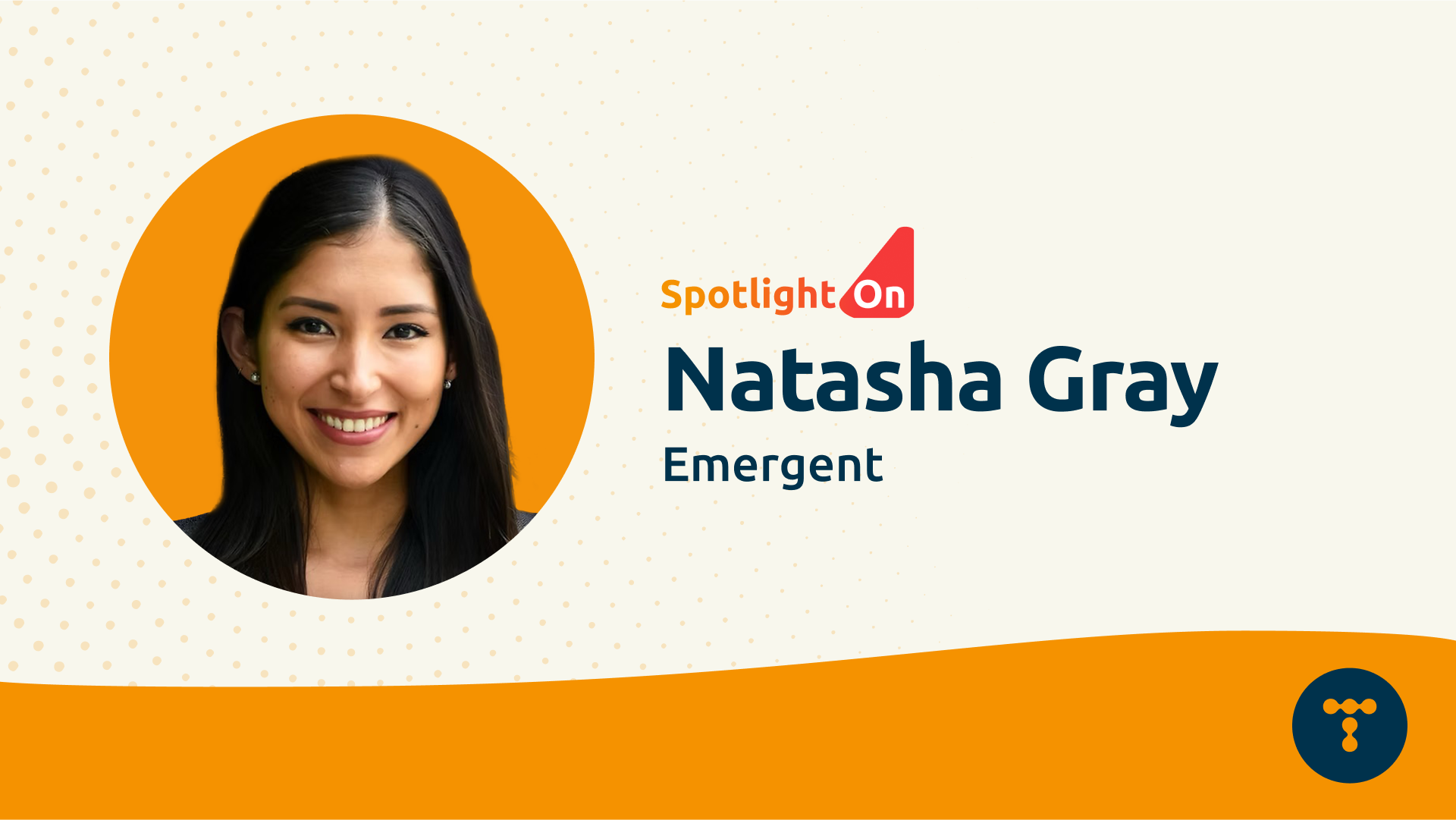
Welcome to the Telum Spotlight, an ongoing series showcasing people working in the PR and communications space, freelancers and those launching their own boutique agencies. Today we shine the Spotlight on Natasha Gray, Founder & Managing Director of Emergent.
By way of Introduction:
I work with emerging and established companies to bring their breakthrough technologies to life - from drones, robotics, immersive tech, materials science and beyond. Along the way, I’ve built communications functions from the ground up, steered through global crises and developed regional integrated strategies to drive adoption and impact.
I founded Emergent as today’s fast-growing companies need more than the conventional public affairs playbook. Our approach integrates communications, policy, risk and creative strategy, treating public affairs not as siloed functions but as a cohesive, strategic whole. We are outcome-minded - helping our clients scale, shape landscapes and deliver lasting impact.
First job:
My entry into the industry was an internship at Waggener Edstrom (now known as We. Communications). I was thrown into the deep end from day one, having to support two major accounts in the midst of global crisis management. It was intense but invaluable.
It’s funny when I tell fresh graduates today how we used to clip newspaper coverage by hand and calculate AVE with a ruler and calculator - they look at me like I’m from another century! It feels like a lifetime ago, but it was a great start, and I was lucky to learn from a great team.
One thing you would change about the communications industry:
Commoditised scopes of work. We should always strive for outcomes, not outputs.
Most admired person in public affairs:
I’ve had the privilege of working with some incredibly talented people - too many, and it wouldn’t be fair to name just one. I was recently recommended a book called “The Fixer” by Bradley Tusk and really enjoyed it. His approach resonates with how we think about public affairs at Emergent.
Most admired journalist:
Maria Ressa.
Advice to anyone starting out in comms:
Be open, stay curious and don’t be afraid to experiment. Starting out at a consultancy can be a great move - it gives you early, broad exposure to different industries, clients and ways of working. You’ll build skills quickly, grow your network and have a stronger offering if or when you do decide to move client-side.
Essential daily reading:
I start my mornings with a rotating mix of news and commentary podcasts - perfect for staying hands-free while multitasking. Once I’m settled in for the workday, I dive deeper into major headlines and client-relevant stories. Some essentials are Nikkei Asia, NYT, Platformer and Foreign Policy and The Economist for uninterrupted stretches on planes.
Favourite film:
Too many… but let’s go with Interstellar. I’m a huge sci-fi fan!
Social media app you can’t live without:
Instagram to keep up with friends, TikTok to keep up with trends. Plus Reddit.
Your proudest achievement:
Emergent has grown entirely through organic momentum. What started as one project turned into a retainer, then another, and another. We’re proud to be bootstrapped, and that growth has only been possible because of a great team and great advisors. I’m really proud of what we’ve built in a short time - and it’s only going to get more exciting from here.
Quotable you (what’s your most often used saying or quote?)
Focus on outcomes, not outputs.
By way of Introduction:
I work with emerging and established companies to bring their breakthrough technologies to life - from drones, robotics, immersive tech, materials science and beyond. Along the way, I’ve built communications functions from the ground up, steered through global crises and developed regional integrated strategies to drive adoption and impact.
I founded Emergent as today’s fast-growing companies need more than the conventional public affairs playbook. Our approach integrates communications, policy, risk and creative strategy, treating public affairs not as siloed functions but as a cohesive, strategic whole. We are outcome-minded - helping our clients scale, shape landscapes and deliver lasting impact.
First job:
My entry into the industry was an internship at Waggener Edstrom (now known as We. Communications). I was thrown into the deep end from day one, having to support two major accounts in the midst of global crisis management. It was intense but invaluable.
It’s funny when I tell fresh graduates today how we used to clip newspaper coverage by hand and calculate AVE with a ruler and calculator - they look at me like I’m from another century! It feels like a lifetime ago, but it was a great start, and I was lucky to learn from a great team.
One thing you would change about the communications industry:
Commoditised scopes of work. We should always strive for outcomes, not outputs.
Most admired person in public affairs:
I’ve had the privilege of working with some incredibly talented people - too many, and it wouldn’t be fair to name just one. I was recently recommended a book called “The Fixer” by Bradley Tusk and really enjoyed it. His approach resonates with how we think about public affairs at Emergent.
Most admired journalist:
Maria Ressa.
Advice to anyone starting out in comms:
Be open, stay curious and don’t be afraid to experiment. Starting out at a consultancy can be a great move - it gives you early, broad exposure to different industries, clients and ways of working. You’ll build skills quickly, grow your network and have a stronger offering if or when you do decide to move client-side.
Essential daily reading:
I start my mornings with a rotating mix of news and commentary podcasts - perfect for staying hands-free while multitasking. Once I’m settled in for the workday, I dive deeper into major headlines and client-relevant stories. Some essentials are Nikkei Asia, NYT, Platformer and Foreign Policy and The Economist for uninterrupted stretches on planes.
Favourite film:
Too many… but let’s go with Interstellar. I’m a huge sci-fi fan!
Social media app you can’t live without:
Instagram to keep up with friends, TikTok to keep up with trends. Plus Reddit.
Your proudest achievement:
Emergent has grown entirely through organic momentum. What started as one project turned into a retainer, then another, and another. We’re proud to be bootstrapped, and that growth has only been possible because of a great team and great advisors. I’m really proud of what we’ve built in a short time - and it’s only going to get more exciting from here.
Quotable you (what’s your most often used saying or quote?)
Focus on outcomes, not outputs.
-1.jpg)
-1.jpg)