PR News
<span id="hs_cos_wrapper_name" class="hs_cos_wrapper hs_cos_wrapper_meta_field hs_cos_wrapper_type_text" style="" data-hs-cos-general-type="meta_field" data-hs-cos-type="text" >Saudi's Athar Festival unveils a network to support women in marcomms</span>

Saudi's Athar Festival unveils a network to support women in marcomms

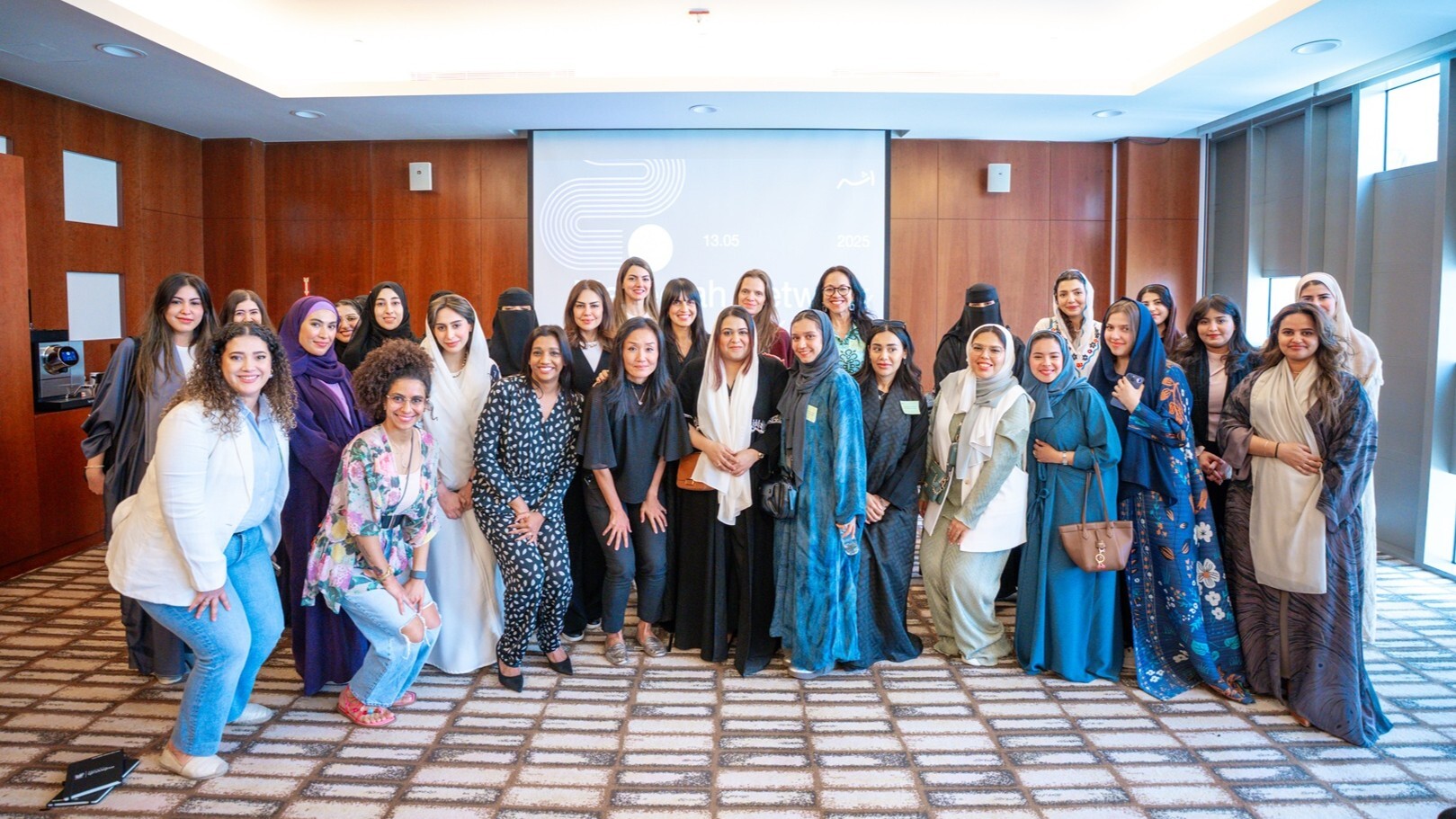
Athar - Saudi Festival of Creativity, the gathering for the creative marketing industry in Saudi Arabia, has officially announced the launch of the Maheerah Network. The initiative is powered by Publicis Groupe and set to become a year-round platform dedicated to enabling, inspiring, and nurturing women in the creative marketing and communications industry in the Kingdom. The network will consist of three core pillars: Maheerah Network, Maheerah Programme, and Maheerah Alumni.

The journey starts with Maheerah Network, a foundational series of year-round activities geared toward women from across the industry. Through online and offline events, access to exclusive insights, and learning opportunities such as webinars and networking meetups, it aims to build early confidence, capability and community.

The Maheerah Programme is a high-level learning and development track for women in senior roles from across the industry. With its third iteration taking place during Athar Festival 2025 later this year in October, it will feature curated workshops, leadership coaching, and executive-level training designed to equip participants with the tools to step into strategic and leadership roles within the creative sector.

Building on that, the Maheerah Alumni pillar creates an enduring network for graduates of past editions of the Maheerah Programme. Alumni will continue to benefit from tailored professional growth experiences, including webinars, mentorship with industry leaders, and in-person gatherings. Leading by example across organisations such as NEOM, Nestle, STA, and more, members represent a growing cross-section of sectors including marketing, advertising, PR and Sector - Technology.

Mohamed Al Ayed, Vice Chairman of Athar Festival and CEO of TRACCS, said: “Saudi Arabia continues to make significant strides in women’s empowerment and is firmly on track to achieving its Vision 2030 goals. As the Kingdom’s foremost creative marketing event, Athar Festival recognises its responsibility in advancing the participation and leadership of women in the industry. The launch of Maheerah Network is a result of our continued commitment to this endeavour. The growth potential of the local marcomms industry is immense, and the transformative journey of women from being participants to industry leaders and narrative shapers is well underway. At Athar Festival, we are happy and proud to play our part.”

Bassel Kakish, Chief Executive Officer, Publicis Groupe Middle East & Turkey added: “When we partnered with Athar Festival to bring Maheerah to life two years ago, we didn’t anticipate the depth of response, or the powerful community that would grow from it. It quickly became clear that we were meeting a real need for women living and working in Saudi Arabia’s marketing communications industry - a space to learn, connect, and thrive. In a market where the industry is already thriving, Maheerah has become a platform to further unlock the talent, ambition and leadership potential of women across the Kingdom. Now in its third year, the program has evolved into a year-round network, and we have shared ambitions to grow it into one of the strongest communities of women in Saudi Arabia, supporting and enabling the next generation of leaders in our industry.”

Previous story

Bastion announces acquisition of Australian boutique corporate advisory firm

Next story

HAVAS Red Middle East bolsters leadership team with three appointments

You might also enjoy

PNTR
Industry update

PNTR Group announces Sarawak expansion and AI solutions unit

PNTR Group, a strategic communications and advisory firm based in Southeast Asia, has expanded into Sarawak and launched PNTR Intelligence, its AI solutions unit.

Michael King (pictured right) has been appointed Managing Consultant and Associate Director, leading the group’s advisory practice in Sarawak.

In the role, he will advise boards and leadership teams on strategy, environmental, social and governance (ESG) matters, sustainability, reputation, stakeholder and government engagement.

Michael will also lead PNTR Malaysia’s AI-enabled advisory services for clients across the energy, resources and public sectors.

AJ Lee, Founder and CEO of PNTR Group (pictured left), said: “The establishment of PNTR Group's presence in Sarawak marks an important milestone in our growth strategy and reflects our commitment to supporting the state's economic and digital transformation ambitions.

“With PNTR Intelligence, we are expanding beyond our traditional strategic communications and advisory services to deliver practical, AI-powered solutions for our clients.”

Michael brings experience across corporate and public affairs, sustainability, strategic communications and technology. He has previously worked across the technology, education, industrial manufacturing and upstream oil and gas sectors.

AJ added: “Dr. King's experience in digital transformation, technology and sustainability will be instrumental in building our capabilities and delivering greater value to clients. Together, these developments position PNTR Group to play a more meaningful role in supporting businesses, government agencies and industries across Sarawak and the wider region.”

Commenting on his appointment, Michael said: “Sarawak has set clear ambitions for its economy, and organisations here are looking for practical advice that fits local realities. I am glad to be joining PNTR to help build that capability on the ground, and to work with clients on applying AI where it makes a real difference.”

Beyond
Feature

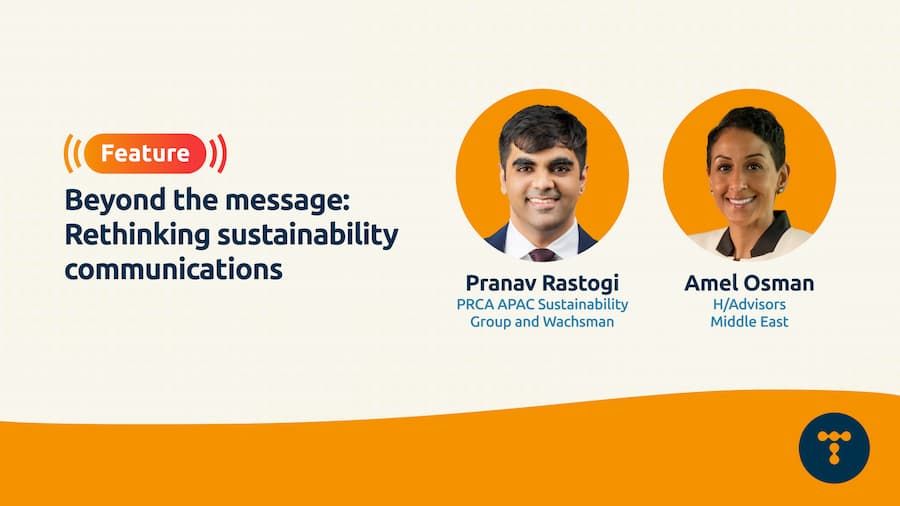
Beyond the message: Rethinking sustainability communications

How can organisations ensure their sustainability communications go beyond reporting environmental commitments to demonstrate meaningful change? As stakeholder scrutiny increases, communications professionals face growing pressure to substantiate corporate claims with evidence and assess whether their efforts are making a difference.

Telum Media spoke with two communications leaders, Pranav Rastogi, Executive Director, Head of Singapore at Wachsman and Chair of the PRCA APAC Sustainability Group, and Amel Osman, Managing Director of H/Advisors Middle East, about what makes modern sustainability communications strategic, self-aware, and substantial.

Going beyond commemorative dates

Dates such as Earth Day, World Environment Day, and COP present opportunities for organisations to communicate their sustainability efforts, but both communications leaders challenged the idea of planning communications activities solely around these events.

"The starting point should be what an organisation has to contribute, rather than feeling obliged to say something because of a date on the calendar," Pranav said.

He suggested three simple tests: relevance, credibility, and contribution.

Communicators should first evaluate whether the issue is material to the organisation and the people it affects. Next, they should establish whether there is evidence of meaningful work or progress to share, including areas where the organisation may be falling short.

Finally, he said communicators should consider whether speaking up would inform a debate, support an initiative, or help stakeholders take action.

From Amel's perspective, participation in commemorative moments should reflect work that is already underway.

To achieve this, she advised communicators to track stakeholder expectations throughout the year, including those of customers, consumers, investors, and policymakers. They should also regularly establish what the organisation needs to do, prove, and explain.

"Stakeholder demands should determine the substance and urgency of the response. The communications calendar should follow that judgement. It should never substitute for it," she said.

Understanding the wider sustainability landscape

Both leaders acknowledged that major global environmental events can still provide valuable opportunities for communicators to better understand emerging sustainability priorities, changing stakeholder expectations, and broader industry developments.

Looking at COP, for instance, Pranav shared: "I'll be watching conversations around adaptation, climate finance, and resilience, alongside the implementation of national climate commitments and a just transition; and looking for details on how these promises are financed, delivered, and measured."

He explained that events like these can raise both reputational and strategic questions, as stakeholders will likely want to understand an organisation's targets, transition plans, the trade-offs involved, and who bears the associated costs.

Amel also pointed to the importance of understanding regional priorities when approaching global sustainability conversations.

In October 2026, H/Advisors published a report titled Market perspectives ahead of COP31, examining sustainability conversations and regional considerations leading up to the global event.

"The GCC analysis connects climate action with energy security, industrial competitiveness, diversification, and resilience. That is the context communications leaders must understand before proposing a narrative," she urged.

Similarly, Pranav said it's crucial to consider local contexts: "For communicators in APAC, the most important thing is to recognise that there is no single regional sustainability narrative.

"Communications leaders need to understand how global commitments translate into local realities."

Both leaders emphasised the importance of anticipating stakeholder scrutiny and preparing organisational leaders to address potential questions ahead of external enquiries.


A more strategic role for communicators

Both leaders agreed that communicators need to be involved early in the organisational decision-making process to play a strategic role in shaping sustainability practices and communications.

"Our contribution is to test whether the organisation's account matches its operating decisions. Bring stakeholder concerns into investment and partnership discussions while they can still influence the outcome," Amel noted.

Pranav explained that communicators should help identify organisational blind spots and bring external perspectives from communities, employees, investors, regulators, and journalists into the boardroom.

To him, this also means being prepared to challenge the substance of sustainability claims, particularly those that lack credible supporting evidence. He also pointed to the misuse of sustainability terminology, which prompted the PRCA APAC Sustainability Group to develop a Sustainability Communications Glossary to help address the issue.

"Terms like 'net zero', 'carbon neutral', and 'regenerative' are not interchangeable marketing expressions. They carry specific implications and need appropriate evidence and context," Pranav cautioned.

Amel echoed the importance of ensuring that sustainability claims are supported by evidence.

"A factory improvement cannot automatically support a whole-product claim. An unfunded aspiration should not be presented as a delivery plan. National ambition provides context; it cannot substantiate company performance."

She added that communications leaders should have the authority to withhold unsupported claims. Depending on the circumstances, this could mean narrowing the wording, changing the underlying practice, commissioning verification, or postponing publication.

From awareness to lasting change

"If the goal is behavioural change, communications teams need to start with the desired outcome, not the message," Pranav said.

He explained that communications teams should first consider whose behaviour they are trying to influence, what those stakeholders currently believe, what prevents them from taking action, and what forms of information or support could help.

Measurement is another area that needs to evolve.

Amel suggested looking at how communications contribute to action through indicators such as qualified enquiries, completed assessments, changes in purchasing criteria, adoption, and sustained use, rather than relying on reach and sentiment alone.

She also recommended tracking environmental outcomes separately and being transparent about what communications efforts have helped influence.

Pranav similarly pointed out that meaningful and lasting sustainability outcomes depend on collaboration across internal functions, including operations, product, and senior leadership teams.

He said: "Ultimately, our contribution should be judged less by how convincingly we tell a sustainability story, and more by whether our work helps people and organisations make better decisions."

APCO
Industry update

APCO strengthens Global China offering with senior hires

Global advisory and advocacy firm, APCO, has expanded its Global China offering, appointing Bruce Fu as Executive Director, Global China, to lead the team.

According to APCO, the expansion responds to changing geopolitical and commercial conditions, including shifts in global supply chains and market access.

Previously APCO's Managing Director for Beijing, Bruce will continue to be based in the city. The expanded team also includes Sherry Shi, based in Dubai, who has been appointed Deputy Lead, Global China; Yadan Ouyang and Trudy Wang as Senior Directors in Shanghai; and Kate Zhao as a Senior Director in New York.

Yadan brings experience from Washington, D.C. and Beijing. Trudy will serve as Head of Capital Markets and Mergers and Acquisitions (M&A) for Asia, while Kate will lead Global China in North America.

The practice is further backed by a bench of senior advisors from across APCO's global network, who bring decades of experience in government, business, and international affairs.

"Our clients' questions increasingly run in both directions: Chinese companies figuring out how to operate abroad, and multinationals figuring out how to operate in and with China," said Chris Torrens, APCO's Managing Director for Greater China and Chair of the British Chamber of Commerce in China.

"This team understands how decisions get made at head offices and how to read the politics of the markets on the other side of that relationship, working as one group across Asia and the rest of the world."

"Our job is to be the bridge: helping Chinese companies build trust with stakeholders in every market they enter, and helping global companies navigate China with the same confidence," said Bruce.

"That only works if the team operates as one, with people who understand both the thinking at head office and the realities on the ground, wherever our clients are."