

Australian public affairs advisory, insights and advocacy consultancy, 227 Partners, has launched to support clients navigate government.
The new agency will be led by Susanna Montrone and will combine political and policy strategy, government relations and community engagement services with market entry research and due diligence, transaction communications and executive counsel.
Susanna is an adviser with decades of experience in senior government and public relations consultancy roles.
227 Partners Executive Director, Susanna Montrone said: “At a time of heightened geopolitical risk, when government is increasingly interventionist in the marketplace, corporate clients are seeking hands on support that applies senior level counsel with a practical understanding of how to integrate business priorities with Australian parliaments, government agencies and key stakeholders.
“Our team, led by expert advisers in government, investment and regulatory risk, work in partnership with clients to design and execute effective strategies - anchored by proprietary intelligence - across the public and private sector interface.”
227 Partners is backed by Ideia Partners, a growing boutique corporate advisory, transaction support and investment firm with domestic and international clients in the infrastructure, property, defence, banking and financial services, transport and energy sectors.
Ideia Partners Managing Partner, Jason de Sousa said: “We are seeing clear market demand for integrated services that combine corporate advisory and transaction support with public affairs and regulatory expertise, to better capitalise on investment opportunities and manage uncertainty in domestic and international markets.
“Ideia Partners' extensive customer base across a wide and diverse range of business and industry sectors in Australia has welcomed the addition of a new strategic alliance with 227 Partners to expand our overall service offering.”
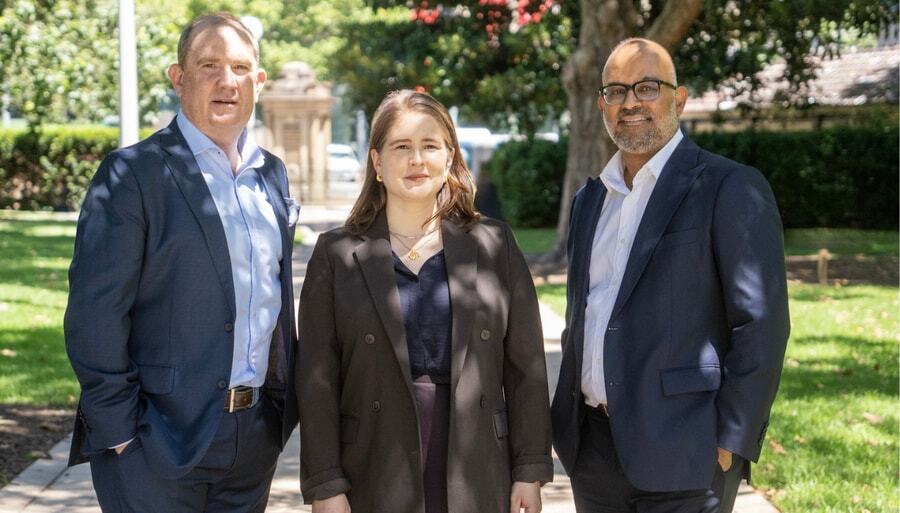
(Pictured L - R: 227 Partners senior team Andrew Huckel, Senior Advisor, Susanna Montrone, Executive Director, and Jason de Sousa, Senior Advisor)
Public affairs advisory 227 Partners launches
Telum Media creating connections
Get in touch to learn more
You might also enjoy

Laura Kiely has joined NSW Health as Director - People and Corporate Communications. She was at the Cancer Institute of NSW for nearly 14 years, most recently as Director - Strategic Communications. Prior to this, Laura worked agency-side in Sydney and Ireland.

Tracy Bustamante has joined Cisco as Communications Manager. Based in Sydney, she was at Intuit, where she held a similar role. Prior to this, Tracy was at VMware as Regional Communications Specialist, Asia Pacific and Japan.
.png)
There is a tendency to judge the health of our communications profession by the number
of job advertisements, agency mergers, or restructuring announcements. While these
indicators provide part of the picture, they rarely tell the full story.
Conversations with senior practitioners from across Aotearoa New Zealand paint a more
nuanced view of the sector in 2026. Following several years characterised by economic
uncertainty, political change, organisational restructures, and cautious investment,
confidence is beginning to return. Yet it is not a simple return to business as usual. The
profession itself is evolving.
One of the clearest signs of that evolution is the growing investment in professional
capability. Across the profession, communications practitioners are actively developing
new skills to navigate artificial intelligence, changing stakeholder expectations, and their
strategic role within their organisations.
Communications leaders are finding themselves at the centre of more complex
organisational decisions. Artificial intelligence is reshaping workflows and changing how
stakeholders think about visibility. Trust has become one of the most valuable strategic
assets an organisation can possess. At the same time, communications professionals are
being asked to deliver more value than ever before with finite resources.
What we're seeing is a profession entering a new phase, where strategic judgement and
trusted advice are becoming even more important.
Recruitment confidence returns
Perhaps the clearest sign of improving confidence is the recruitment market.
After an extended period where organisations delayed hiring and relied heavily on internal resources, recruiters are now reporting renewed activity across both permanent and contract roles. In Wellington particularly, contracting has strengthened as organisations seek experienced professionals who can quickly fill capability gaps created through restructures, hiring freezes, and staff turnover.
Many communications teams remain deliberately lean, creating strong demand for
practitioners capable of stepping into complex environments and making an immediate
impact.
Permanent recruitment is also showing encouraging signs. Demand is strongest for
experienced communications and engagement professionals with around five to eight
years' experience, particularly those capable of combining strategic thinking with practical delivery.
Interestingly, recruitment activity is also being influenced by broader workforce trends.
Auckland employers continue to experience shortages in this mid-career cohort as many
professionals pursue overseas opportunities or relocate to Australia, creating additional
competition for experienced talent.
Salary expectations also appear to be normalising. While some organisations initially
assumed a softer employment market would place downward pressure on remuneration,
that perception has largely disappeared. Rates have largely returned to levels seen in
2022/23, reflecting continuing demand for experienced practitioners.
While uncertainty inevitably remains, particularly as organisations prepare for another
election cycle, the overall mood among recruiters is notably more optimistic than it has
been in recent years.
A changing agency landscape
Agency leaders report a similarly mixed but generally positive outlook.
Some agencies continue to experience steady growth, supported by expanding work from existing clients rather than relying solely on winning new business. This reflects the
enduring value clients place on trusted advisory relationships, particularly during periods
of uncertainty.
At the same time, client behaviour is changing.
Many organisations remain financially cautious. Rather than aggressively pursuing
expansion, communications investment is increasingly focused on protecting reputation,
maintaining stakeholder confidence, and defending market position. This shift has changed the nature of advisory work, with agencies spending more time supporting clients through complex issues, regulatory change, and strategic risk management.
For others, particularly some regional agencies, conditions have remained remarkably
stable. While they have not necessarily experienced significant growth or contraction, they describe a consistent flow of work and continued demand for senior strategic expertise.
One notable trend emerging across agencies is the changing nature of client requests.
Routine communications tasks that once consumed significant time are gradually
diminishing. Rather than reducing demand for communications expertise, this appears to
be shifting agency work further up the value chain.
Clients are seeking advice on complex stakeholder engagement, strategic
communications, government relations, regulatory environments, and issues management. In other words, organisations are less focused on simply producing communications and more focused on determining what should be communicated, when, and why.
As technology automates more routine production, human judgement becomes
progressively more valuable.
Public sector and Wellington: the calm before the next storm?
The picture in Wellington's public sector is somewhat more complicated.
After successive rounds of restructuring and organisational change, there is a palpable
sense of fatigue among public sector practitioners. Many have been through restructure
after restructure, and the current period feels less like a return to normal than a temporary pause.
There is also a familiar Wellington rhythm at this point in the political cycle. With an
election ahead, some plans are being placed on hold because they may ultimately require
decisions from the next government. Major change has slowed, creating something of a
holding pattern.
For communications professionals, however, that pause does not necessarily mean a
reduction in demand. If anything, it may simply be the calm before another period of
significant change.
That is likely to create increasing demand for practitioners who can lead change
communications: people who can help organisations communicate difficult decisions
clearly, engage already-fatigued workforces, manage uncertainty, and maintain trust while
change is implemented.
There is also a more positive counterpoint to the discussion around the cost of
communications contractors. Following the reductions across the public sector, there has
been less commentary about the perceived expense of contractors. Yet experienced
communications specialists remain highly valued because they can bring immediate
capability into lean teams and complex environments. The best practitioners remain worth their weight in gold.
Communications moves upstream
One of the strongest themes emerging across every sector is the growing strategic
influence of communications.
Communications professionals are being included earlier in organisational decision-making, moving beyond implementation to become genuine advisers around
organisational strategy.
Organisations are navigating inflationary pressures, workforce shortages, heightened
public scrutiny, political uncertainty, misinformation, regulatory complexity, and rapidly
changing technology. These challenges cannot simply be explained through
communications once decisions have already been made.
Instead, communications professionals are helping shape better decisions from the outset.
The most effective organisations are steadily recognising that communications is not
simply about producing content or managing channels. It is about understanding
stakeholder expectations, assessing reputational risk, building trust, and ensuring
decisions can withstand public scrutiny.
Investing in capability, not just capacity
If there is one tangible indicator that the profession is embracing change rather than
resisting it, it is the growing appetite for professional development.
At PRINZ, participation in continuing professional development (CPD) has increased by 16
per cent year on year, despite the economic pressures many organisations continue to
navigate. That level of growth suggests communications practitioners recognise that
standing still is simply not an option in a profession evolving as rapidly as ours.
Importantly, the demand is not simply for theory. While there is significant interest in
understanding emerging technologies such as artificial intelligence, practitioners are more often seeking practical tools, frameworks, and real-world applications that can be
immediately translated into their workplaces.
The focus has shifted from learning about change to building the confidence and capability to lead it.
This trend reflects a broader shift across the profession. Organisations seem to now
recognise that communications capability is about equipping professionals with the skills
to provide strategic counsel and build trusted relationships in rapidly changing
environments.
As organisations focus their professional development budgets on building capability,
PRINZ has also adapted its approach to learning. Course fees for non-members now
include a 12-month PRINZ membership, allowing participants to gain immediate practical
skills while also becoming part of the wider profession and accessing all the benefits of PRINZ membership.
It is a practical response to the way many organisations now allocate professional
development funding, ensuring investment in learning also provides an enduring
connection to the profession. Participants leave not only with new skills they can
immediately apply, but with continued access to the insights and professional standards
that help communications practitioners grow throughout their careers.
The increasing demand for professional development sends an encouraging signal. New
Zealand’s communications professionals are not standing still. They are actively investing
in the skills, judgement, and networks that will enable them to lead organisations
confidently through the next phase of the profession’s evolution.
Artificial intelligence changes the conversation
No discussion about the communications profession in 2026 would be complete without
acknowledging the growing influence of artificial intelligence.
Interestingly, practitioners are not primarily discussing AI as a threat to jobs. Many
organisations are actively investing in training their communications teams to better
understand AI tools while simultaneously strengthening the strategic skills that technology cannot replace.
The emergence of Generative Engine Optimisation (GEO) is changing how organisations
think about reputation and discoverability.
Rather than focusing exclusively on traditional search engine optimisation, there is
recognition that appearing in AI-generated responses requires a consistent body of
credible, authoritative content. This has renewed interest in proactive public relations,
thought leadership, and reputation-building activities that establish organisations as
trusted sources of information.
As media channels have fragmented, earned media and high-quality editorial coverage
remain important signals of authority, creating fresh opportunities for public relations
professionals to demonstrate measurable value.
AI appears to be reinforcing the importance of trusted content and credible relationships
rather than diminishing them.
Trust becomes the competitive advantage
If one word captures the future direction of the profession, it is trust.
Credibility has become the true differentiator.
Across sectors, practitioners report growing emphasis on authentic leadership, employee
advocacy, meaningful stakeholder engagement, community relationships, and long-term
reputation building.
Rather than chasing short-term reach or engagement metrics, successful organisations
are investing in relationships that create lasting confidence among employees, customers, regulators, communities, and other stakeholders.
This is particularly evident in sectors where public confidence directly influences
organisational success, including health, professional services, and government-related
industries.
Communications therefore becomes less about broadcasting messages and more about
building relationships capable of sustaining trust over time.
Ethics matters more, not less
The increasing complexity of the communications environment also reinforces the
importance of professional standards.
For PRINZ members, membership carries an important commitment: adherence to the
PRINZ Code of Ethics. In an environment where the speed and scale of content creation
are increasing exponentially, professional judgement and ethical decision-making have
never been more important.
The Code provides a foundation for practitioners navigating questions of accuracy,
transparency, integrity, conflicts of interest, and responsibility to audiences and
stakeholders. These principles matter whether a communication is drafted by a person,
assisted by AI, or produced almost entirely through technology.
PRINZ is currently reviewing its Code of Ethics to ensure it continues to reflect the realities of contemporary communications practice and the new normal in which practitioners are operating.
This review is important because professional standards cannot remain static while the
environment around them changes. The tools may be new but the responsibility remains.
Relationships remain central
One encouraging observation emerging from agency practitioners is the continuing
strength of relationships between experienced communicators and journalists.
While the New Zealand media landscape continues to transform, many senior practitioners describe constructive engagement built on mutual respect and a shared
commitment to quality storytelling.
This reinforces a truth sometimes overlooked: communications remains fundamentally
about people.
Technology can assist with drafting content, analysing data, and automating processes, but trust, judgement, empathy, and relationships remain distinctly human capabilities.
Looking ahead
What comes through from all of this feedback is a profession that is confidently evolving.
Trust has become an organisational imperative rather than simply a communications
objective, and professional standards are becoming more important as the velocity and
complexity of communications continue to increase.
Perhaps most importantly, the profession appears to be moving beyond debates about
whether communications deserves a strategic seat at the table.
Organisations appear to understand more than ever that reputation and stakeholder
confidence are critical to their success. Communications professionals are uniquely
positioned to help leaders navigate these challenges.
As one of our senior members commented, "The future will not be defined simply by how
quickly we adopt the latest technology, but by how effectively we combine technological
capability with uniquely human qualities: judgement, ethics, empathy, curiosity,
relationship building, and strategic thinking”.
Those capabilities have always been at the heart of good communications.
In an increasingly automated world, they may become even more valuable.
This Earned View column was contributed by Susanne Martin, Chief Executive of the Public Relations Institute of New Zealand (PRINZ), with insights from PRINZ members. PRINZ is the professional body representing public relations and communications practitioners across Aotearoa.
Susanne has a career spanning commercial business, vocational education, and professional membership organisations in New Zealand and Australia, with senior leadership experience across strategy, business development, operations, stakeholder engagement, and sales growth. This breadth gives her a perspective that extends beyond the PR profession itself, including the commercial and organisational imperatives shaping the way organisations operate.
Since joining PRINZ in 2022, Susanne has led the Institute through a period of significant change, with a focus on strengthening its strategic direction, financial sustainability, member value, professional development, partnerships, and advocacy for the profession. She is passionate about the role of PR and communications in building trust and helping organisations navigate an increasingly complex environment.
Through her role at PRINZ, Susanne works closely with practitioners, agencies, organisations and industry stakeholders across Aotearoa and has a strong view on where the profession is heading and the challenges it faces.
More likely to call a spade a shovel, Susanne brings a commercially minded and straight-talking perspective to the sector.
Read more from our columnists in The Earned View