

As PR people, we know the power of an awareness day. If there's a calendar event to leverage, we'll find it - or invent it.
International Day of Happiness is no exception.
But behind the headlines, social posts, and motivational cupcakes sits a more serious question for agency leaders: How do you influence employee happiness - and the commercial gains that follow - beyond short-term gratification?
The commercial case for lasting engagement
A newly released Communications and Public Relations Australia (CPRA) Agency Leader Sentiment Survey shows that business performance is the dominant priority for agency leaders in 2026, selected by 82 per cent of respondents. Efficiency and productivity gains follow at 37 per cent.
But productivity does not operate independently of engagement - it depends on it.
When employees feel valued, supported, and clear about their role, engagement rises. Engagement then drives discretionary effort - the willingness to go beyond minimum requirements - and discretionary effort in turn fuels stronger output, higher quality work, and better client results.
Put simply: Happiness influences engagement, engagement influences productivity, and productivity influences business performance.
Across the PR and communications sector globally, engagement remains solid, but retention risk is real.
Culture Amp's Public Relations & Communications benchmark (January 2026) shows that 30 per cent of employees are thinking about or actively seeking roles elsewhere, and 16 per cent are expecting to leave within the next two years. The benchmark further shows a clear "tenure dip", in which newly hired employees tend to be more positive, but sentiment declines sharply and bottoms out between two and six years before lifting slightly among those who stay.
In high-pressure agency environments, turnover isn't the bigger risk, it's presenteeism - employees who are technically present but operating below their potential. When energy and focus erode, productivity follows.
If business performance is the goal, sustainable engagement is the lever.
The common mistake
When productivity dips, agencies often respond with visible morale boosters: office perks, team events, or wellness initiatives. These aren't pointless, but at the same time, they rarely address the root cause.
What's often overlooked are the structural drivers of sustained engagement: manager capability, goal clarity, feedback rhythms, career progression pathways, and clear decision-making boundaries.
Perks may lift mood, but systems shape results.
Five levers for lasting engagement
The factors that drive lasting motivation aren't complicated - they centre on a handful of core psychological needs and everyday leadership behaviours. For PR leaders, that translates into five practical priorities.
-
Design roles for autonomy, meaning, and growth: People are more engaged when they have genuine influence over how work is done, clarity on expectations, and opportunities to stretch. When teams know what "good" looks like and where they have authority, they move from reactive task execution to purposeful contribution.
-
Build manager capabilities: Manager quality is one of the strongest predictors of team engagement. Frequent check-ins, strengths-based feedback, clear developmental guidance, and genuine care for wellbeing outperform annual processes alone.
-
Ensure fair and sustainable conditions: Engagement does not sit on top of instability. Competitive and transparent pay, job security, manageable workload, and flexibility are foundational. In high-pressure PR environments - where deadlines compress and client expectations escalate - workload design and wellbeing support matter. Happiness cannot offset chronic exhaustion.
-
Intentionally build connection and recognition: Belonging, inclusion, and everyday appreciation are strongly linked to lower absenteeism, stronger collaboration, and higher engagement. Genuine recognition, psychological safety in team discussions, shared wins, and inclusive rituals may seem soft, but they materially influence morale, creativity, and retention. The most effective agencies embed them into how work is led, not just how it is celebrated.
-
Reduce friction to make work more enjoyable: Small, recurring obstacles are one of the most underestimated productivity blockers at work. Delayed approvals, constant context-switching, unclear processes, slow technology, meetings that run overtime, and non-stop notifications, these seemingly small irritants drain mental energy over time and cause people to quietly disengage. Removing friction is a powerful engagement driver because it frees up energy for meaningful, high-value work. That fuels discretionary effort and compounds over time.
International Day of Happiness - done differently
On 20th March, many organisations will mark International Day of Happiness with social posts and internal gestures, and there's nothing wrong with that. But if agency leaders want to honour the day meaningfully - and align it with performance priorities - try this instead:
Ask your team one question: "What is one friction point in your work that, if removed, would materially improve your productivity?"
Then act on it.
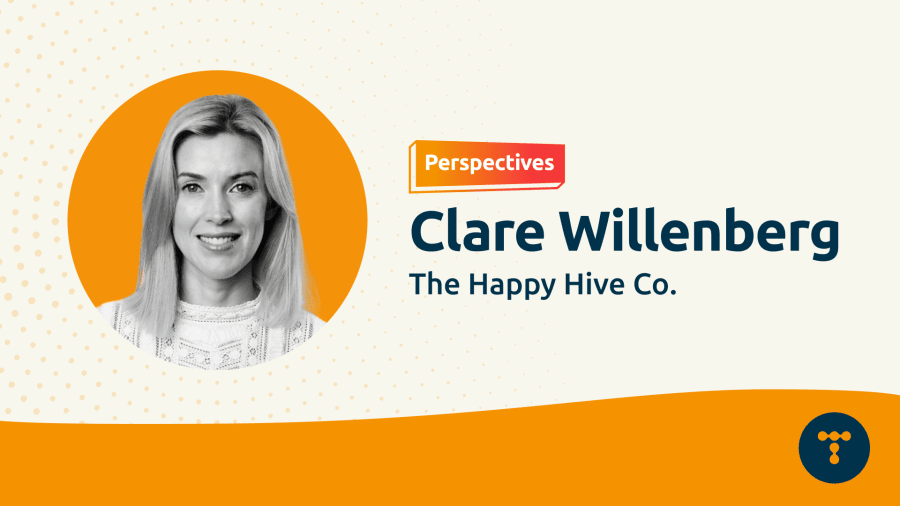
'Perspectives' is a Telum Media submitted article series, where diverse viewpoints spark thought-provoking conversations about the role of PR and communications in today's world. This Perspectives piece was submitted by Clare Willenberg, Founder of The Happy Hive Co.
Clare works with PR agencies and boutique consulting firms across APAC to design the internal people systems required to scale without friction. With 15 years in the agency world prior to founding The Happy Hive Co., she specialises in structured operating rhythms, manager capability frameworks, and practical employee experience design that strengthens long-term effectiveness in high-pressure client-service environments.

-4.png)
-1.jpg)