

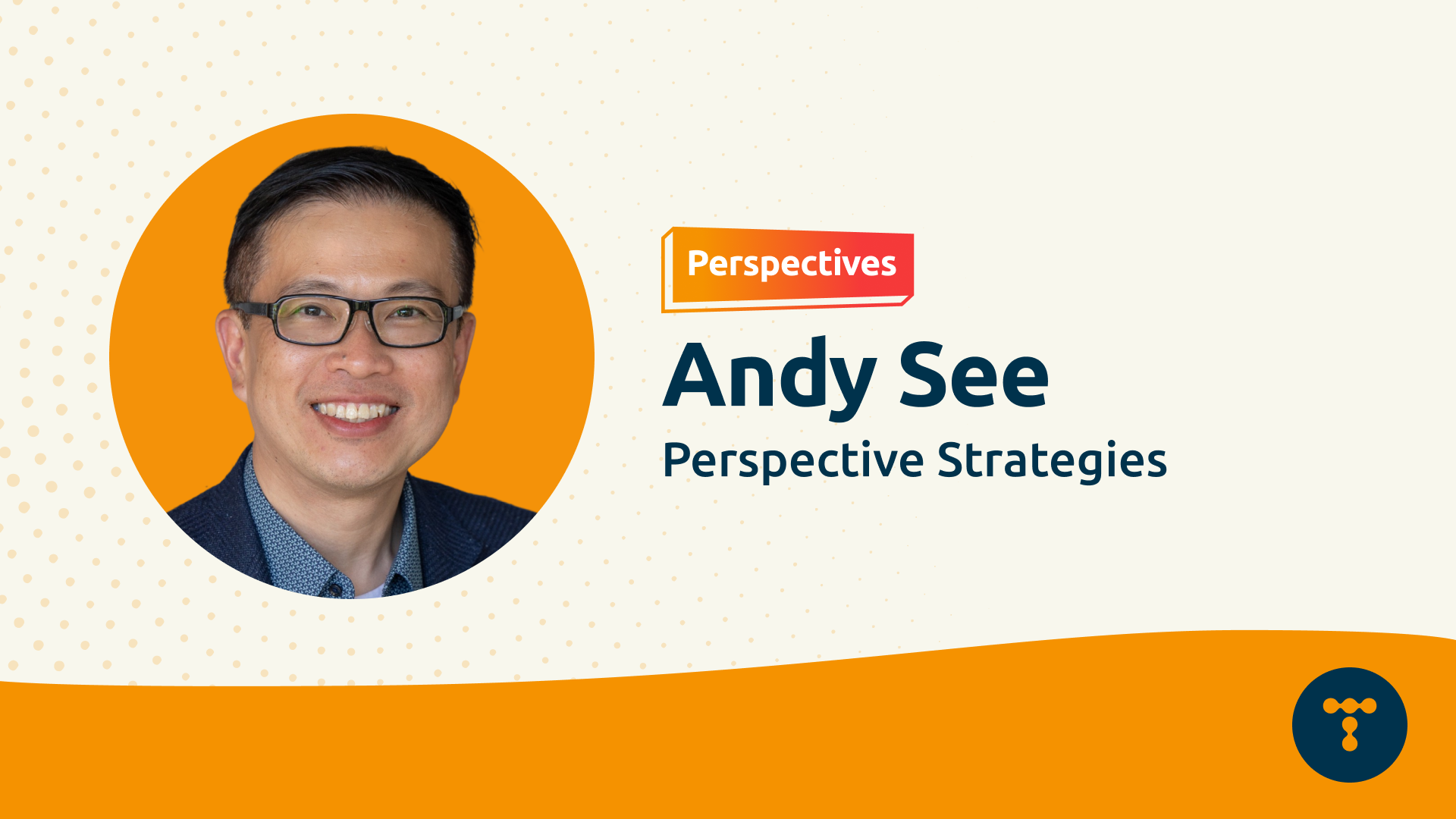
'Perspectives' is a Telum Media submitted article series, where diverse viewpoints spark thought-provoking conversations about the role of PR and communications in today's world. This Perspectives piece was submitted by Andy See, Founder & Managing Director of Perspective Strategies.
Trust is no longer built through media relations, shareholder meetings or marketing initiatives alone. It is important to recognise that genuine credibility is not achieved in a linear route. It is the result of a multi-dimensional approach that weaves together transparent reporting, consistent stakeholder engagement and a demonstrated commitment to action.
Building trust requires telling your story as well as showing how values are embedded across every level of your organisation. Brands and businesses are now expected to communicate a clear purpose (their 'why') and to involve stakeholders in that journey. This shift demands an authentic, purpose-driven narrative that wins the people's hearts and minds.
Purpose is the new product
Simon Sinek's Golden Circle reminds us that true loyalty begins with this 'why.' Organisations that communicate their purpose are more likely to win in the marketplace in the long term. In fact, purpose is the new product. Sustainability, now a key expectation from Boards, is measured and communicated through ESG (Environmental, Social, and Governance) indicators. These indicators serve as our tool to demonstrate how we deliver on our purpose with transparency, consistency and real-world impact.
It is no surprise that sustainability has become the new profitability in Boardroom deliberations. The financial community is already using ESG indicators to evaluate long-term value and business resilience. Communicating purpose through the lens of ESG does not just elevate your brand but it also strengthens your license to operate.
Rethinking sustainability communication: From indicators to impact
Sustainability communication is a holistic approach. It spans campaigns, partnerships, stakeholder engagements and digital platforms. But one pillar stands out for its role in ensuring credibility: sustainability reporting. A transparent report turns ESG from an ideal into measurable action. It creates accountability, signals progress and helps stakeholders see how purpose is being translated into outcomes.
But here is the question I often get from clients: What does 'good' sustainability reporting look like in this part of the world? In Southeast Asia, the rules are evolving, and expectations are still taking shape.
To help answer that, we partnered with the Global ESG Monitor (GEM) in 2023 to assess the transparency of sustainability reports by Malaysian companies on the FTSE Bursa Malaysia KLCI (FBMKLCI). We benchmarked them against indices such as the S&P 50 (USA), Hang Seng (Hong Kong) and EUROSTOXX (European Union).
How well is Malaysia doing?
Malaysia's performance landed us squarely in the midfield. A solid start but the data also revealed hard truths. While many local companies align with global frameworks, there is still room to improve in terms of clarity, depth and narrative quality, especially for non-financial metrics.
We found that most reports included the right categories. Companies declared their sustainability goals, followed accepted frameworks and disclosed ESG data. But the depth was inconsistent. Many companies focused on what they had done or planned to do yet remained vague about the how, when and why.
For instance, 67 per cent of companies listed their stakeholders, but only 37 per cent explained how they were identified. Additionally, 90 per cent reported conducting a materiality analysis, but only 20 per cent disclosed when or how the data was collected.
Setting the stage for trustworthy reporting
This reveals a crucial opportunity to elevate sustainability reporting from compliance to meaningful engagement. And that begins with letting go of a few common myths:
Myth 1: Sustainability reporting is about setting goals to save the planet
Reality: It is about managing and measuring your organisation's impact across people, planet and profit, and communicating your purpose.
To do this well, sustainability must become a lens through which all departments operate, from finance to procurement to operations. That scrutiny may uncover both risks and untapped strengths.
Tip: Sustainability communication must be championed at the leadership level. If sustainability is not embedded in decision-making, reporting becomes a box-ticking exercise, not a transformation tool.
Myth 2: Sustainability reporting is a once-a-year showcase
Reality: It is an ongoing progress tracker.
Many organisations fear disclosing unmet targets. But in reality, stakeholders value honesty over perfection. Investors and partners know sustainability is a journey. What matters is transparency and a commitment to improve.
Tip: Communicate consistently and be forward-looking. Do not just report the wins but share plans to achieve unmet goals.
Myth 3: We can fully outsource sustainability reporting
Reality: External expertise is useful to guide the team, but authenticity and meaningful impact comes from within.
Bring in consultants for frameworks, design, reporting and sharpening the message. But the real value lies in the internal conversations that spark the process of sustainable transformation.A A
In one engagement, we supported a client's first impact report. During field interviews with external stakeholders smallholders, in this case one suggestion emerged: hold regular town halls for open dialogue. That simple request led to wider conversations about stakeholder engagement and even encouraged conversations about the company's operating model.
Tip: Think of sustainability reporting as an ongoing, constructive dialogue. In Southeast Asia, where regulatory structures are still developing, culture and trust often matter as much as compliance.A
Beyond the ESG checklist
Sustainability reporting in Malaysia, and sustainability communication as a whole, is still finding its footing. But transparency is critical if we are to build trust and catalyse change. While there are hurdles including limited data, shifting expectations and uneven disclosures, we are moving in the right direction.
What we need now is a mindset shift from viewing sustainability reporting as a compliance obligation to embracing it as a strategic growth tool.
Andy See is the Founder and Managing Director of Perspective Strategies. He is also the immediate past president of the Public Relations Global Network (PRGN) and a former president of the Public Relations & Communications Association of Malaysia (PRCA Malaysia). Andy is a public relations professional with more than 25 years of experience, specialising in strategic communications, stakeholder engagement and issues management.
Trust is no longer built through media relations, shareholder meetings or marketing initiatives alone. It is important to recognise that genuine credibility is not achieved in a linear route. It is the result of a multi-dimensional approach that weaves together transparent reporting, consistent stakeholder engagement and a demonstrated commitment to action.
Building trust requires telling your story as well as showing how values are embedded across every level of your organisation. Brands and businesses are now expected to communicate a clear purpose (their 'why') and to involve stakeholders in that journey. This shift demands an authentic, purpose-driven narrative that wins the people's hearts and minds.
Purpose is the new product
Simon Sinek's Golden Circle reminds us that true loyalty begins with this 'why.' Organisations that communicate their purpose are more likely to win in the marketplace in the long term. In fact, purpose is the new product. Sustainability, now a key expectation from Boards, is measured and communicated through ESG (Environmental, Social, and Governance) indicators. These indicators serve as our tool to demonstrate how we deliver on our purpose with transparency, consistency and real-world impact.
It is no surprise that sustainability has become the new profitability in Boardroom deliberations. The financial community is already using ESG indicators to evaluate long-term value and business resilience. Communicating purpose through the lens of ESG does not just elevate your brand but it also strengthens your license to operate.
Rethinking sustainability communication: From indicators to impact
Sustainability communication is a holistic approach. It spans campaigns, partnerships, stakeholder engagements and digital platforms. But one pillar stands out for its role in ensuring credibility: sustainability reporting. A transparent report turns ESG from an ideal into measurable action. It creates accountability, signals progress and helps stakeholders see how purpose is being translated into outcomes.
But here is the question I often get from clients: What does 'good' sustainability reporting look like in this part of the world? In Southeast Asia, the rules are evolving, and expectations are still taking shape.
To help answer that, we partnered with the Global ESG Monitor (GEM) in 2023 to assess the transparency of sustainability reports by Malaysian companies on the FTSE Bursa Malaysia KLCI (FBMKLCI). We benchmarked them against indices such as the S&P 50 (USA), Hang Seng (Hong Kong) and EUROSTOXX (European Union).
How well is Malaysia doing?
Malaysia's performance landed us squarely in the midfield. A solid start but the data also revealed hard truths. While many local companies align with global frameworks, there is still room to improve in terms of clarity, depth and narrative quality, especially for non-financial metrics.
We found that most reports included the right categories. Companies declared their sustainability goals, followed accepted frameworks and disclosed ESG data. But the depth was inconsistent. Many companies focused on what they had done or planned to do yet remained vague about the how, when and why.
For instance, 67 per cent of companies listed their stakeholders, but only 37 per cent explained how they were identified. Additionally, 90 per cent reported conducting a materiality analysis, but only 20 per cent disclosed when or how the data was collected.
Setting the stage for trustworthy reporting
This reveals a crucial opportunity to elevate sustainability reporting from compliance to meaningful engagement. And that begins with letting go of a few common myths:
Myth 1: Sustainability reporting is about setting goals to save the planet
Reality: It is about managing and measuring your organisation's impact across people, planet and profit, and communicating your purpose.
To do this well, sustainability must become a lens through which all departments operate, from finance to procurement to operations. That scrutiny may uncover both risks and untapped strengths.
Tip: Sustainability communication must be championed at the leadership level. If sustainability is not embedded in decision-making, reporting becomes a box-ticking exercise, not a transformation tool.
Myth 2: Sustainability reporting is a once-a-year showcase
Reality: It is an ongoing progress tracker.
Many organisations fear disclosing unmet targets. But in reality, stakeholders value honesty over perfection. Investors and partners know sustainability is a journey. What matters is transparency and a commitment to improve.
Tip: Communicate consistently and be forward-looking. Do not just report the wins but share plans to achieve unmet goals.
Myth 3: We can fully outsource sustainability reporting
Reality: External expertise is useful to guide the team, but authenticity and meaningful impact comes from within.
Bring in consultants for frameworks, design, reporting and sharpening the message. But the real value lies in the internal conversations that spark the process of sustainable transformation.A A
In one engagement, we supported a client's first impact report. During field interviews with external stakeholders smallholders, in this case one suggestion emerged: hold regular town halls for open dialogue. That simple request led to wider conversations about stakeholder engagement and even encouraged conversations about the company's operating model.
Tip: Think of sustainability reporting as an ongoing, constructive dialogue. In Southeast Asia, where regulatory structures are still developing, culture and trust often matter as much as compliance.A
Beyond the ESG checklist
Sustainability reporting in Malaysia, and sustainability communication as a whole, is still finding its footing. But transparency is critical if we are to build trust and catalyse change. While there are hurdles including limited data, shifting expectations and uneven disclosures, we are moving in the right direction.
What we need now is a mindset shift from viewing sustainability reporting as a compliance obligation to embracing it as a strategic growth tool.
Andy See is the Founder and Managing Director of Perspective Strategies. He is also the immediate past president of the Public Relations Global Network (PRGN) and a former president of the Public Relations & Communications Association of Malaysia (PRCA Malaysia). Andy is a public relations professional with more than 25 years of experience, specialising in strategic communications, stakeholder engagement and issues management.
-2.jpg)
-1.jpg)