Miles Alexander has been appointed Communications, Marketing and Public Affairs Lead - Infrastructure, Australia at global engineering, construction, and project management firm, Bechtel. He made the move after more than five and a half years at Thrive PR + Communications, where he was most recently Group Account Director.
In the newly created role for the region, Miles will help promote and build Bechtel's reputation within Australia's infrastructure and engineering sector. His remit will span the full marketing communications gamut including media relations, executive thought leadership, owned and paid media strategy, strategic partnerships, and industry engagement.
On the new role, Miles said: "I'm incredibly excited to be stepping into this new role within Bechtel's global Infrastructure business. Few companies can point to a legacy of shaping nations through infrastructure, and in Australia that legacy began more than 70 years ago and includes some of the country’s most transformative projects in energy and mining as well as the soon-to-be-opened Western Sydney International Airport.
"For a communications professional, the opportunity to help tell the stories behind projects of such scale and significance is a privilege.
"I'm looking forward to shining a spotlight on the extraordinary people across Bechtel whose expertise is helping customers deliver critical infrastructure that creates jobs, strengthens economies, enhances resilience, expands access to energy and essential services, and leaves a lasting positive impact for communities."
Miles Alexander takes on lead role at engineering firm
Telum Media creating connections
Get in touch to learn more
Study Highlight: Burson's The Credibility Paradox
You might also enjoy
Burson has released The Credibility Paradox, a report exploring how audiences believe AI-generated answers about brands and companies. The research moves the discussion around Generative Engine Optimisation (GEO) beyond visibility and cited sources, positioning it as a strategic reputation opportunity focused on believability.
The agency, partnered with AI marketing platform Profound, to field thousands of reputation-related answers across seven major AI answer platforms. The study evaluated 85 companies against the eight levers of Burson’s Reputation Capital framework: Innovation, Creativity, Workplace, Products, Financial Performance, Governance, Citizenship, and Leadership.
Responses were assigned a believability score for three audience groups: General Population, Opinion Elites and Business Decision Makers. The agency used its proprietary Decipher tool, developed with cognitive AI company Limbik, to produce more than 55,000 believability forecasts.
Key findings from the research:
- AI rewards proof, not positioning
The research found that fact-based claims tied to innovation, products, and workplace culture consistently performed better than claims linked to more subjective areas such as leadership, governance, and citizenship. The report said this points to the importance of a strong mix of earned, owned and social content for GEO, as AI places weight on independent corroboration from media coverage, reviews and conversation.
- Workplace is an underused credibility lever
Workplace-related answers were the most believable among the general population. Burson said this finding is consistent with large language models’ reliance on independently verifiable sources such as talent platform reviews, labour reporting and earned media.
- Leadership is AI’s toughest credibility test
Leadership-related prompts ranked among the least believable across every industry studied. The industries that scored higher - Aerospace and Technology - had a common thread. Their proof came from governance structures, business performance and external validation, rather than executive messaging alone.
- Believability changes by audience
The report found that a narrative that appears credible in an AI-generated answer may not land equally with customers, investors, employees or regulators. Business Decision Makers rated AI-generated answers 10 per cent more believable on average than the general population. Burson said more specialised audiences were more receptive to innovation-led narratives and the business context behind them.
For communicators, rather than treating earned media, owned content, and social engagement as separate workstreams, Burson said the framework takes a holistic approach. The aim is to build an ecosystem of independent, credible voices whose coverage and commentary reinforce a company’s narrative over time.
“In today’s zero-click world, LLMs have become the new gatekeepers of reputation - how brands are discovered and evaluated. But visibility is not credibility,” said Corey duBrowa, CEO, Burson.
“AI synthesises, summarises, and delivers information directly to audiences. Showing up in these LLMs is necessary but not sufficient. Our role is no longer just to make clients visible, but to build an evidence ecosystem so robust that the answers AI constructs are believable to the audiences that matter most. This research is our playbook for turning the credibility paradox into a competitive advantage.”
"As AI becomes an increasingly influential layer between companies and their stakeholders, it is shaping not only how brands are discovered, but also how they are understood and evaluated. The real opportunity for organisations is not simply to secure share of answer, but to ensure those answers are grounded in evidence, backed by credible sources, and believable to the audiences that matter most,” said Red Surtida, APAC Head of Intelligence & Transformation.
"In a region as diverse and complex as EMEA, GEO is fundamentally a reputation challenge, not just a visibility one," says Bryn Tweedale, Senior Director, Digital Marketing, Burson UK. "Visibility in an AI-generated answer is just the beginning, as the true benchmark is if the underlying reputation translates across borders. This study makes clear it has become a test of ensuring a brands' hard-won reputation remains credible and consistent, no matter which market an AI delivers it to."

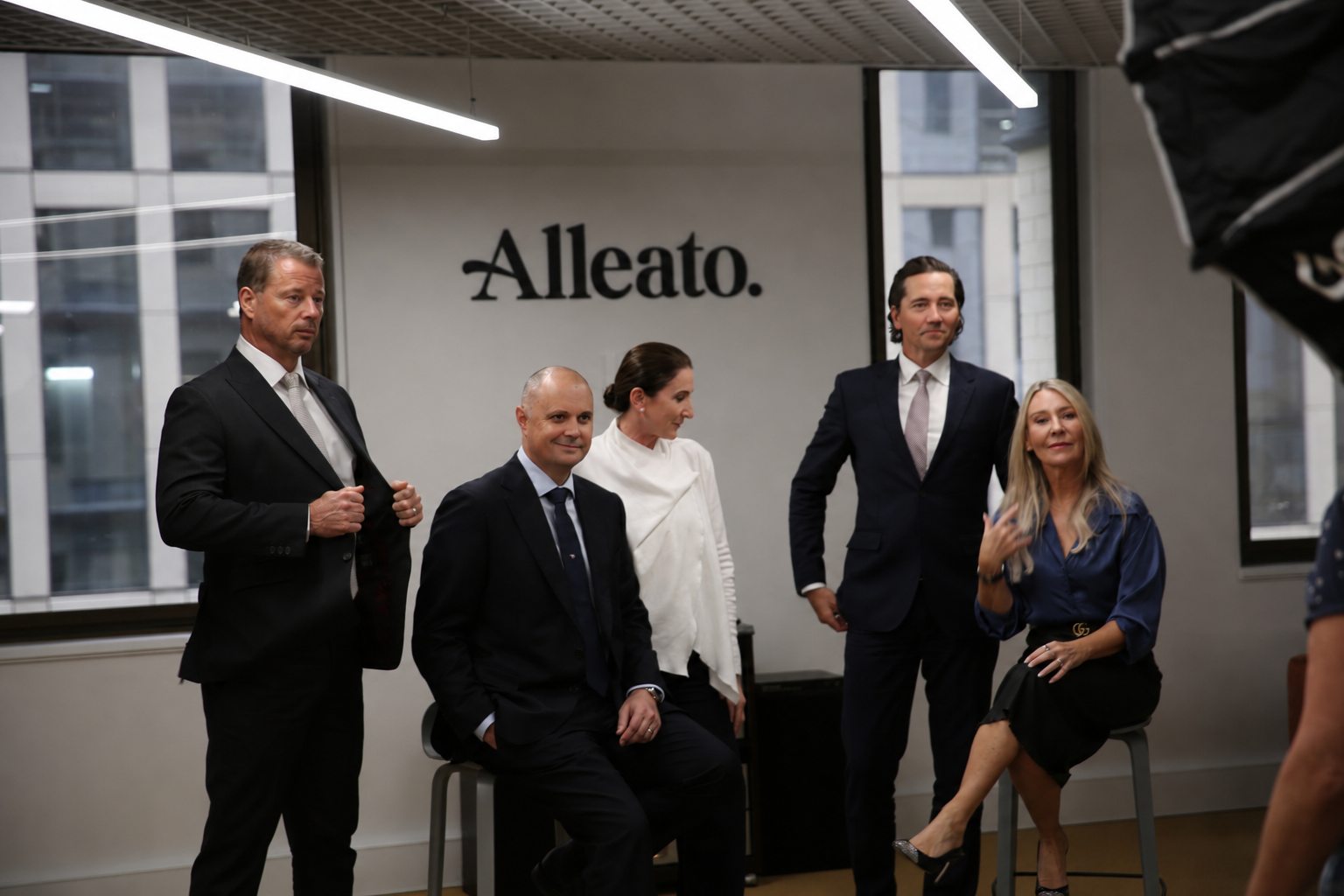
Alleato has launched as an integrated capital markets advisory firm, bringing together senior practitioners across core disciplines under a single operating model.
With a team of 35 people across offices in Sydney, Melbourne, and Brisbane, the firm also has more than 30 active client mandates across investor relations, strategic communications, and brand and design. Plans for an APAC expansion, including Japan, Korea, and Hong Kong, is planned for FY27, through a mix of organic growth and acquisition.
Alleato said it was built to challenge the existing consulting model where companies often rely on siloed specialists to manage critical stakeholder moments, each working with only part of the available data, context, and market intelligence.
The firm's model organises every relevant discipline - shareholder engagement, strategic investor relations, research and intelligence, strategic communications, governance and board advisory, and brand and design - around events that concentrate enterprise value risk. Alleato's foundational team incorporates specialist expertise across these disciplines in AGM seasons, results cycles, activist accumulation, hostile approaches, IPO readiness, CEO transitions, crisis events, and mandatory ESG disclosure.
Senior practitioners lead every engagement directly, with counsel supported by intelligence infrastructure that aggregates shareholder data, beneficial ownership mapping, activist early-warning signals, and investor sentiment.
Christian Sealey, Chief Executive Officer of Alleato, said the firm was launching into a dynamic and changing market environment.
"Companies are dealing with complex risk and operating environments, increasingly unpredictable market reactions, and a widening disconnect in how businesses are valued. It’s not possible to get ahead of these challenges by taking a siloed approach to problem-solving," he said.
"We saw the opportunity to build something that could deliver quality advice at speed and do it in a way that has the full picture.
"We've worked across hundreds of transactions, contested campaigns, governance challenges and reputational crises. The lesson is always the same. When your advisory team isn’t working with the same intelligence or toward the same outcome, no-one is accountable for the result, and the enterprise value suffers. Alleato resolves that."
Alleato's founding team includes Christian Sealey as Chief Executive Officer, Sean Langdon as Chief Operating Officer, and Scott Jenson as Chief Growth Officer, alongside Maria Leftakis, Vas Kolesnikoff, Rebecca Wilson, and Luisa Megale as Strategic Advisers.
Strategic communications and reputation consultancy, Sound Story, has announced the acquisition of The Comms Department, expanding its capabilities across crisis and issues management, reputation advisory, executive communications, and organisational change.
Founded by Bec Brown in 2012, The Comms Department has advised brands, leaders, and organisations across the media, entertainment, lifestyle, and corporate sectors.
The Comms Department will operate as a specialist brand alongside Sound Story, with distinct but complementary positioning: Sound Story will continue to focus on strategic communications and reputation for creative industry leaders, while The Comms Department will specialise in reputation and influence across crisis and issues, change and transformation, mergers and acquisitions, executive advisory, and media training.
As part of the acquisition, Bec has joined as Strategic Advisor across Sound Story and The Comms Department, working alongside Sound Story founders and Managing Partners, Jake Challenor and Brian Lawlor, and senior leaders Jane Elliott, Zanda Wilson, and Jono Harrison.
Jake said the acquisition reflected growing demand from organisations for senior communications counsel during periods of pressure, scrutiny, and change.
"The role of communications has fundamentally changed over the last few years, with reputational issues sitting even closer to business strategy. Organisations are navigating more complexity, more scrutiny and faster-moving stakeholder environments than ever before," he said.
"That has made trusted strategic counsel significantly more valuable.
"Bec has built an incredibly respected business with deep expertise across crisis, reputation and executive communications. Bringing that capability to the group strengthens the advice and support we can provide to clients during high-stakes moments.
"This is an important next step in Sound Story’s growth and reflects where we believe the communications industry is heading – closer to business strategy, leadership and reputation.”
Bec said the acquisition represented a natural evolution for The Comms Department and an opportunity to deepen its strategic support.
"The Comms Department has always done its best work in complex situations where judgement, trust and communication genuinely matter," she said.
"Joining Sound Story gives The Comms Department a bigger platform for the next stage of its work, while protecting the relationships, discretion and values that have shaped the business over the past 14 years.
"Having partnered with Sound Story on several client projects, this next step isn’t theoretical. The work has been strong, the trust is already there, and we genuinely enjoy working together. There’s real alignment in how we think about communications - commercially grounded, deeply human, and always connected to long-term reputation."