PR News
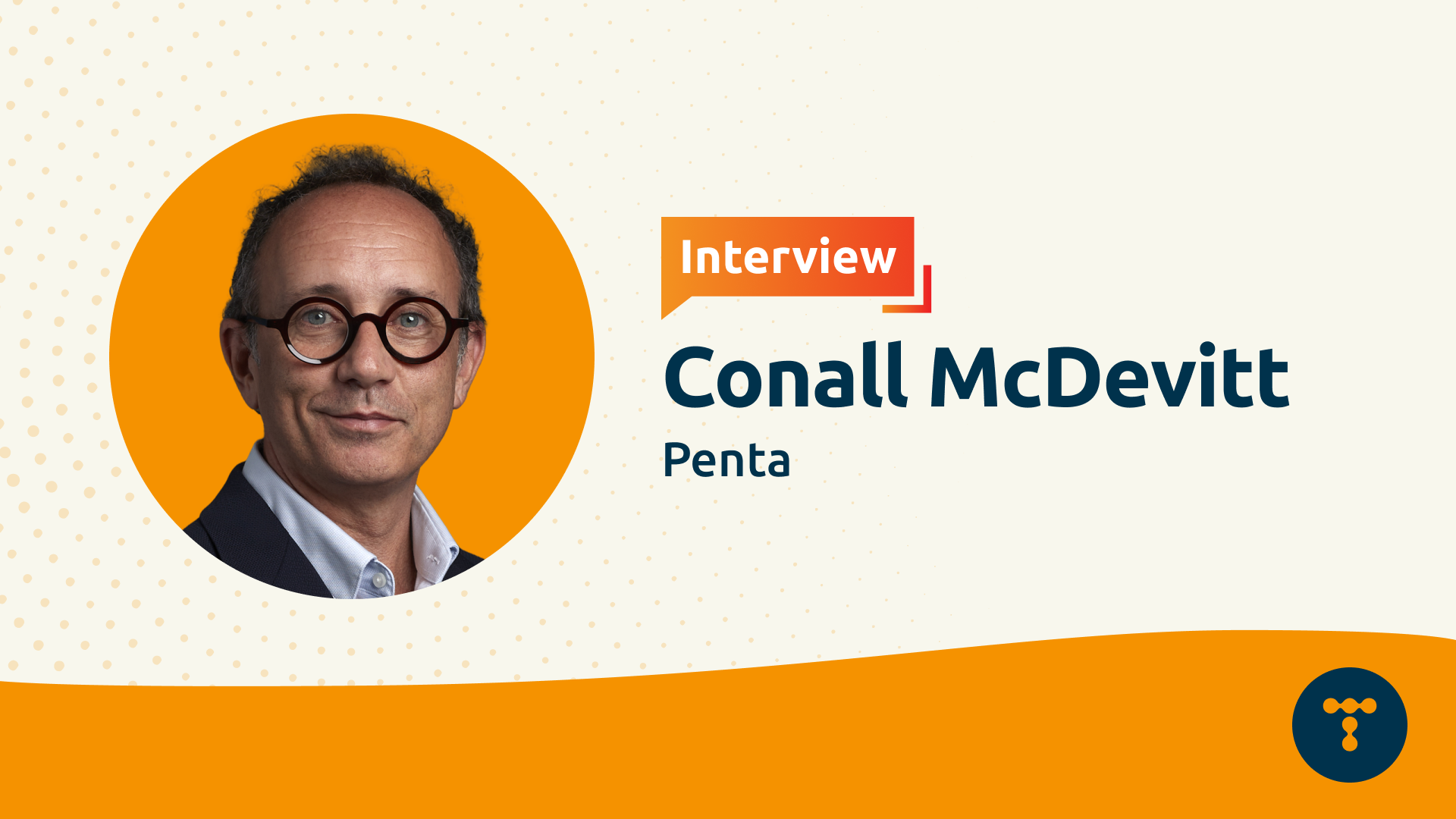
Conall McDevitt

Interview: Conall McDevitt on building strategic influence through data

Communications has traditionally been brought in when an issue emerges, often to manage risk, protect reputation, or respond to a crisis. But as organisations gain access to increasingly sophisticated data and technology, the function has an opportunity to move further upstream - using stakeholder signals, research and analytics to anticipate risks, identify opportunities and inform business decisions.

Telum Media spoke with Conall McDevitt, President of Penta Group, about how communications can build greater strategic influence, the role of data in strengthening reputation advice, and why communicators need to become more predictive and evidence-led.

How can communications teams move beyond their traditional role and become more strategically embedded in organisational decision-making?

We are at a moment of absolute inflection. We are going to see more change in our industry in the next two years than we have seen in the past 20.

That is obviously challenging, but it is also a massive opportunity for those who steward an organisation’s reputation to be more strategically placed by adding real value to decision-making: understanding what stakeholders are saying, seeing, thinking, and doing.

To do that, communications professionals need to embrace data, research and analytics, and allow themselves to be data-led. We need to move from being the trusted adviser with no data to the trusted adviser who has the data.

We also need to reposition the industry from being perceived as people who manage crises to people who get ahead of potential issues. We should be critical, predictive agents within the organisation, anticipating what might happen, helping organisations think through the implications of their actions, and becoming much more valuable internal advisers.

Communications teams often have more data than ever. Where does conventional reporting fall short, and what turns that data into strategic counsel?

Organisations need to monitor and measure what stakeholders are seeing and saying, and periodically conduct research to understand what they are thinking. Having that data is now table stakes. Communications professionals earn our money by interpreting it and looking for signals.

There is a difference between measuring something and noting interesting findings, versus spotting data points that indicate an opportunity or threat. Our expertise allows us to spot those signals, whether we are crisis specialists, public affairs specialists, or something else. But without the data, we have nothing to work on.

The foundation for our industry going forward is credible data, preferably data we own and can analyse in whatever way we want. Our advice needs to be underpinned by signals rooted in evidence.

Consider an emerging crisis. A CEO of a large organisation flat-foots some messaging during an investor briefing, and staff are the first group to react negatively. The organisation now has not only a PR problem but an HR problem. If staff take to social media to complain about the CEO, regulators may also become concerned about systemic risk. One misspeak can therefore create a crisis across multiple stakeholder groups.

If the organisation had researched its stakeholder groups and understood what they were seeing, saying, and thinking, it could have used available technology, including synthetic modelling, to anticipate that the proposed investor messaging might backfire with staff. The communications team could then have raised the concern internally with evidence.

Most reputation crises are avoidable. Black swan events exist, but many crisis briefs, when traced back to their source, involve something the organisation could have prevented.

There is no reason for that today. The question is whether reputation custodians and communicators want to be led and informed by the data, and be seen as the people who can give senior executives the best evidence-based advice on the opportunities and threats associated with proposed actions.


In a region as diverse and complex as Asia, how can communications leaders translate local nuance into insights that senior leadership can act on?

This is where the thesis really comes to life. Southeast Asia has a multiplicity of jurisdictions, cultures, languages, government systems, and economic models. For anyone stewarding an organisation’s reputation, there is a huge amount to understand.

Consider the corporate and policy brands. In a highly regulated industry, communications teams need to understand what is happening across every jurisdiction that could threaten operations from a regulatory perspective, but also where opportunities may exist.

Historically, we have relied on people with local expertise to produce reports. Today, we can overlay that human intelligence with signal intelligence through metadata analysis. Local advice should remain the first and most important data point, but another layer of data can help triangulate it, accounting for human error and unconscious bias.

The same applies to corporate reputation. We still need great people on the ground managing reputation, media relations, and other stakeholder relationships. But the creator economy is now bigger than all established media put together. Unless organisations have teams covering every stakeholder group, supported by consistent reporting, they need a layer of data monitoring what is happening among critical influencer groups, including media, creators, and other key opinion formers.

In a complex region, there are numerous stakeholder tensions. A data- and AI-forward organisation can keep a finger on the pulse of those tensions, identify which require attention, monitor those that are not threats, and spot opportunities.

The goal is to create a common language and measurement model that allows leaders who are not communications experts to understand the reputational impact of proposed actions or strategies. If we are the experts in reputation management, it is on us to develop the models and processes leaders can use.

A sentiment shift of eight points, for example, is a measurement, not an insight. Eight points from where? What caused the shift? Could it accelerate a wider trend, or is it a one-off? The measurement gives us an anchor point; we then need data to understand the story behind the story and our professional judgement to determine whether it represents a problem.

With metadata analysis, we can also look back at similar shifts over the past five years and ask what happened: did they develop into something, die down or follow a pattern? That level of analysis is now at our fingertips.

The profession therefore needs to become data-forward, embrace AI as an enabling technology, and underpin judgement with evidence. Marketing communications, corporate communications, public affairs, and content teams should be looking at the same data, creating a common fact base and language. Different specialisms will spot different signals, and that is exactly what we want: all communications expertise brought into planning and strategic formulation so organisations can get ahead of potential problems.

Why is reputation risk still so often treated as something communications manages after an issue becomes public? What would it take to bring that conversation into the business earlier?

The function has unintentionally grown up this way. Reputation advisers and consultants are often called in when there is already a problem. We are good at putting fires out, and the industry responded to that need. When senior executives’ backs are against the wall, they ask, “Where is the comms team?”

There will always be crises and a need for crisis communications experts. But we should not just be that.

AI is an enabling technology, and metadata is the fuel or raw material we can work from. Together, they give us an opportunity to reframe the role from managing issues to shaping outcomes. We can be strategic advisers and an advisory platform; the industry can become a strategic asset to business if it brings its experience together with data.

I have always argued that communications leaders need to be strategic thinkers. Your expertise may be communications, media relations or government relations, but that does not mean you are not a senior leader in the business. Being a senior leader means being a stakeholder in the business and contributing to strategic conversation and debate.

We are at a moment that makes it more possible for the function responsible for reputation management to become strategic. But people need to choose to be strategic too. If the function is going to become more important and powerful, those in the roles need to operate at that level. I know many people who are already capable of doing so. What I want is for us to level up as an industry, and the work we do, the careers we have and the opportunities we create for the next generation will be really interesting.

In an interview with us in 2023, you challenged communicators in Asia to ask, “How big can your function be?” Three years on, how should communications leaders in this region move from execution to enterprise influence?

My opinion has not changed. There is no reason why communications leaders in Asia cannot be global communications leaders.

Communications leaders around the world need to embrace the power of the data already at their feet and become people who view the organisation's future through a reputational lens. That requires attitude, curiosity, adaptability, and a willingness to evolve. Those characteristics are baked into many of Asia’s great economies, which are among the world’s most adaptive, innovative, and curious.

My appeal is: let us be the best representation of that.

We can still do the work we love, whether content, financial communications, marketing communications, or product. But we should do it as part of an ecosystem underpinned by a common language and shared objective data set, where communications specialisms debate the potential implications and opportunities of reputational change.

The role is then to give the C-suite the best advice, underpinned by data, so organisations do not slow-walk themselves into avoidable crises. Instead, they can focus on enriching stakeholder relationships and enhancing reputation.

I am optimistic about our future. For those entering the industry, AI is an enabling technology, not a replacement technology. Embrace its potential, but use the time it gives back to build networks and relationships. These are relationship businesses, and trusted advisers need strong relationships with their peers.

Curiosity will also always be rewarded. Be curious about your part of the business, but also the business as a whole.

And the foundational skills remain: being able to tell a great story, having a creative mind, and being able to write. The best people in our industry will continue to be those who can do those things well.

Be bullish and positive about the future. Embrace the change and roll with it. It is going to be good.

Previous story

The art of looking like you didn’t try

You might also enjoy

The
The Earned View

The art of looking like you didn’t try

I produced a video once where the most expensive shot was the one that looked like nobody had thought about it.

Ten rounds of script development. Eleven takes. Four days in edit. And then a meeting, a genuine, scheduled, multi-stakeholder meeting, to discuss whether the result still felt sufficiently off-the-cuff.

I am not embarrassed to tell you this. Or rather, I am slightly embarrassed, which is probably why it is worth saying out loud.

The illusion of the unplanned

We have built an entire aesthetic grammar around the performance of spontaneity. The slightly off-centre framing. The ambient noise left in. The sentence that trails off in a way that has been carefully written to trail off. The thought leadership post that reads like it was dashed off at six in the morning and was, in fact, reviewed by four people over a fortnight and quietly rewritten by each of them.

The reason we do this is not cynical, or at least it didn't begin that way.

Audiences had become fluent, rightly, in the visual language of institutional communications. High production values had become a reliable signal of managed messaging, and managed messaging had become a reliable signal of something worth being sceptical about. So we adapted.

We learned to speak a different visual dialect. We reached for the rough cut and the imperfect take because these carried a different signal: this is real, this is unmediated, this person is just talking to you.

The limits of looking 'real'

The problem is that signal has been so thoroughly colonised by professional communicators that it barely functions anymore.

Audiences feel the effort behind the effortlessness even when they can't name it. And the gap between what the aesthetic promises, directness, authenticity, genuine human communication, and what it is actually delivering, a carefully managed performance of those things, is precisely the kind of gap that erodes trust slowly and without a single identifiable moment of failure.

I wrote in an earlier column about the way organisations have enthusiastically embraced the language of authenticity while remaining perfectly, carefully, strategically safe. This is the visual version of that same problem. We are not being more direct. We are making increasingly sophisticated use of the aesthetic codes of directness. Those are not the same thing, and the distinction matters more now than it ever has.

Because AI has changed the economics of this in ways the profession has not yet properly absorbed.


AI has broken the old visual shortcuts

For years, visual quality was a rough but functional proxy for institutional seriousness. High production value signalled resources, which signalled credibility, which gave audiences a reason to pay attention before they had processed a single word. The rough cut worked in the opposite direction for the same reason: it signalled the absence of that machinery, which felt like the absence of spin. Both proxies were imperfect. Both broadly worked.

But AI is dismantling both simultaneously.

The cost of producing visually sophisticated content has collapsed. Which means polish no longer reliably signals credibility, because almost anyone can produce it now. And the cost of producing convincing roughness, the compression artefact, the authentic-feeling imperfection, the appearance of a single unplanned take, has also collapsed. Which means the rough cut no longer reliably signals authenticity either, because that too can be generated, adjusted, and optimised at scale.

What we are left with is a visual environment in which the proxies our audiences have been using to calibrate trust are becoming progressively unreliable, and most of the communications industry is responding by producing more content faster using the same proxies, without stopping to ask whether those proxies still mean what we think they mean.

McLuhan’s observation that the medium is the message has been invoked so many times in our industry that it has almost stopped being useful. But it is genuinely clarifying here. Because if the rough cut, the handheld frame, the unpolished register, if these are the medium, then the message they carry is one about authenticity and approachability. And if that message is being manufactured, the medium is lying.

Not in any single detectable moment. Just steadily, quietly, at scale.

What organisations should ask before the brief

The organisations that will navigate this well are not, I think, the ones that crack the code on what authentic-looking content looks like in an AI-saturated environment. They are the ones that develop the judgment to ask, before the shoot, before the brief, before the meeting about whether it looks casual enough: what does our choosing this aesthetic actually say, and is it true?

Aesthetic judgment in strategic communications has always been present. It has rarely been explicit. It has almost never been treated as a strategic competency in its own right, something to be developed, interrogated, and defended in the same way we defend a key message or a media strategy.

That needs to change. Not because beauty matters for its own sake, though it does. But because in a visual environment where the old signals are failing and the new tools make every register equally accessible, the question of what your content looks like, and what that appearance communicates before anyone has processed a single word, is no longer an aesthetic question at all.

It is a trust question. And trust, as this column has been arguing for a few months now, is the thing our profession exists to build and has developed a remarkable number of sophisticated ways to quietly undermine.

Matthew (Matt) Thomas is Founder and Chief Catalyst at Stake The Reputation Company, a Melbourne-based consultancy working across brand, reputation, communications, and public affairs. He has advised some of Australia’s largest private companies and has worked extensively with global organisations localising their storytelling and narratives for Australian audiences. His experience spans consumer, government, health, infrastructure, technology, and corporate reputation, including advisory work at all levels of government in Australia.

Matt’s work sits at the intersection of communications, behaviour change, and institutional strategy. He is also a contributor to the The Oxford Handbook of Social Purpose, writing on reputation, legitimacy, and the growing gap between organisational messaging and operational reality.

Read more from our columnists in The Earned View

Clair
Moves

Clair White takes up role as Media Manager

Clair White has returned to Victoria Police and has commenced a new role as Media Manager. She has finished nine and a half years at St Kilda Football Club, most recently as Head of Media and Communications. Prior to this, Clair was at the Victorian Department of Health & Human Services, following three and a half years at Victoria Police.

Relationships
Feature

Relationships and trust as the foundation of reputation

In the world of PR and communications, reputation is rarely built by a single campaign, statement, or moment of visibility. It is usually influenced by the network of people surrounding an organisation and by how those relationships are nurtured over time.

To find out more about what effective relationship building looks like in practice, Telum Media spoke to senior agency PR and communications practitioners across APAC and the Middle East to gather their insights. They shared how communicators can move beyond transactional engagement, identify relationships that matter most, strengthen media connections, and earn the trust required to become valued advisors in challenging circumstances.

It all starts small

Strong relationships and trust with stakeholders start at an individual level, rather than with an institutional rank. Instead of thinking about the organisation they represent or their job title, understanding the individual's priorities, how they prefer to communicate, and their current pressures is a lot more fruitful.

Ericka Anicas, Consultant at Northbourne Advisory, said that strong relationships are built through very small interactions over time.

"It might be responding quickly when someone needs information, making a useful introduction, sharing context even when there is no immediate benefit to you, or simply remembering a previous conversation and following up. None of those things are complicated, but consistency matters.”

Although micro relationships may seem insignificant, they impact how an organisation and its representatives are perceived.

Yvonne Koh, Managing Director at Saeloun Asia, explained that she approaches micro relationships as building blocks, laid down layer upon layer until something sturdier takes shape, and views it through the lens of genuine curiosity rather than as a transactional ask.

“These one-to-one relationships matter because trust needs to be earned, and it is built on each individual interaction, and then compounds. A journalist who has found you reliable once will take your next call. A colleague who felt respected during a difficult situation will lend help the next time you are going through a difficult time,” she said.

Diana Footitt, CEO of Artemis Associates, agreed and shared how every interaction doesn't just have to be transactional.

“The strongest relationships often develop through unexpected conversations, shared experiences, and small acts of support overtime. We stay in touch even when we are not asking for anything. Organisational trust is ultimately built one conversation at a time."

When relationships matter most

The strongest professional relationships become most visible during periods of change, crisis, and uncertainty, but by then, the groundwork should have already been laid.

Jenna Fearnley, Founder of VIPERA, stressed the importance of PR and communications professionals building those relationships early, warning: “You can't suddenly create warmth, credibility, or goodwill in the middle of a crisis.”

Ericka agreed, noting that when circumstances change quickly, communicators rarely have the luxury of building trust from scratch and instead have to rely on the credibility that has already been established.

Jenna added that while media relationships are important in these situations, they are just one part of the equation, with trusted client relationships equally important.

“The clients I value most are the ones who can be honest with me when it is messy, and who trust me to work through it with them, protect what can be protected and tell them when something needs to be handled differently.

“You need people who know how you work, know you won’t panic or sugar-coat it, and know you will be there until it is dealt with.”

Yvonne echoed the sentiment, saying: "The infrastructure only holds when you've built it well before the stress test arrives.

“Having peers you trust enough to be honest with, and can count on to have grounded opinions, is an asset you don’t appreciate until you need it.”


Good media relations in practice

It's no secret that credibility between communications professionals and journalists is built by making a genuine effort to understand their beat and consistently making their job easier. But that can sometimes be overlooked when communicators are juggling campaign after campaign, often several at once.

Journalists face similar pressures. Trust can quickly be eroded when their time is disregarded through poorly targeted, vague or generic pitches, overselling a spokesperson or story, or going silent when they need you simply because there is nothing immediate to gain.

Jenna suggested the ‘silver-platter theory’ as a way to support journalists who are increasingly under-resourced and working to tight deadlines.

“Give them the story clearly, explain why it is relevant now, provide the data or evidence behind it, the right talent, strong images or vision where possible, and make the spokesperson available. Anticipate the questions they’re likely to ask and have the answers ready. It’s about respect,” she said.

Something that Diana says to keep in mind is that lasting credibility with journalists is based on relevance, honesty, and respect for their judgment.

"Our team takes the time to understand what constitutes a story for them and the pressures they are under. If we do not know something, we say so. If something is not really a story, we do not pretend that it is."

She also emphasised the importance of building long-term trust, saying: "We would never trade a relationship built over 20 years for one piece of coverage with a client."

Ericka added that building strong media relationships also means not treating every interaction as a pitch.

“Some of my longest media relationships have lasted because there is an exchange of knowledge and context, rather than a constant expectation of coverage,” she said.

Yvonne echoed the point, saying that some of the most useful conversations with journalists didn't need to result in any coverage at all.

Quality over quantity

With communications functions becoming leaner and stakeholder expectations growing, there comes a point where, realistically, communicators cannot build relationships with everyone. This creates the challenge of exercising judgment about which relationships to invest in, rather than building a large network that may be unsustainable.

A smaller network does not necessarily mean a weaker one. Instead, the more useful measure may be whether a relationship is strong enough to allow for candid engagement.

“I’d rather have five stakeholders who trust us enough to take a difficult call, than 50 who only know us by name but are not familiar with how we actually work,” Yvonne said.

Diana also shared the same thoughts: "We take the time to understand what drives people, how they think and what they care about, not simply what their job title says they do.

"That approach is central to how we have built our firm. Artemis is highly specialised, and we work closely with a relatively small number of clients, often over many years."

For Ericka, investing in worthwhile relationships means considering both relevance and influence, including who can affect an organisation’s objectives and offer valuable insight and expertise. She warned though, that a stakeholder's value shouldn't be determined by hierarchy alone.

“Sometimes a specialist journalist, an internal subject-matter expert, or someone deeply connected to a particular community can be more influential in a specific situation than the person with the most senior title,” she said.

For Jenna, prioritising the right relationships comes down to asking: Who understands us? Who can help us understand what’s really happening? Where is there risk if we're not connected?

“Sometimes that will be a senior leader. Sometimes it’s the person in the business who hears complaints first, knows what customers are frustrated about, or has noticed that a change is not landing the way leadership expected. Sometimes it is a journalist who has built deep knowledge in a sector and can see the bigger issue behind the announcement. Sometimes it’s a community voice who may not have the biggest platform but has real trust locally,” she said.

What it means to be a trusted advisor

According to Ericka, curiosity in stakeholder engagement means understanding: Why that person matters, what is happening around them, and how that relationship connects to the organisation’s wider objectives.

This needs to be matched with careful listening, paying attention to both what stakeholders are saying and what they're not.

Diana agreed, saying: "Trusted advisors listen carefully, follow through on what they promise, and remain in contact when there is no immediate request to make. They share insight, make thoughtful introductions, and help others without calculating the immediate return."

She also highlighted other qualities of trusted advisors: “They help absorb some of the pressure their clients are under, bring clarity, and help their clients make good decisions without adding ego or drama.”

Being a trusted advisor also requires the confidence to be candid and honest. This means being prepared to raise unwelcome information, challenge a weak message or announcement, or tell leaders when stakeholder sentiment is worse than they realise.

“Early in my career, I learned that the moment you hold back bad news to preserve superficial harmony is often the moment you start losing credibility with a leader or client,” Yvonne said.

Candour and honesty shouldn’t be confused with confrontation for its own sake, but rather as useful counsel grounded in judgement.

“I think the biggest difference is whether you’re there to be liked or there to be useful,” said Jenna.