In the world of PR and communications, reputation is rarely built by a single campaign, statement, or moment of visibility. It is usually influenced by the network of people surrounding an organisation and by how those relationships are nurtured over time.
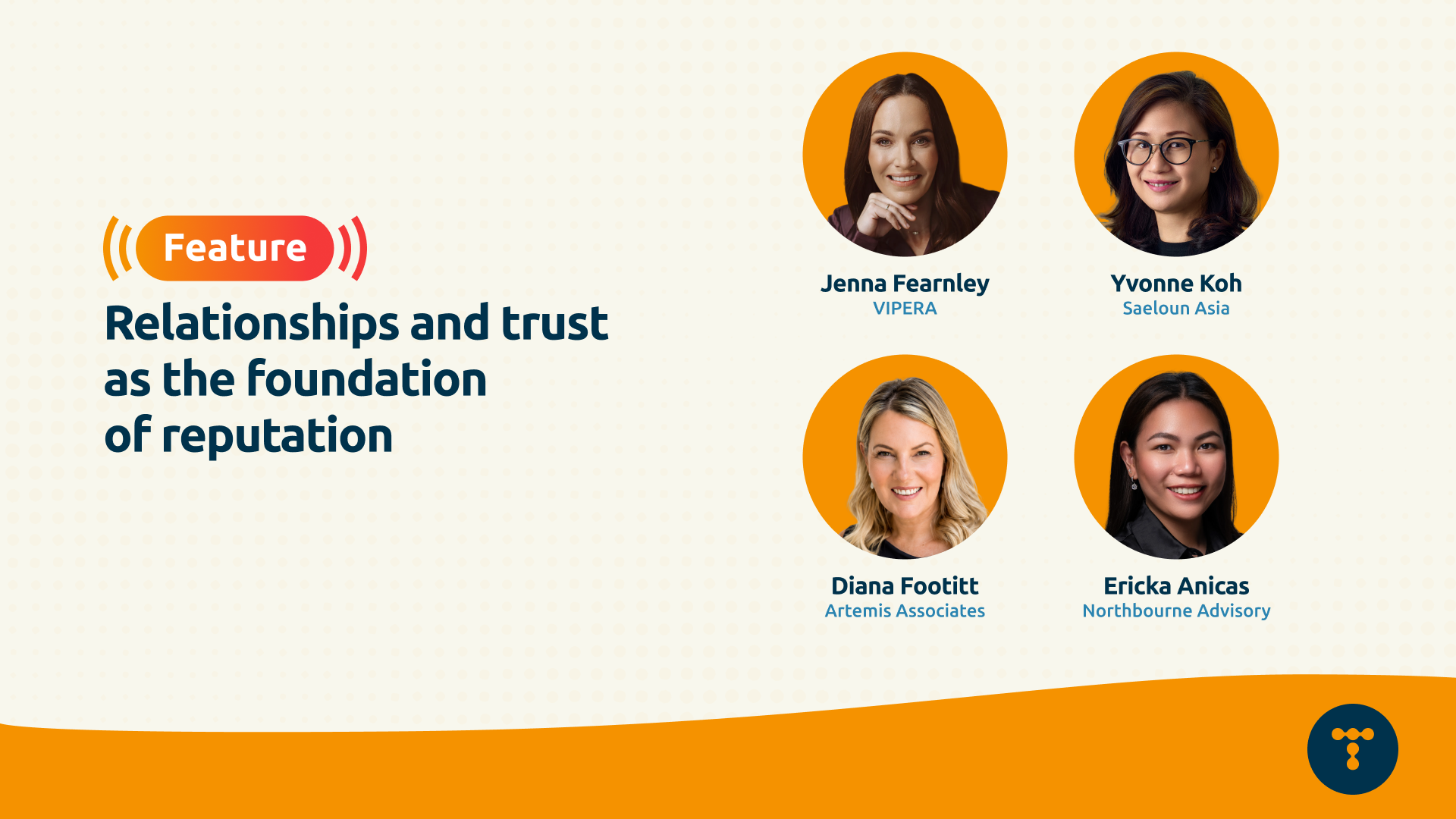
To find out more about what effective relationship building looks like in practice, Telum Media spoke to senior agency PR and communications practitioners across APAC and the Middle East to gather their insights. They shared how communicators can move beyond transactional engagement, identify relationships that matter most, strengthen media connections, and earn the trust required to become valued advisors in challenging circumstances.
It all starts small
Strong relationships and trust with stakeholders start at an individual level, rather than with an institutional rank. Instead of thinking about the organisation they represent or their job title, understanding the individual's priorities, how they prefer to communicate, and their current pressures is a lot more fruitful.
Ericka Anicas, Consultant at Northbourne Advisory, said that strong relationships are built through very small interactions over time.
"It might be responding quickly when someone needs information, making a useful introduction, sharing context even when there is no immediate benefit to you, or simply remembering a previous conversation and following up. None of those things are complicated, but consistency matters.”
Although micro relationships may seem insignificant, they impact how an organisation and its representatives are perceived.
Yvonne Koh, Managing Director at Saeloun Asia, explained that she approaches micro relationships as building blocks, laid down layer upon layer until something sturdier takes shape, and views it through the lens of genuine curiosity rather than as a transactional ask.
“These one-to-one relationships matter because trust needs to be earned, and it is built on each individual interaction, and then compounds. A journalist who has found you reliable once will take your next call. A colleague who felt respected during a difficult situation will lend help the next time you are going through a difficult time,” she said.
Diana Footitt, CEO of Artemis Associates, agreed and shared how every interaction doesn't just have to be transactional.
“The strongest relationships often develop through unexpected conversations, shared experiences, and small acts of support overtime. We stay in touch even when we are not asking for anything. Organisational trust is ultimately built one conversation at a time."
When relationships matter most
The strongest professional relationships become most visible during periods of change, crisis, and uncertainty, but by then, the groundwork should have already been laid.
Jenna Fearnley, Founder of VIPERA, stressed the importance of PR and communications professionals building those relationships early, warning: “You can't suddenly create warmth, credibility, or goodwill in the middle of a crisis.”
Ericka agreed, noting that when circumstances change quickly, communicators rarely have the luxury of building trust from scratch and instead have to rely on the credibility that has already been established.
Jenna added that while media relationships are important in these situations, they are just one part of the equation, with trusted client relationships equally important.
“The clients I value most are the ones who can be honest with me when it is messy, and who trust me to work through it with them, protect what can be protected and tell them when something needs to be handled differently.
“You need people who know how you work, know you won’t panic or sugar-coat it, and know you will be there until it is dealt with.”
Yvonne echoed the sentiment, saying: "The infrastructure only holds when you've built it well before the stress test arrives.
“Having peers you trust enough to be honest with, and can count on to have grounded opinions, is an asset you don’t appreciate until you need it.”
Good media relations in practice
It's no secret that credibility between communications professionals and journalists is built by making a genuine effort to understand their beat and consistently making their job easier. But that can sometimes be overlooked when communicators are juggling campaign after campaign, often several at once.
Journalists face similar pressures. Trust can quickly be eroded when their time is disregarded through poorly targeted, vague or generic pitches, overselling a spokesperson or story, or going silent when they need you simply because there is nothing immediate to gain.
Jenna suggested the ‘silver-platter theory’ as a way to support journalists who are increasingly under-resourced and working to tight deadlines.
“Give them the story clearly, explain why it is relevant now, provide the data or evidence behind it, the right talent, strong images or vision where possible, and make the spokesperson available. Anticipate the questions they’re likely to ask and have the answers ready. It’s about respect,” she said.
Something that Diana says to keep in mind is that lasting credibility with journalists is based on relevance, honesty, and respect for their judgment.
"Our team takes the time to understand what constitutes a story for them and the pressures they are under. If we do not know something, we say so. If something is not really a story, we do not pretend that it is."
She also emphasised the importance of building long-term trust, saying: "We would never trade a relationship built over 20 years for one piece of coverage with a client."
Ericka added that building strong media relationships also means not treating every interaction as a pitch.
“Some of my longest media relationships have lasted because there is an exchange of knowledge and context, rather than a constant expectation of coverage,” she said.
Yvonne echoed the point, saying that some of the most useful conversations with journalists didn't need to result in any coverage at all.
Quality over quantity
With communications functions becoming leaner and stakeholder expectations growing, there comes a point where, realistically, communicators cannot build relationships with everyone. This creates the challenge of exercising judgment about which relationships to invest in, rather than building a large network that may be unsustainable.
A smaller network does not necessarily mean a weaker one. Instead, the more useful measure may be whether a relationship is strong enough to allow for candid engagement.
“I’d rather have five stakeholders who trust us enough to take a difficult call, than 50 who only know us by name but are not familiar with how we actually work,” Yvonne said.
Diana also shared the same thoughts: "We take the time to understand what drives people, how they think and what they care about, not simply what their job title says they do.
"That approach is central to how we have built our firm. Artemis is highly specialised, and we work closely with a relatively small number of clients, often over many years."
For Ericka, investing in worthwhile relationships means considering both relevance and influence, including who can affect an organisation’s objectives and offer valuable insight and expertise. She warned though, that a stakeholder's value shouldn't be determined by hierarchy alone.
“Sometimes a specialist journalist, an internal subject-matter expert, or someone deeply connected to a particular community can be more influential in a specific situation than the person with the most senior title,” she said.
For Jenna, prioritising the right relationships comes down to asking: Who understands us? Who can help us understand what’s really happening? Where is there risk if we're not connected?
“Sometimes that will be a senior leader. Sometimes it’s the person in the business who hears complaints first, knows what customers are frustrated about, or has noticed that a change is not landing the way leadership expected. Sometimes it is a journalist who has built deep knowledge in a sector and can see the bigger issue behind the announcement. Sometimes it’s a community voice who may not have the biggest platform but has real trust locally,” she said.
What it means to be a trusted advisor
According to Ericka, curiosity in stakeholder engagement means understanding: Why that person matters, what is happening around them, and how that relationship connects to the organisation’s wider objectives.
This needs to be matched with careful listening, paying attention to both what stakeholders are saying and what they're not.
Diana agreed, saying: "Trusted advisors listen carefully, follow through on what they promise, and remain in contact when there is no immediate request to make. They share insight, make thoughtful introductions, and help others without calculating the immediate return."
She also highlighted other qualities of trusted advisors: “They help absorb some of the pressure their clients are under, bring clarity, and help their clients make good decisions without adding ego or drama.”
Being a trusted advisor also requires the confidence to be candid and honest. This means being prepared to raise unwelcome information, challenge a weak message or announcement, or tell leaders when stakeholder sentiment is worse than they realise.
“Early in my career, I learned that the moment you hold back bad news to preserve superficial harmony is often the moment you start losing credibility with a leader or client,” Yvonne said.
Candour and honesty shouldn’t be confused with confrontation for its own sake, but rather as useful counsel grounded in judgement.
“I think the biggest difference is whether you’re there to be liked or there to be useful,” said Jenna.
-1.jpg)
-1.jpg)