PR News
Steve Fontanot

Havas Red's 2026 Red Sky Prediction report on key trends for year ahead

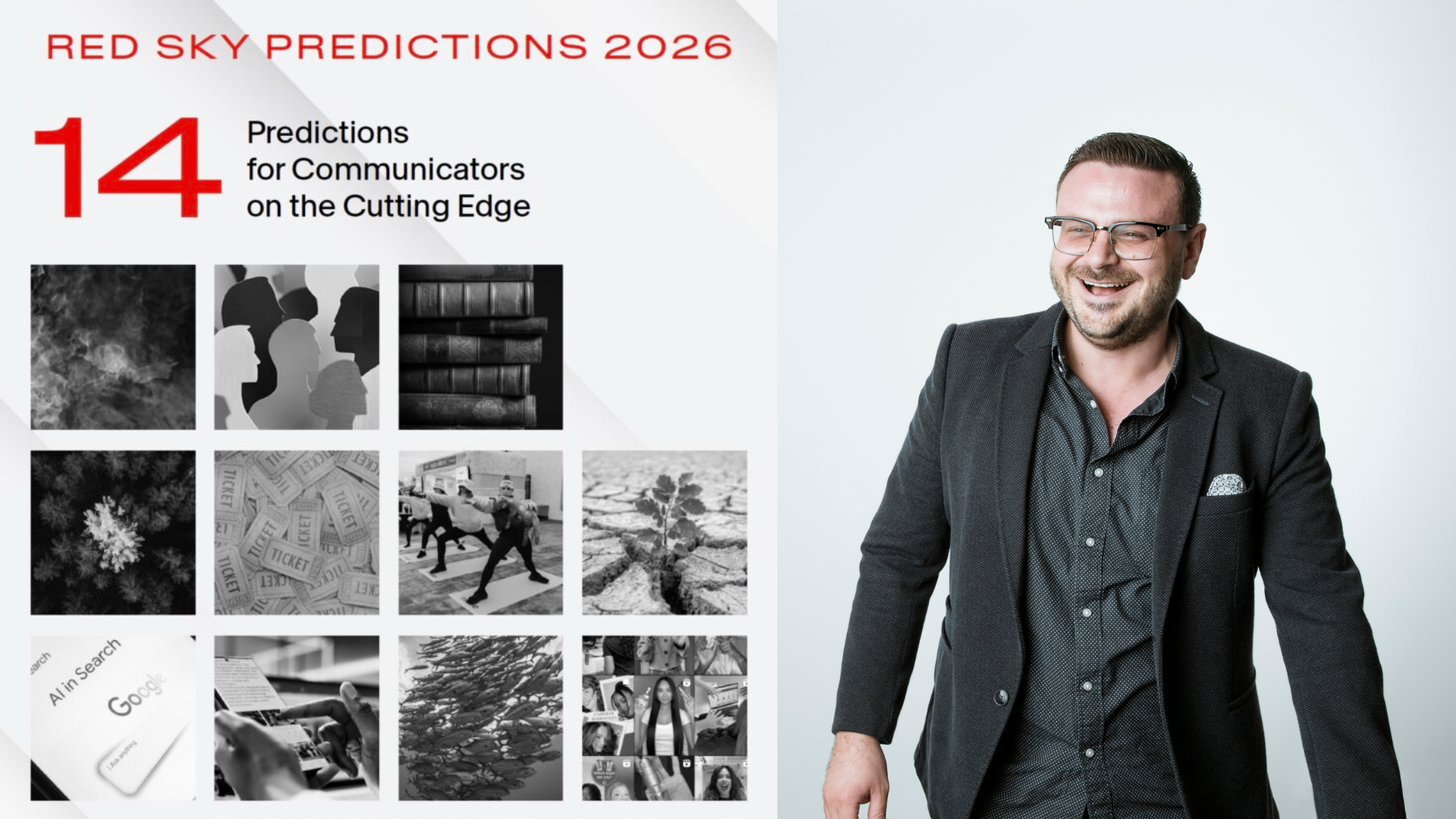
Havas Red has released its 2026 Red Sky Predictions report. This ninth edition of the report included input from 24 of the agency's markets in the region.

It highlighted 14 trends that will impact brand communications in Asia Pacific, in particular cultural fragmentation, rising misinformation, private digital communities, and acceleration of AI.

Steve Fontanot (pictured), Commercial Managing Director APAC at HAVAS Red, commented: “The Asia-Pacific region is a wonderfully diverse, with a lot of contrasts - hyper-connected yet privacy-conscious, tech-driven yet deeply human. Our 2026 predictions show that success will come to brands that embrace bold creativity, invest in trust and adapt to technologies like generative AI without losing cultural nuance and human intelligence. Now in its ninth year, this report from Havas Red brings together the brightest minds in our global Network, and we’re pleased to share it once again with the world.” 

Key predictions from the report include:

  • Crisis mode as business as usual: With geopolitical tensions, climate volatility and economic uncertainty impacting APAC markets, crisis readiness will become a core competency for communicators. 
  • Synthetic research becomes standard: AI-driven audience simulations will accelerate campaign planning and stress-testing, enabling brands to adapt quickly to APAC’s fragmented consumer landscape. 
  • Truth as the ultimate brand value: In markets where trust is fragile and misinformation rampant, brands that demonstrate transparency and authenticity will win loyalty. 
  • Boldness is the new benchmark: From experiential activations in Australia to influencer-led campaigns in Southeast Asia, brands must push creative boundaries to cut through content fatigue. 
  • Closed communities > public feeds: With consumers in APAC gravitating toward private digital spaces like WeChat groups, Discord, and Telegram, influence will hinge on authentic engagement within niche communities.

Key APAC case studies include:

  • In Australia, Wise’s “Fleece Free FX” activation at Bondi Beach featured live sheep and theatrical stunts aimed at depicting hidden bank fees.
  • Across Southeast Asia, from Cebuano hashtags in the Philippines to regional dialect videos on TikTok in Indonesia, brands picked up on dialect-first content trends and engaged lo-fi, creator-led storytelling. 
  • As part of their closed community strategies, brands invested in WeChat and Telegram micro-groups to build intimacy and loyalty within fandoms. 

The report further touched upon the shift in discoverability, with brands transitioning from traditional SEO to Generative Engine Optimisation, as well as the move towards creator-led storytelling and niche voices. 

Previous story

CampaignLab promotes team member to General Manager

Next story

Ogilvy Malaysia names new CEO and Chief Creative Officer

You might also enjoy

Leadership
Moves

Leadership appointment at FleishmanHillard Singapore

Aaron Tan has joined FleishmanHillard as Auto Practice Lead and Account Director, bringing experience across branding, communications, marketing and digital strategy.


Based in Singapore, he has accumulated more than 15 years of experience, having previously held senior roles at agencies including The Ate Group and W Communications.

Study
Research

Study Highlight: AI trust higher among Chinese public than in the West, Edelman poll finds

In 2025, artificial intelligence sits at the centre of growing global divides. Across economies and generations, engagement with AI is revealing widening gaps in trust, understanding, and opportunity.

Chinese AI trust landscape
The 2025 Edelman Trust Barometer Flash Poll: Trust and Artificial Intelligence at a Crossroads reveals that respondents in Mainland China demonstrates high trust in AI compared to developed markets, including the US, UK, Brazil and Germany.

87 per cent of Chinese respondents say they trust AI, a figure that increased by 9 per cent   between November 2023 and October 2025. This compares with trust levels of 32 per cent in the US, 36 per cent in the UK, and 39 per cent in Germany.

Strong embrace of AI adoption
High trust in AI among Chinese respondents also translates into their everyday use. 60 per cent of Chinese employees use AI weekly or more, while 49 per cent say they embrace its growing use, compared with just 18 per cent who reject it.

Acceptance is particularly strong in sectors shaping future growth. 43 per cent of financial services workers and 55 per cent of technology sector employees report embracing AI in their work, highlighting how quickly the technology is becoming embedded in professional life.

Optimism over fear of disruption 
Unlike Western markets, where AI is often framed as a threat, Chinese respondents remain broadly optimistic. At least 67 per cent believe generative AI will help rather than harm society, including in areas such as climate change, work life, mental health, social cohesion, and economic equity.

Fear of economic displacement is notably low. Only 26 per cent worry that people like them will be left behind by AI, the lowest level among all surveyed markets. Even among lower-income respondents, concern rises to just 36 per cent.

A broad ecosystem of trust
Mainland China’s confidence in AI extends across all categories of AI communicators. 87 per cent trust 'people like themselves' to speak truthfully about AI, 88 per cent trust friends and family, and 85 per cent trust coworkers.

Trust in institutions and authority figures is similarly high, including 87 per cent for scientists and AI researchers, 83 per cent for CEOs, and 84 per cent for journalists and technology influencers.

More than 70 per cent of respondents are comfortable with their employer's use of AI - the highest rate amongst countries surveyed, while 60 per cent are comfortable with the media's AI usage.

Trust issues outweigh other barriers
Despite high overall trust, some barriers to AI adoption exist in Mainland China. Among infrequent users, 43 per cent cite trust concerns such as data protection, 28 per cent worry about how data will be protected, and 19 per cent are concerned about how their data will be used. Issues of motivation and access affect 40 per cent, while discomfort with technology is cited by just 15 per cent.

However these barriers are significantly lower than in Western markets, where 55 to 70 per cent of infrequent users identify trust as the main obstacle to AI adoption.

Ultimately, the Edelman Flash Poll highlights a simple point: trust shapes adoption. Mainland China’s high public confidence supports faster and broader use of AI, while lower trust in Western markets aligns with a more cautious pace. These differences underline how public attitudes influence the trajectory of technological change across regions.

New
Moves

New marcomms manager at W Kuala Lumpur

Alexa Cheah has joined W Kuala Lumpur as Marketing Communications Manager. In her new role, she manages the hotel’s brand and communications efforts, including media relations, corporate communications and reputation, events, social media, as well as beverage and food marketing, working alongside the Director of Marketing Communications.

Her prior experience includes roles at Grand Hyatt Kuala Lumpur, followed by Hyatt Hotels in Malaysia, where she contributed to brand campaigns, hotel openings, and cross-property initiatives in the cluster marketing team.