

Since its blogging roots in 2004, podcasting has grown into one of today’s most popular audio platforms.
By February 2025, YouTube reported over 1 billion monthly podcast users while a YouGov data highlighted strong weekly listenership across markets such as Saudi Arabia, Indonesia, and Hong Kong. A BBC study also found the conversational nature of podcast drives higher brand engagements. Beyond marketing, podcasts are also increasingly leveraged during election seasons, with politicians appearing on the platform as part of their outreach strategies.
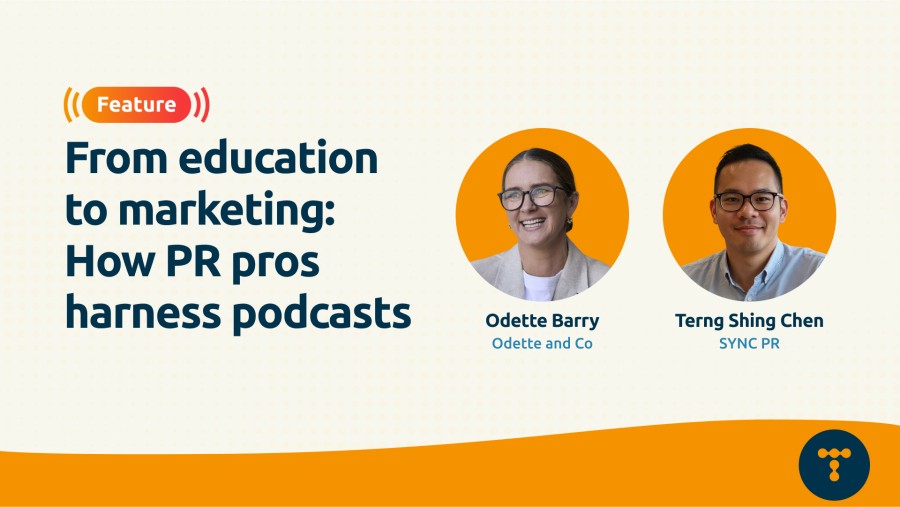
As podcasts continue to grow, how can communications professionals tap into this medium and where should they start? Telum Media spoke with agency leaders, Terng Shing Chen, CEO and Founder of SYNC PR, and Odette Barry, Founder of Odette and Co, to learn how they are leveraging podcasts, and gather practical advice for others exploring this space.
Educating beyond the classroom
Back in 2019, Odette launched a paid PR mentorship programme, Hack Your Own PR, to teach businesses practical public relations skills. During live sessions with journalists, she noticed rich insights that emerged, and an idea sparked: why not share these conversations wider via a freely accessible podcast?
“General business leaders haven't necessarily had access to that information and a lot of our cohort of people that we work with are social change makers - so they're charities, not-for-profits, social enterprises, for-purpose organisations, which often times they don't have massive media spend to pay for a publicist,” Odette observed.
Thus, the Hack Your Own PR Podcast was born. To date, the podcast has run for three seasons and Odette has since received testimonials from listeners who successfully pitched stories to journalists after tuning in.
Podcasts as branding powerhouses
For Terng, his personal podcast, Business Over Drinks, started as a way to maintain “human contact” during the COVID pandemic. Today, the podcast has evolved into a branding tool, one that sparks meaningful conversations with individuals he might not have had otherwise.
“The PR industry sucks at talking about themselves,” Terng admitted.
Odette shared the same observation on her podcast’s brand power: “For those people who don't want to DIY their PR, they can see we're having conversations with journalists and editors publicly. And that's good for retainer services as much as it is a marketing vehicle in that space.”
Both Terng and Odette pointed out podcast’s unique ability to allow audiences to engage while multitasking. Odette reflected, “Having an hour of audio in someone's ears is a pretty good relationship-building exercise. That is such a privilege to spend that time with someone that they would invest in listening to a conversation.”
Terng, however, stressed that the content must always add value: “Your customers don't want a podcast about how awesome your product is. Your customers want a podcast about what their pain points are and what they care about because then, you're positioned as an expert.”
Bridging relationships
Odette further highlighted podcasts as an effective tool for industry relationship-building, offering an alternative to in-person meetings.
“Some journalists that we have on the podcast we have a really deep relationship with and others it might be the first time we've had a conversation. In both instances, it’s really valuable for us to enrich our relationship for our clients that we work with as well,” she shared.
Apart from speaking to journalists across the world, Terng also uses podcasting for broader marketing conversations. He does this through SYNC podcast, where he brings in marketers for open, honest discussions with no promotional agenda.
“We laugh about issues that we all face as agency owners or people being in the agency industry for a while. For me, it's like a great cathartic as well as honest way of learning,” Terng shared.
The road ahead for podcasting
When asked for advice on stepping into podcast, Terng was candid: commit to it, or not to start at all.
He stressed that running a podcast is no easy feat, given the costs involved - from equipment to time and creativity. Odette echoed the importance of having a long-term view on podcasts, including proper research to align content with the intended audience: “Investigate who your decision maker is and what they care about.”
She added that podcasts work best when they focus on broader editorial narratives and are properly resourced with time, budget, and support.
While the regional podcasting scene is growing, Terng noted that the business side remains less developed compared to countries like the United States.
In contrast, Odette offered a brighter perspective and rallied readers to tap into podcasting as a medium to be seen and heard, emphasising the need for greater diversity in media representation: “There are so few barriers to entry in podcasting which makes it a wonderful place for emerging voices to cut through.”
While podcasts have become a popular and versatile tool in the PR toolkit, Terng and Odette’s experiences serve as a reminder that creating impact takes commitment, clear purpose, and proper resourcing. For those willing to invest, the rewards can be profound: stronger brands, deeper relationships, greater credibility, and a platform to be truly heard.
You might also enjoy

-Sep-23-2026-02-32-38-6871-AM.png)