
PR News
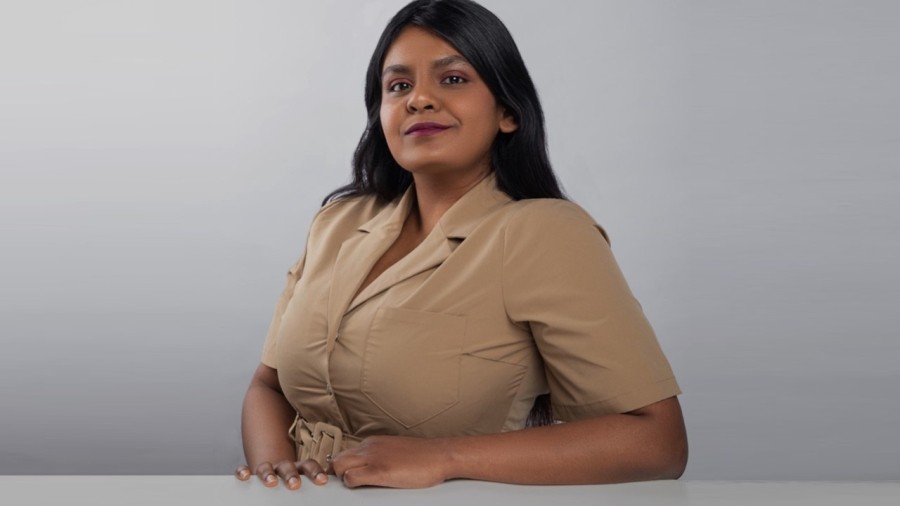
Tooba Khan

Expanded agency role for Tooba Khan in Dubai

Tooba Khan has been promoted to Associate Account Director at Katch International. In this role, she leads the strategic direction and execution of public relations for a portfolio of clients across the hospitality, F&B, entertainment, and lifestyle sectors.

In the hospitality space, she manages PR for hotels and resorts, including Rixos Hotels, FIVE LUXE JBR, Centara Hotels & Resorts in Dubai and the Maldives, as well as Al Habtoor Polo Resort Dubai.

On the F&B front, Tooba oversees communications for a mix of fine dining and fast-casual concepts such as Alaya, LYLA, and Adaline in DIFC, Revolver Dubai, and Cupbob, while also driving strategic positioning for Global Restaurant Investment Forum (GRIF), an industry platform that connects culinary leaders and investors.

Within the entertainment and events sector, she spearheads PR for large-scale concepts and experiences such as FIVE Entertainment’s Pacha ICONS and Bohemia Beach Club, alongside cultural activations including Dubai Comedy Festival.

In addition, over the past two years with Katch International, Tooba has delivered campaigns for flagship projects such as the MICHELIN Guide Abu Dhabi Ceremony and Festival 2024, LIWA Village 2023 and 2024, and the Hot Wheels Monster Truck Live Glow Party 2024.

Beyond client servicing, she is also tasked with playing a key role in driving new business opportunities for the agency, contributing to pitches, shaping proposals, and identifying growth prospects across hospitality, lifestyle, and entertainment sectors.

Group PR Director, Dhara Bhatia, commented, “It’s been such a pleasure working with Tooba over the past two years and witnessing her growth first-hand. She has consistently stepped up, built a strong team, and established herself as a trusted lead across hospitality, F&B, entertainment, and lifestyle. Tooba is switched on, dependable, and always there to support her team, qualities that define her as a strong leader. We’re excited to welcome her into the management team and look forward to her playing a key role in driving the agency’s growth and future success.”

“I’m truly excited to take on this role with Katch International and continue leading impactful campaigns for some of the region’s most dynamic brands. Over the past two years, I’ve had the privilege of working across hospitality, F&B, entertainment, and lifestyle, and I’m proud to be supported by a talented team that brings creativity and passion to everything we do. Together, we look forward to delivering even more innovative, results-driven work that strengthens our clients’ voices and pushes the boundaries of PR in the region,” said Tooba on her promotion.

Prior to joining Katch International in 2023, Tooba brought PR and influencer management experience from agencies including DAC Communications and Seven Media.

Previous story

Pinterest names PR agency for Asia

Next story

Stephen Howard moves to KSA for a new tourism role

You might also enjoy

Blueshark
Moves

Blueshark promotes communications head

Eric Lim has been elevated to Head of Marketing Strategy & Communications at Blueshark, a partner of PETRONAS Group in green mobility. Based in Malaysia, he spearheads brand communications, public relations, content creation, collaborations, and marketing for the electromobility company and its sub-brand, SoloEra.

Eric has accumulated more than 25 years of communications, marketing, and related experience across the automotive, technology, and property development sectors, and was most recently Senior Manager of Brand and Communications at Blueshark.

TikTok
Moves

TikTok welcomes new regional comms leader

Anggini Setiawan has stepped into the role of Head of Communications for Southeast Asia at TikTok. Based in Jakarta, she oversees the social media brand's overall communications activities and reputation across the region.

Anggini brings more than a decade of comms experience across agency and in-house roles at Beyond Communication, Ruangguru, and ByteDance.

AI’s
Feature

AI’s integration into PR and comms in 2025

Over the past few years, mentions of AI within the industry haven't toned down - if anything, they've been ramping up. Looking back at Telum's 2024 Year Ahead and PR Tech in 2025 pieces, it's interesting to see how attitudes have shifted. What began as a period of experimentation - playing with prompts, dabbling in ideation, and speculating about job replacement - has solidified into a structural transformation within the profession.

AI has moved from a nice-to-have to a non-negotiable; from a fringe tool to a core strategic capability. 2025 is the year PR and comms practitioners stopped asking, “What can AI do?” and began asking, "How do we lead with it?”.

Integration of AI tools in the industry
Early adoption of AI centred around basic prompting and inspiration. In 2025, however, practitioners in the PR and comms space have unlocked more of its capabilities.

We saw many organisations develop their own AI offerings across APAC and the Middle East, ranging from AI visibility services and training tools to crisis solutions. These include PIABO GEO, Ogilvy ANZ’s Generative Impact, Golin’s First Answer, TEAM LEWIS' Training for Trust, and FINN Partners' CANARY FOR CRISIS.

The narrative around job replacement has also softened. Rather than replacing humans, the industry is now embracing AI as an enhancer.

As Natacha Clarac, Director General of Athenora Consulting in Brussels and former President of PRGN, said following PRGN's launch of Précis Public Relations: "The introduction of Précis Public Relations showcases the potential of AI to enhance rather than replace the strategic value PR professionals offer."

GEO / LEO and search transformation
One trend that we have seen in 2025 was the decline of traditional search behaviour. AI assistants, such as ChatGPT, Gemini, and Perplexity, increasingly replaced clicks with instant answers.

As Nichole Provatas, Executive Vice President and APAC Head of Integrated Marketing and Innovation at WE Communications, noted: "Around 69 per cent of Google news searches now end in zero clicks as AI Overviews rise."

This reality raises the stakes for inclusion in AI answers, as Rob van Alphen, Managing Director of Polaris Digital, warned: “…if your brand or leadership isn’t part of the AI answer, you’re invisible.”

Jack Barbour, EVP and AI Lead at Golin New York, and Nichole both highlighted how earned media is key in making brands discoverable, with at least 90 per cent of AI search results coming from earned citations. Brian Buchwald, Edelman’s President, Global Transformation and Performance, emphasised the same point: "You can't buy your way to the top of an AI-generated answer...brands must proactively shape how they appear in LLM outputs or risk being misrepresented, misunderstood, or missed entirely."

AI platforms are relying on reputable journalism, corporate blogs, and expert commentaries - flipping the paid-dominated marketing playbook on its head.

This shift fuelled the rise of GEO (Generative Engine Optimisation) and LEO (Language Engine Optimisation). In April, Celia Harding launched what she described as the world’s first LEO advisory firm, arguing: "While other agencies are looking at how AI can drive efficiencies in creativity and client service, they are all overlooking the real opportunity that lies ahead - shaping the data LLMs learn from."

If SEO defined the 2010s, GEO and LEO are shaping 2025 and beyond, with earned media at the core.

AI upskilling
As AI adoption surged throughout the year, professional development opportunities expanded rapidly, ranging from hands-on workshops and panel discussions to large-scale conferences.

These events spanned the region, including the Generative AI Bootcamp series by PRCA APAC and Sequencr AI, PRCA Thailand's first-ever conference in Bangkok on AI and communications, and Jakarta's “Shape the Future of Your Communications Strategy with AI” workshop hosted by ACE, APPRI and Reputasia Strategic Communications.

Telum Media also hosted its own list of AI-focused events, including workshops with Shaun Davies in Sydney and Melbourne, a workshop with Rob Van Alphen in Singapore, a global webinar with Matt Collette, collaborations with the Kennedy Foundation for panels on AI and journalism in Australia, and joint sessions with SOPA on ethical AI use in publishing in Singapore and Hong Kong.

The scale of these events showed one thing - these sessions were no longer “optional extras”, they've become essential for teams wanting to keep pace with AI's evolution across the industry.

Human and ethical considerations
As AI adoption rose, so did the reminders that human oversight remains essential. Practitioners repeatedly stressed that AI cannot replace human judgement, empathy, or lived experience.

As Matt Cram, Head of Media and Communications at Orygen, put it: "AI can’t replace the way people connect through empathy, creativity, and lived experiences."

Rob van Alphen reinforced this: "…we must double down on our inherently human strengths, such as empathy, curiosity, ethical decision-making, and critical thinking."

And Zeno’s Head of Regional Business Development, Asia, Ekta Thomas, said: "People connect with people - not algorithms."

These sentiments were reinforced across industry events focused on responsible AI use. At the Jakarta workshop, Reputasia Co-Founder and Communications Strategist, Fardila Astari, emphasised the importance of ethical guidelines for AI use, noting that careless application can create reputational risks, as seen in cases where major companies faced credibility issues due to AI-generated inaccuracies.

Similar points were made at Telum Media and SOPA's sessions in Singapore and Hong Kong, where newsroom leaders stressed the importance of maintaining editorial oversight, transparent disclosure, and strong governance structures. The consensus is that while AI may accelerate workflows, humans safeguard credibility.

2026 and beyond
As we approach the new year, AI is shifting from experimental to foundational. Nichole Provatas urges teams to "publish for AI inclusion," treating owned channels as structured, plain-language reference hubs built for machine ingestion.

But the landscape is still evolving, as Matt Cram cautions: "AI doesn’t just surface information, it consumes it…and the best strategies today might look very different tomorrow." For communicators, adaptability becomes the differentiator.

Ultimately, the future isn't AI-led but AI-enabled. As Matt Collette notes, "Human + AI is the new paradigm." Success will come from pairing AI's scale and precision with the empathy, judgement, and contextual understanding only humans can bring.