Independent earned-led culture agency, Example, has expanded into the Middle East, launching its Dubai office to lead hospitality, beverage, and tourism projects in the region. The expansion follows a period of growth for the agency in Australia.
To lead this new chapter, Example has established a global leadership structure, which sees Co-Founder and Chief Executive Officer, Andy El-Bayeh, relocate to Dubai. He will be leading operations in the Middle East, as well as overseeing global creative and strategic direction, while Co-Founder and Chief Operating Officer, Rebecca Jarvie-Gibbs, will remain based in Australia, driving global operations and continued delivery across markets.
They are joined by Chief Strategy Officer Chris Loukakis, who will anchor Example's strategic product across APAC and the Middle East, and Daniel Goldstein, Head of PR for both regions. Together, they’re backed by a global bench of senior strategists, PR specialists, chefs, drinks and music experts, interior designers and brand builders already working across Example projects.
Andy said: "The Gulf is building the future of hospitality in real time. Our role is to ensure the hotels, venues, brands and products that show up here aren't just impressive on the
surface, but rich in story and deep in soul.
"We want to sit with owners, operators, brand teams and creators to define the true role a brand should play in people’s lives - then translate that into experiences and moments that become the stories people tell afterwards. We’re not here to drop in a Western formula; we're here to build something with the region that feels local, proud and built to last."
Joining Andy in Dubai is Sarah Knowles as Client Relationship Director, a strategic marketing leader with a background spanning agency and client-side roles in luxury spirits and experiential brand building. She had formerly led the global experiential account for The Macallan, and has delivered work for brands including Tommy Hilfiger, Glenfiddich, FIX Chocolatier, and EA Sports.
Example Middle East will feature a locally based team expanding across strategy, PR, social, content, and placemaking. The first wave of hires will focus on research, PR and social, as the agency builds its presence in the region.
The Dubai office will launch with foundation clients including Bacardi-Martini, for which Example will lead Patrón's AMEA and Pacific culture strategy, with the first work driving strategy, concept design and communications for the brand's involvement at Sole DXB. The agency is also leading creative and amplification projects for Blue Coral Concepts, and place strategy, concept and branding for Addmind.
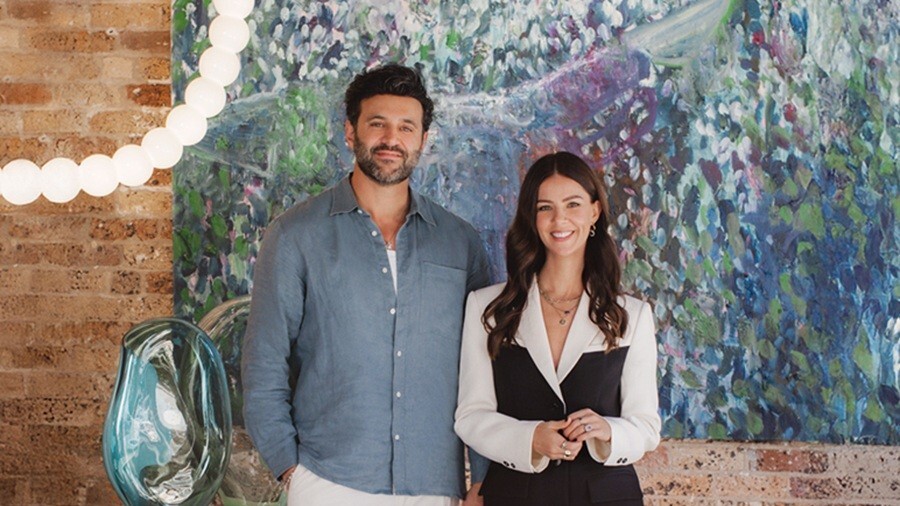
(Pictured: Andy El-Bayeh and Rebecca Jarvie-Gibbs)
Example sets foot in the Middle East
Telum Media creating connections
Get in touch to learn more
You might also enjoy
Robyn Tan has been named Head of Global PR at PixVerse, an AI video generation platform. Based in Singapore, she leads PR and media relations across international markets, and serves as Chief Representative of Singapore, overseeing on-ground presence and community relations in the region.
Strategic communications consultancy, Sefiani, part of Clarity Global, has released a new study indicating that 84 per cent of Australian marketing and comms leaders disagree on who "owns" AI visibility, while the remaining 16 per cent take an integrated approach.
Conducted by OnePoll on behalf of Sefiani, the research surveyed 150 marketing and communications leaders at Director level and above from organisations with more than 50 employees, exploring how strategies have been adapted in response to AI search.
According to the report, 91 per cent of cross-departmental leaders are revising their strategies to influence AI-driven discovery, although an internal "turf war" is emerging over who controls brands' AI search visibility. The research found that ownership currently sits across five functions: data / analytics (23 per cent), comms / corporate affairs (20 per cent), brand (19 per cent), digital (17 per cent), and performance (16 per cent), which the agency said reflects a structurally fragmented approach within many organisations.
The "silo" challenge
To complement its findings, Sefiani collected qualitative insights from leaders through a series of executive GEO-focused sessions and a recent panel moderated by Mandy Galmes, Managing Partner at Sefiani. Speakers included Johanna Lowe, Chief Marketing and Communications Officer at the University of Sydney; Brad Pogson, Head of Communications at Lendi Group; and Tom Telford, Chief Digital Officer at Clarity Global.
Based on these discussions, several themes emerged around managing reputation in AI-driven environments:
- Internal silos as a key barrier: Participants noted that while some leaders are encouraging cross-functional experimentation, others remain 'nihilistic' about breaking down traditional departmental walls, leading to stalled effort and wasted budgets. The panel identified the rise of AI as a 'shadow task' layered on top of existing senior role requirements without removing previous duties, which further delays progress.
- The forever life of reputational issues: According to panellists, LLMs draw on long-term patterns across coverage, reviews, forums, and owned content, meaning historic issues may continue resurfacing in AI-generated responses. This suggests that organisations might need to take a more data-led, cross-channel approach to finding, correcting, and rebalancing inaccurate information.
- Quality content remains critical: Insights from the discussion indicated that AI models do not discriminate by content format, but they do reward depth. The findings suggest that high-quality, thought leadership content performs better within LLM training sets, so it should be considered as central to strategies across channels moving forward.
The cost of siloed GEO: Misinformation and reputational risk
The agency stated that a lack of clear ownership over GEO is already having tangible consequences. Based on the research, AI search was cited by leaders as the most structurally siloed channel, with 77 per cent reporting problems in the last 12 months. This included a slower response to issues, conflicting messages across channels, and AI tools amplifying yesterday's problems instead of today's narratives.
The study also found that the risk is compounded by the speed at which AI-generated misinformation can spread, with 25 per cent of leaders reporting that incorrect, inconsistent, or outdated brand information has already appeared in AI answers.
"Reputation used to be managed channel by channel, but AI search has changed the rules. Because these systems read across everything - earned coverage, on-site content, social signals, and search authority - siloed marketing and communications are quietly muting your AI visibility," said Tom Telford.
"When your channels don't tell the same story, or teams are chasing independent KPIs with separate budget pots, these silos also become a major reputational liability. It is only when functions are truly connected that the models become trained on a consistent brand message and compound visibility across AI services over time. This is the crux of GEO, Generative Engine Optimisation, and done well it becomes the multiplier on everything you already invest in brand, PR and digital."
The "citations race": PR and earned media take centre stage
The report also suggested that a shift toward AI-first discovery is changing budget priorities.
According to the findings, 49 per cent of leaders have already allocated five to 10 per cent of their marketing and communications budgets to AI visibility, with 90 per cent of that spend being reallocated from traditional channels like paid digital and brand. A further 30 per cent reported allocating up to 20 per cent of their budgets.
Citing external analysis from Gartner, the agency noted that the majority of sources referenced by AI systems are non-paid, which the report argues increases the strategic importance of PR and earned media in AI-driven discovery.
Mandy Galmes said: "When LLMs answer a question in your category, they’re drawing overwhelmingly on non-paid, third party sources. If your spokespeople, experts, case studies and proof points aren’t in those sources, you’re invisible at a key moment in the buyer journey."
Irwin Lim has been appointed Director of Marketing Communications at Royal Plaza on Scotts. In this role, he oversees brand, communications, content, campaigns, media relations, and marketing initiatives across the hotel’s key business areas.
Most recently, Irwin was Director of Marketing at Pan Pacific Orchard, Singapore.