
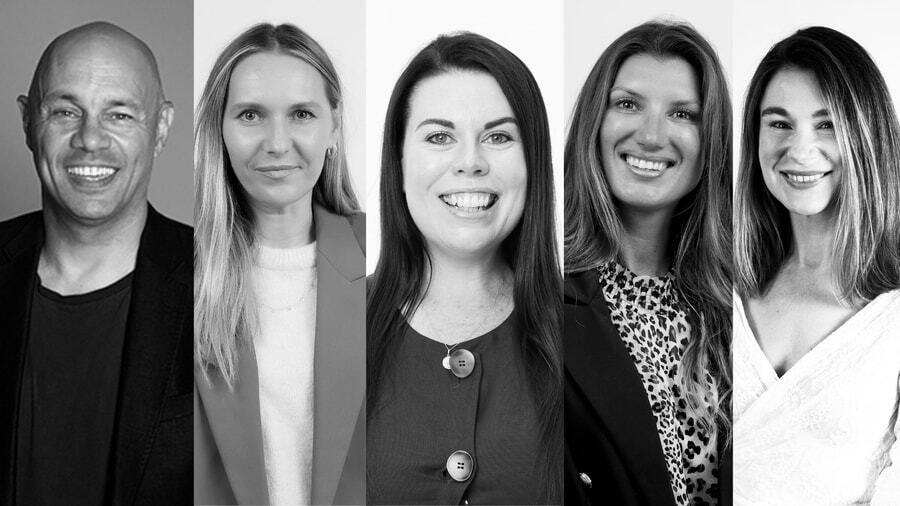
Full-service content marketing and PR agency, ENTHRAL, has repositioned itself as an earned-first agency. To support this, the agency has brought in five new appointments across its creative, production, and PR functions.
Hayden Isaacs has joined as Business Director, with a focus on the agency's earned-first creative and production offering. He made the move from Dentsu Creative and had previously held roles at WhiteGREY, Leo Burnett, Cummins & Partners, as well as in-house roles at CUB and Brown Brothers.
Tatsiana Baibak has been appointed as PR and Content Group Account Director in Melbourne, as previously reported on Telum.
In Sydney, Jade Glashoff has started as PR and Content Group Account Director. She was most recently Director for Brand USA, Australia and New Zealand at Gate 7. Jade also brings experience from prior roles at Hopeful Monsters and FleishmanHillard.
Paige McLaren and Sally Muul have also joined the team in Sydney as Senior Creative Producers.
ENTHRAL has also celebrated two new client wins, being named Australian and New Zealand communications agency of record for fitness-focused energy drink company, Celsius, as well as adding IHG Hotels & Resorts to its portfolio after a competitive pitch.
(Pictured, from left: Hayden Isaacs, Tatsiana Baibak, Jade Glashoff, Paige McLaren, and Sally Muul)
ENTHRAL welcomes new hires as it repositions itself as earned-first
Telum Media creating connections
Get in touch to learn more
New comms director at Singapore American School
You might also enjoy
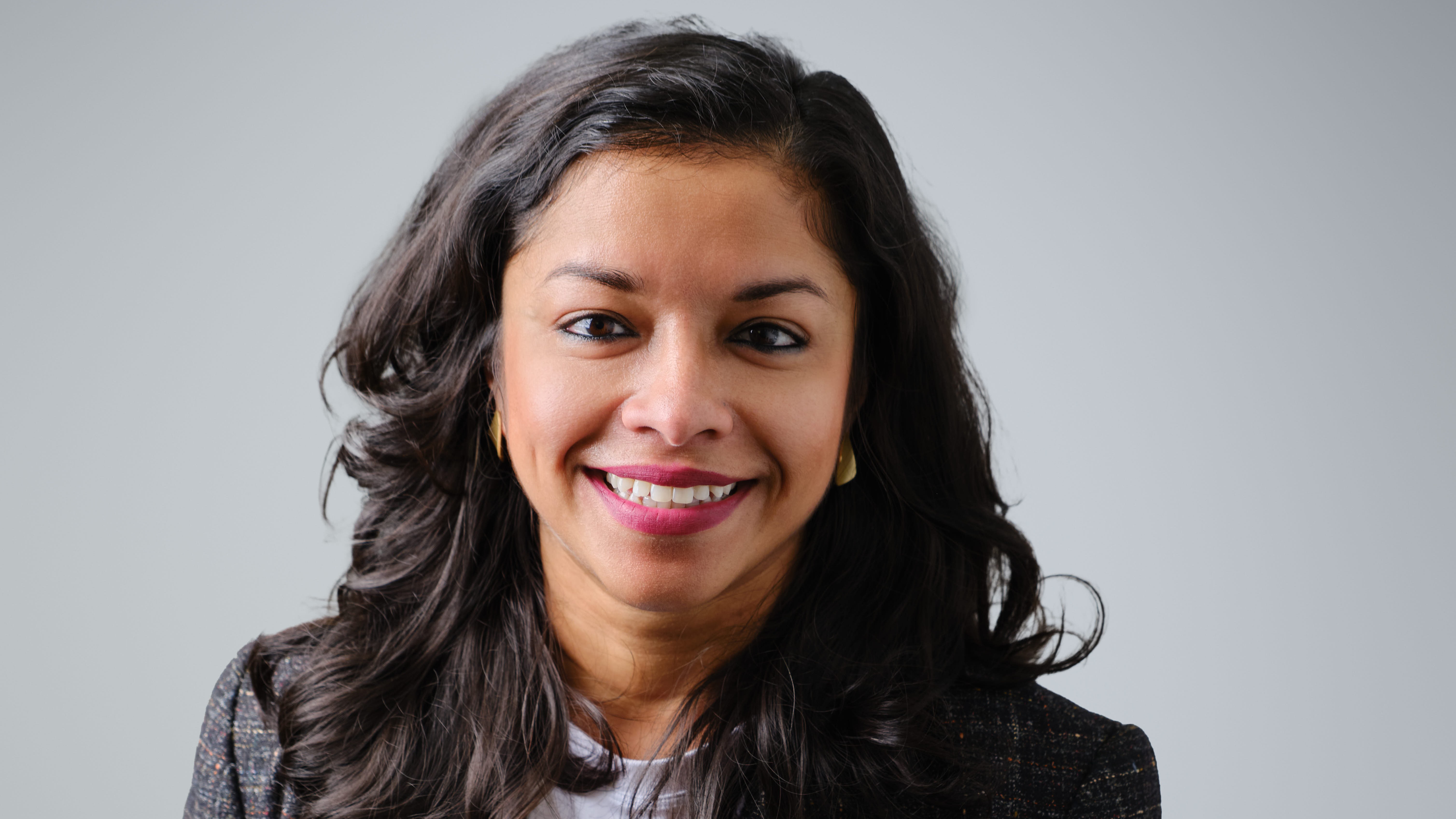
Each year, the Met Gala captures global attention through celebrity fashion and viral red-carpet moments. Yet for comms professionals, the event represents far more than a showcase of style. It has become a live demonstration of how brands communicate purpose, cultural relevance, and values under intense public scrutiny.
With the 2026 Met Gala currently underway, Telum Media spoke with Kieran Ho, Senior Vice President of PURPLE in Hong Kong, as he shares his APAC-rooted insights on how purpose-driven and values-led fashion is redefining fashion communications at cultural events. He touches upon topics such as transparency as a core pillar of luxury fashion and how high-end brands can still remain culturally-grounded and inclusive.
For PR and communications professionals, what makes fashion and events such as the Met Gala such a powerful platform for brands to communicate its purpose, identity, and values?
In the fashion and lifestyle space, the Met Gala is the ultimate "Cultural Super Bowl." At its core, it is a celebrity-driven engine. In today's consumer landscape, celebrities remain the most potent catalysts for marketing impact and any gathering that concentrates this much star power is guaranteed to generate a massive, global media footprint. However, the true power of the Met Gala lies in its ability to foster whimsy and escapism.
A garment is more than just fabric - it gains power through its wearer. While the wearer amplifies a look’s reach, the garment itself can carry immense significance, symbolising heritage,craftsmanship, and even societal shifts. The Met Gala provides a unique stage where fashion houses and icons collaborate to create moments that go beyond mere clothing. It becomes an opportunity for brands to communicate their universe: their legacy, artistry, and vision for the future, all within a single frame.
For brands, these moments are invaluable storytelling tools, transforming a label from a transactional entity into a creator of dreams, inviting audiences to step into their world. In an era of digital saturation, providing that sense of wonder is how a brand cements its identity and values in the collective consciousness.
Consumer expectations have shifted more towards sustainability, ethics, and social positioning. How has the rise of values-driven consumption changed the way communicators craft fashion brand narratives?
The shift toward values-driven consumption has fundamentally rewired how we approach brand narratives. We are moving away from simply communicating the materiality of an object - the fabric, the cut, or the price - and focusing instead on the emotional benefits and the "why" behind the brand.
Today’s consumers prioritise emotional resonance and wellness; they don't just want to look good, but they want to feel good about what they wear. Much like the farm-to-table movement in the food industry, luxury consumers now demand to know the provenance of their purchases. When you are paying top dollar, you want to understand the source and the ethics behind the production.
At PURPLE, we advise clients that transparency is no longer a "nice-to-have" - it is a core pillar of luxury. Communicators must now craft stories that highlight the human element: the artisans, the sustainable supply chains, and the ethical footprint. We are no longer just publicising a product; we are defending a brand’s right to exist in a conscious world.
If a brand cannot articulate its contribution to social or environmental well-being, it risks becoming irrelevant. The narrative has shifted from "what is this made of" to "what does this stand for," and our job is to ensure that answer is both authentic and compelling.
With the Met Gala being such a high visibility event, brands walk a fine line between authentic expression and performative positioning. How can communicators ensure values-led storytelling withstands public scrutiny and feels credible rather than opportunistic?
The distinction between a "fantasy" brand and a "relatable" brand is crucial here. Brands that position themselves as relatable or "of the people" are naturally more prone to scrutiny if their actions feel out of touch or opportunistic. Conversely, fantasy-led brands have more license to push boundaries, provided their storytelling is rooted in deep cultural intelligence.
To ensure credibility, communicators must prioritise rigorous research. Fantasy should never be an excuse for ignorance. We have seen industry-wide cautionary tales where campaigns - such as those involving sensitive imagery or controversial legal references - backfire because they lacked cultural sensitivity. To withstand public scrutiny, a brand's presence at the Met Gala must feel like a natural extension of its long-term values, not a sudden pivot for "clout."
Credibility is built through consistency. If a brand claims to support sustainability, that could be reflected in the custom archival piece they pull out for the red carpet. If they claim to support diversity, that should be reflected in their choice of muse and the creative team behind the look. When the walk matches the talk, the storytelling feels authentic.
In PR, our role is to act as the conscience of the brand, ensuring that every creative choice is vetted against the current social climate to avoid the "performative" trap.
High fashion brands often dominate visibility at the Met Gala through celebrity partnerships, yet luxury can sometimes be perceived as elitist or disconnected from broader audiences. From a comms perspective, how can brands maintain aspiration while remaining culturally grounded, inclusive, and values-led?
It is important to acknowledge that, in the specific context of the Met Gala, the event is not intended for the masses; its very nature is exclusive and aspirational. However, "aspiration" does not have to mean "exclusion." In the modern era, brands maintain relevance by using their platform to champion inclusivity and new talent.
A significant part of this responsibility falls on the celebrity and their stylist. They act as the bridge between the brand and the public. We are seeing a beautiful trend where celebrities use the Met Gala to debut and elevate up-and-coming or emerging designers. By turning the red carpet into a launchpad for new talent rather than just relying on established heritage houses, brands and icons demonstrate that they are culturally grounded and invested in the future of the industry.
Furthermore, while the physical event is exclusive, the digital communication around it must be inclusive. Brands stay grounded by sharing the behind-the-scenes process - the hundreds of hours of labour by diverse artisans - which democratises the craft. By celebrating the humanity behind the luxury, brands can remain aspirational while proving they are values-led. It is about moving from an ivory tower mentality to a shared inspiration model.
The Met Gala generates a large amount of earned media impact within hours. What lessons can PR and communications leaders across industries take from fashion’s ability to turn cultural moments into sustained reputation and relevance?
The primary lesson is the power of the visual and social hook to spark a narrative that lasts far beyond the initial event. Fashion excels at creating thumb-stopping moments that demand immediate attention, but the real magic is in the tail of the coverage. PR leaders in other sectors should observe how fashion brands don't just drop a moment; they seed it weeks in advance and dissect it for months afterward.
Another key takeaway is the importance of cross-pollination. The Met Gala isn't just about clothes; it’s where art, film, music, and social issues collide. Other industries can learn to build relevance by stepping outside their silos and finding cultural tentpoles that allow them to participate in broader conversations.
Finally, fashion teaches us the value of "the second life" of content. A single red-carpet walk is transformed into memes, deep-dive videos, "get the look" tutorials, and various debates. To turn a moment into sustained reputation, communications leaders must create multi-layered stories. Don’t just announce a product; create a cultural artifact that invites interpretation, debate, and sharing. Relevance is maintained not by being the loudest for one hour, but by being the most interesting for the next month.
Looking ahead, what does strategic communications excellence in fashion look like, and how will cultural tentpole events continue to shape how brands build long-term trust and loyalty?
In my view, strategic communications excellence in 2026 and beyond is defined by engagement over broadcasting. The days of one-way PR announcements are over. Excellence now looks like building a community where the brand acts as a curator of culture rather than just a manufacturer of goods.
Cultural tentpole events like the Met Gala serve as the anchors of a brand’s yearly narrative, like what Art Basel does for Hong Kong. They are the moments where a brand proves its cultural currency. However, long-term trust is built in the spaces between these events. A brand that dazzles at the Met Gala but remains silent on social issues or fails on customer experience the rest of the year will lose loyalty.
In the future, I think these tentpole events will be used to demonstrate radical alignment. Every look, every guest, and every caption will be evidence that consumers use to measure a brand’s integrity and relatability. Excellence will be found in those who can balance the spectacle required for the spotlight with the substance required for the long haul.
At PURPLE, we believe that trust is the new luxury, and cultural events are the stage where that trust is either earned or lost.
Language Engine Optimisation (LEO) advisory, LEOPRD, has expanded its team as it celebrates its first year in business:
- Sally Douglas has joined the team as Communications Director, as reported on Telum.
- Esther Carlson has started as Growth Consultant, with previous roles at Bench, Nine, and Nova.
- Louis Roa has been welcomed to the team as Data and AI Lead, with experience from SSW and RX Global.
LEOPRD has also welcomed new clients to its roster, including Amazon, National Dental Care, Stock Spirits Group (Europe), and Repeat Builders.
(Pictured, from left: Sarah Rhodes, Louis Roa, Celia Harding, Esther Carlsen and Sally Douglas)
Uniting Church Australia has welcomed Paul Wallbank as National Manager, Media and Communications. He has recently completed a stint as Business Writer - National Metro for News Corp and is also Owner of Brilliant Communications.
Paul was previously Media and Communications Manager at ACS (Australian Computer Society), following his career in journalism at Mumbrella and the ABC.
He also recently launched The Comms Minute, a series of short discussions about the issues facing PR and comms professionals that’s available on YouTube, LinkedIn, Instagram and TikTok.