
PR News
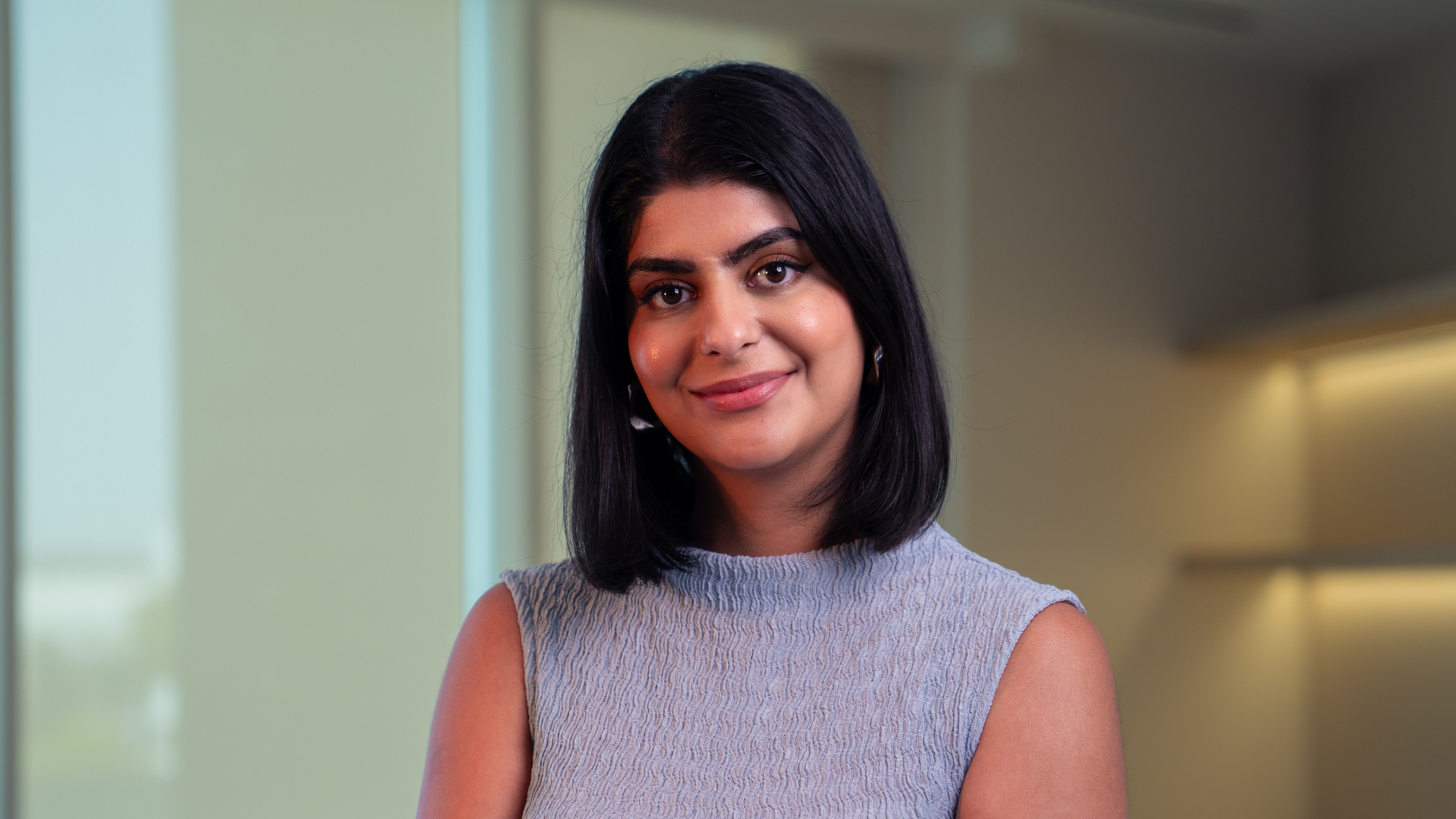
Current Global MENAT has welcomed Sim Devgun as Senior Account Director

Current Global MENAT brings in new Senior Account Director

Current Global MENAT, part of Middle East Communications Network (MCN), has welcomed Sim Devgun as Senior Account Director, as the agency continues to invest in its growing team and client portfolio.

Sim brings close to a decade of PR experience across Dubai and London, specialising in creative consumer communications across travel, hospitality, F&B, entertainment and FMCG. Most recently at Umami Comms, Simran led communications for brands including talabat UAE, Diageo MENA and Rosewood Hotels across integrated campaigns, experiential launches, partnerships and reputation management.

Peter Jacob, Managing Director, Current Global MENAT, said, “The last few months have been challenging for many across the region, so we’re especially proud to be continuing to be able to bring in fresh talent, energy and ideas. Sim brings strong international experience, brilliant strategic instincts and a real understanding of what makes work cut through in the region.”

Sim added, “I wanted my next move to challenge me creatively and give me the opportunity to work on brands that genuinely shape the city and wider region. Current Global is without doubt one of the best agencies to be at with the calibre of the work, human-first culture and brilliant people right across the team. I’m super excited to get stuck in.”

Now in its fourth year of operations in the region, the agency has continued to expand its team and client roster across the UAE and wider GCC, working with brands including Dubai Airports, Global Village, Dubai Tourism, ŌURA, Uber, New Balance, Heinz and Puck.

Previous story

Kimberley Gardiner steps into government as Media Director

You might also enjoy

Kimberley
Moves

Kimberley Gardiner steps into government as Media Director

Kimberley Gardiner has been welcomed at the Office of the Premier of Victoria as Media Director. She has moved in-house following more than three years at 89 Degrees East as Senior Consultant. Prior to this, Kimberley worked in the international NFP sector, following several comms roles for Australian politicians at the Federal and State level. 

Kate
Moves

Kate Millar relocates to Singapore as Head of Comms APAC

Kate Millar has joined the team at Airbus as Head of Communications, APAC. She has relocated to Singapore from Melbourne, following nearly a decade at Jetstar Airways, most recently as its Head of Communications.

Kate previously held in-house comms roles at the City of Melbourne, Victoria Police and the Victoria State Emergency Service. 

Interview:
Feature

Interview: Conall McDevitt on building strategic influence through data

Communications has traditionally been brought in when an issue emerges, often to manage risk, protect reputation, or respond to a crisis. But as organisations gain access to increasingly sophisticated data and technology, the function has an opportunity to move further upstream - using stakeholder signals, research and analytics to anticipate risks, identify opportunities and inform business decisions.

Telum Media spoke with Conall McDevitt, President of Penta Group, about how communications can build greater strategic influence, the role of data in strengthening reputation advice, and why communicators need to become more predictive and evidence-led.

How can communications teams move beyond their traditional role and become more strategically embedded in organisational decision-making?

We are at a moment of absolute inflection. We are going to see more change in our industry in the next two years than we have seen in the past 20.

That is obviously challenging, but it is also a massive opportunity for those who steward an organisation’s reputation to be more strategically placed by adding real value to decision-making: understanding what stakeholders are saying, seeing, thinking, and doing.

To do that, communications professionals need to embrace data, research and analytics, and allow themselves to be data-led. We need to move from being the trusted adviser with no data to the trusted adviser who has the data.

We also need to reposition the industry from being perceived as people who manage crises to people who get ahead of potential issues. We should be critical, predictive agents within the organisation, anticipating what might happen, helping organisations think through the implications of their actions, and becoming much more valuable internal advisers.

Communications teams often have more data than ever. Where does conventional reporting fall short, and what turns that data into strategic counsel?

Organisations need to monitor and measure what stakeholders are seeing and saying, and periodically conduct research to understand what they are thinking. Having that data is now table stakes. Communications professionals earn our money by interpreting it and looking for signals.

There is a difference between measuring something and noting interesting findings, versus spotting data points that indicate an opportunity or threat. Our expertise allows us to spot those signals, whether we are crisis specialists, public affairs specialists, or something else. But without the data, we have nothing to work on.

The foundation for our industry going forward is credible data, preferably data we own and can analyse in whatever way we want. Our advice needs to be underpinned by signals rooted in evidence.

Consider an emerging crisis. A CEO of a large organisation flat-foots some messaging during an investor briefing, and staff are the first group to react negatively. The organisation now has not only a PR problem but an HR problem. If staff take to social media to complain about the CEO, regulators may also become concerned about systemic risk. One misspeak can therefore create a crisis across multiple stakeholder groups.

If the organisation had researched its stakeholder groups and understood what they were seeing, saying, and thinking, it could have used available technology, including synthetic modelling, to anticipate that the proposed investor messaging might backfire with staff. The communications team could then have raised the concern internally with evidence.

Most reputation crises are avoidable. Black swan events exist, but many crisis briefs, when traced back to their source, involve something the organisation could have prevented.

There is no reason for that today. The question is whether reputation custodians and communicators want to be led and informed by the data, and be seen as the people who can give senior executives the best evidence-based advice on the opportunities and threats associated with proposed actions.


In a region as diverse and complex as Asia, how can communications leaders translate local nuance into insights that senior leadership can act on?

This is where the thesis really comes to life. Southeast Asia has a multiplicity of jurisdictions, cultures, languages, government systems, and economic models. For anyone stewarding an organisation’s reputation, there is a huge amount to understand.

Consider the corporate and policy brands. In a highly regulated industry, communications teams need to understand what is happening across every jurisdiction that could threaten operations from a regulatory perspective, but also where opportunities may exist.

Historically, we have relied on people with local expertise to produce reports. Today, we can overlay that human intelligence with signal intelligence through metadata analysis. Local advice should remain the first and most important data point, but another layer of data can help triangulate it, accounting for human error and unconscious bias.

The same applies to corporate reputation. We still need great people on the ground managing reputation, media relations, and other stakeholder relationships. But the creator economy is now bigger than all established media put together. Unless organisations have teams covering every stakeholder group, supported by consistent reporting, they need a layer of data monitoring what is happening among critical influencer groups, including media, creators, and other key opinion formers.

In a complex region, there are numerous stakeholder tensions. A data- and AI-forward organisation can keep a finger on the pulse of those tensions, identify which require attention, monitor those that are not threats, and spot opportunities.

The goal is to create a common language and measurement model that allows leaders who are not communications experts to understand the reputational impact of proposed actions or strategies. If we are the experts in reputation management, it is on us to develop the models and processes leaders can use.

A sentiment shift of eight points, for example, is a measurement, not an insight. Eight points from where? What caused the shift? Could it accelerate a wider trend, or is it a one-off? The measurement gives us an anchor point; we then need data to understand the story behind the story and our professional judgement to determine whether it represents a problem.

With metadata analysis, we can also look back at similar shifts over the past five years and ask what happened: did they develop into something, die down or follow a pattern? That level of analysis is now at our fingertips.

The profession therefore needs to become data-forward, embrace AI as an enabling technology, and underpin judgement with evidence. Marketing communications, corporate communications, public affairs, and content teams should be looking at the same data, creating a common fact base and language. Different specialisms will spot different signals, and that is exactly what we want: all communications expertise brought into planning and strategic formulation so organisations can get ahead of potential problems.

Why is reputation risk still so often treated as something communications manages after an issue becomes public? What would it take to bring that conversation into the business earlier?

The function has unintentionally grown up this way. Reputation advisers and consultants are often called in when there is already a problem. We are good at putting fires out, and the industry responded to that need. When senior executives’ backs are against the wall, they ask, “Where is the comms team?”

There will always be crises and a need for crisis communications experts. But we should not just be that.

AI is an enabling technology, and metadata is the fuel or raw material we can work from. Together, they give us an opportunity to reframe the role from managing issues to shaping outcomes. We can be strategic advisers and an advisory platform; the industry can become a strategic asset to business if it brings its experience together with data.

I have always argued that communications leaders need to be strategic thinkers. Your expertise may be communications, media relations or government relations, but that does not mean you are not a senior leader in the business. Being a senior leader means being a stakeholder in the business and contributing to strategic conversation and debate.

We are at a moment that makes it more possible for the function responsible for reputation management to become strategic. But people need to choose to be strategic too. If the function is going to become more important and powerful, those in the roles need to operate at that level. I know many people who are already capable of doing so. What I want is for us to level up as an industry, and the work we do, the careers we have and the opportunities we create for the next generation will be really interesting.

In an interview with us in 2023, you challenged communicators in Asia to ask, “How big can your function be?” Three years on, how should communications leaders in this region move from execution to enterprise influence?

My opinion has not changed. There is no reason why communications leaders in Asia cannot be global communications leaders.

Communications leaders around the world need to embrace the power of the data already at their feet and become people who view the organisation's future through a reputational lens. That requires attitude, curiosity, adaptability, and a willingness to evolve. Those characteristics are baked into many of Asia’s great economies, which are among the world’s most adaptive, innovative, and curious.

My appeal is: let us be the best representation of that.

We can still do the work we love, whether content, financial communications, marketing communications, or product. But we should do it as part of an ecosystem underpinned by a common language and shared objective data set, where communications specialisms debate the potential implications and opportunities of reputational change.

The role is then to give the C-suite the best advice, underpinned by data, so organisations do not slow-walk themselves into avoidable crises. Instead, they can focus on enriching stakeholder relationships and enhancing reputation.

I am optimistic about our future. For those entering the industry, AI is an enabling technology, not a replacement technology. Embrace its potential, but use the time it gives back to build networks and relationships. These are relationship businesses, and trusted advisers need strong relationships with their peers.

Curiosity will also always be rewarded. Be curious about your part of the business, but also the business as a whole.

And the foundational skills remain: being able to tell a great story, having a creative mind, and being able to write. The best people in our industry will continue to be those who can do those things well.

Be bullish and positive about the future. Embrace the change and roll with it. It is going to be good.