
PR News
Burson strengthens social and influence capability with key leadership appointments

Burson strengthens social and influence capability with key leadership appointments

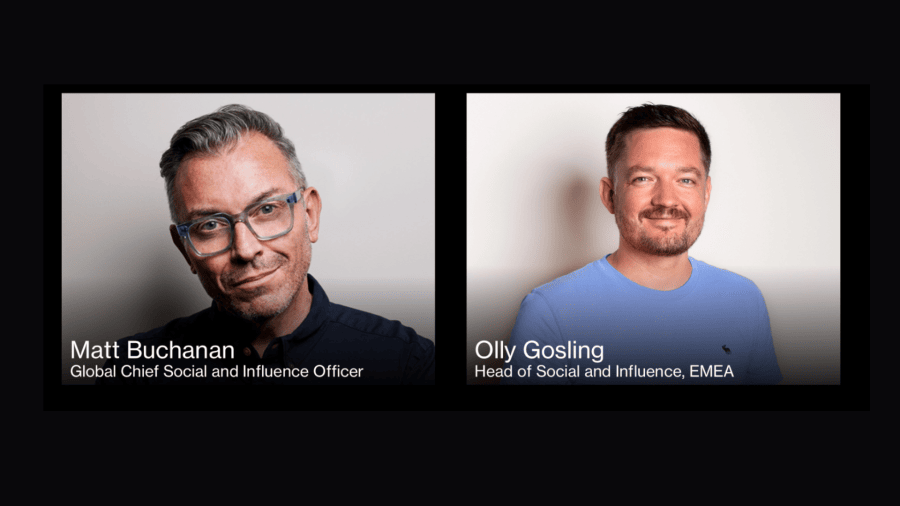
Burson's former Chief Operating Officer, EMEA, Matt Buchanan, has been named Global Chief Social and Influence Officer and a member of Burson’s global leadership team. In this newly created role, he is responsible for building on the agency’s foundation in Social and Influence in the U.S. and scaling the capability globally.

“Reputation is no longer built through a single channel, format or voice, but through ideas that originate in culture and society, travel through communities and stakeholders, and earn attention across every platform,” said Corey duBrowa, CEO, Burson. “And with nearly 40 per cent of adults under 30 getting their news from influencers, it’s clear that reputations must be built in platform-fluent ways from the start. That shift represents a genuine inflexion point, and this appointment is about making sure Burson is scaled to meet it."

“Matt’s considerable experience in building modern, earned-first communication campaigns and driving results for clients across PR, social and influence make him the right choice to ensure that our clients’ narratives resonate and achieve the reach necessary to build their reputations on the global stage,” Corey added.

Matt joined Burson in 2025 from Ogilvy, where he spent more than six years, most recently as Global & EMEA President, Ogilvy PR, leading global clients and the agency’s PR, social and influence business in the EMEA region. Before Ogilvy, he was with Havas-owned One Green Bean for seven years, initially as Australian Managing Director, ahead of returning to London to launch its UK business as Managing Director. He has worked across diverse sectors for global clients such as The Coca-Cola Company, L’Oréal, Google, TJX Europe and Pfizer, among many others.

“Communications today is about the seamless integration of social and influence across all marketing and communications strategies and creative outputs,” said Matt. “What we’re building at Burson is a social-first creative muscle that works in service of reputation - ideas conceived for platforms, creators, communities and opinion leaders that actually shape how audiences feel about brands and the people that lead them. That integration of social, influence and earned, executed with fluency in culture and policy, is where the most meaningful reputation work happens now, and where we will build Burson as the benchmark.”

Furthermore, Olly Gosling has joined the agency as Head of Social and Influence, EMEA, after five years at global creator marketing agency Influencer. Most recently serving as Vice President of Strategy, Media & Production, where he led Impact Studio, a cross-functional division designed to solve brand challenges through the integration of creative strategy, deep insights and media distribution. Olly also has held key roles at The Walt Disney Company, Maker Studios and MediaCom.

“The intersection of creator culture and corporate strategy is where the next decade of brand growth lives,” said Olly. “Burson already has a reputation for strategic impact and a clear commitment to creator-led strategy; my focus will be to build upon that foundation to further convert digital influence into brand reputation.

“In an age of infinite content, attention is no longer a commodity brands can simply buy; it must be earned through the cultural relevance that creators uniquely provide,” Olly continued. “I’m thrilled to join Matt and this world-class team across EMEA to ensure our social and influence work doesn’t just capture attention, but drives the kind of sustainable, long-term impact that will define the next era of influence.”  

Previous story

Pauline Wee takes on new comms role

Next story

Lee Nugent moves in-house, leads APAC comms for storage and data management company

You might also enjoy

PixVerse
Moves

PixVerse appoints Head of Global PR

Robyn Tan has been named Head of Global PR at PixVerse, an AI video generation platform. Based in Singapore, she leads PR and media relations across international markets, and serves as Chief Representative of Singapore, overseeing on-ground presence and community relations in the region. 

Sefiani
Research

Sefiani unveils new research on AI visibility ownership

Strategic communications consultancy, Sefiani, part of Clarity Global, has released a new study indicating that 84 per cent of Australian marketing and comms leaders disagree on who "owns" AI visibility, while the remaining 16 per cent take an integrated approach.

Conducted by OnePoll on behalf of Sefiani, the research surveyed 150 marketing and communications leaders at Director level and above from organisations with more than 50 employees, exploring how strategies have been adapted in response to AI search.

According to the report, 91 per cent of cross-departmental leaders are revising their strategies to influence AI-driven discovery, although an internal "turf war" is emerging over who controls brands' AI search visibility. The research found that ownership currently sits across five functions: data / analytics (23 per cent), comms / corporate affairs (20 per cent), brand (19 per cent), digital (17 per cent), and performance (16 per cent), which the agency said reflects a structurally fragmented approach within many organisations.

The "silo" challenge
To complement its findings, Sefiani collected qualitative insights from leaders through a series of executive GEO-focused sessions and a recent panel moderated by Mandy Galmes, Managing Partner at Sefiani. Speakers included Johanna Lowe, Chief Marketing and Communications Officer at the University of Sydney; Brad Pogson, Head of Communications at Lendi Group; and Tom Telford, Chief Digital Officer at Clarity Global.

Based on these discussions, several themes emerged around managing reputation in AI-driven environments:

  • Internal silos as a key barrier: Participants noted that while some leaders are encouraging cross-functional experimentation, others remain 'nihilistic' about breaking down traditional departmental walls, leading to stalled effort and wasted budgets. The panel identified the rise of AI as a 'shadow task' layered on top of existing senior role requirements without removing previous duties, which further delays progress.
  • The forever life of reputational issues: According to panellists, LLMs draw on long-term patterns across coverage, reviews, forums, and owned content, meaning historic issues may continue resurfacing in AI-generated responses. This suggests that organisations might need to take a more data-led, cross-channel approach to finding, correcting, and rebalancing inaccurate information.
  • Quality content remains critical: Insights from the discussion indicated that AI models do not discriminate by content format, but they do reward depth. The findings suggest that high-quality, thought leadership content performs better within LLM training sets, so it should be considered as central to strategies across channels moving forward.

The cost of siloed GEO: Misinformation and reputational risk
The agency stated that a lack of clear ownership over GEO is already having tangible consequences. Based on the research, AI search was cited by leaders as the most structurally siloed channel, with 77 per cent reporting problems in the last 12 months. This included a slower response to issues, conflicting messages across channels, and AI tools amplifying yesterday's problems instead of today's narratives.

The study also found that the risk is compounded by the speed at which AI-generated misinformation can spread, with 25 per cent of leaders reporting that incorrect, inconsistent, or outdated brand information has already appeared in AI answers.

"Reputation used to be managed channel by channel, but AI search has changed the rules. Because these systems read across everything - earned coverage, on-site content, social signals, and search authority - siloed marketing and communications are quietly muting your AI visibility," said Tom Telford.

"When your channels don't tell the same story, or teams are chasing independent KPIs with separate budget pots, these silos also become a major reputational liability. It is only when functions are truly connected that the models become trained on a consistent brand message and compound visibility across AI services over time. This is the crux of GEO, Generative Engine Optimisation, and done well it becomes the multiplier on everything you already invest in brand, PR and digital."

The "citations race": PR and earned media take centre stage
The report also suggested that a shift toward AI-first discovery is changing budget priorities.

According to the findings, 49 per cent of leaders have already allocated five to 10 per cent of their marketing and communications budgets to AI visibility, with 90 per cent of that spend being reallocated from traditional channels like paid digital and brand. A further 30 per cent reported allocating up to 20 per cent of their budgets.

Citing external analysis from Gartner, the agency noted that the majority of sources referenced by AI systems are non-paid, which the report argues increases the strategic importance of PR and earned media in AI-driven discovery.

Mandy Galmes said: "When LLMs answer a question in your category, they’re drawing overwhelmingly on non-paid, third party sources. If your spokespeople, experts, case studies and proof points aren’t in those sources, you’re invisible at a key moment in the buyer journey." 

Royal
Moves

Royal Plaza on Scotts names marcomms director

Irwin Lim has been appointed Director of Marketing Communications at Royal Plaza on Scotts. In this role, he oversees brand, communications, content, campaigns, media relations, and marketing initiatives across the hotel’s key business areas.

Most recently, Irwin was Director of Marketing at Pan Pacific Orchard, Singapore.