

APRW Pte Ltd (APRW) has secured a series of new and renewed appointments in Singapore's entertainment sector.
The agency has been appointed to lead publicity and media relations for Malaysian music group, EMPAT's upcoming concert in Singapore.
Following collaborations in 2022 and 2025, APRW has also been reappointed as the public relations agency for SRF2026, the 10th edition of the festival celebrating the Singapore River, its growth, and its cultural vibrancy.
The team has also continued its partnership with child pianist, Mikkel Myer Lee. As his official publicity partner since 2021, APRW has supported publicity efforts through strategic media relations and influencer engagement.
Cho Pei Lin, Managing Director at APRW, said, “At APRW, we are drawn to artists and experiences that move people, and both EMPAT and Mikkel embody exactly that. We are proud to be supporting FriedRice Entertainment as their publicity partner to bring EMPAT to Singapore for the very first time; this is a concert that fans will carry with them long after the curtain falls. And watching Mikkel's musical journey to a world-class performer, reminds us every day of what great music can do: it brings people together in ways that little else can.”
.jpg)
APRW strengthens its entertainment portfolio
Telum Media creating connections
Get in touch to learn more
You might also enjoy

Limited AI skill may be making communications professionals blind to their own gaps
Feeling more confident about how you use AI?
The rising confidence many communications professionals feel about artificial intelligence is not hard to explain. The tools have improved quickly. They are easier to use, more widely available, and increasingly embedded in the apps people already rely on, including search, email, documents, meeting notes, and the daily systems of work.
But ease of use is not the same as skill. With generative AI, that distinction is becoming more important and more easily missed.
For the past two years, Sequencr AI has worked with communications teams to empower them to understand, adopt, and scale the use of the technology. At the start of every engagement, we ask participants how they use AI, how proficient they believe they are, how confident they feel about their skills, and where they hope to apply the technology next.
The answers point to a troubling pattern. Communications professionals are becoming more confident with AI, but they are not becoming more proficient. In fact, proficiency has stagnated.
When confidence outpaces capability
Across dozens of Sequencr AI surveys, with more than 1,000 substantive responses, self-reported proficiency has not changed significantly over the last two years. The largest group continues to sit in the middle. In surveys where we asked a comparable proficiency question, 56 per cent of respondents identified themselves as Explorers, one level above beginners. Another 20 per cent identified as Adopters, 12 per cent identified as Skilled Users, and just two per cent qualified as Power Users.
Confidence tells a different story. In recent surveys, it has risen from an average of 4.2 a year ago, to the mid-6s on a 10-point scale.
In some teams, we are seeing a clear divide. Half of the people with similar proficiency scores reported low confidence in their AI skills. The other half rated their confidence at 7 or 8 out of 10, even with the same reported proficiency.
People are more confident of their AI skills even though their proficiency has not changed.
This dynamic resembles the Dunning-Kruger effect, the cognitive bias in which people with limited knowledge or ability in a specific area overestimate their competence.
For communications teams and agencies, that confidence gap has consequences. It affects what teams try, what they ignore, and what risks or opportunities they fail to see, including:
1. Teams mistake basic use for real capability
Most communications professionals already use AI to draft, edit, summarise, brainstorm, and rewrite. Those are useful applications. They are also the easiest ones.
The larger opportunity is not to make the old workflow a little faster, it is to rethink the workflow itself. AI can help teams test messages across audiences, map stakeholder concerns, identify reputational risks, synthesise competing signals, draft response scenarios, and adapt content across channels with far greater speed and consistency.
A team that believes it is already proficient may never ask the more important question: What could this work become if AI were designed into the system, not simply added to the task?
That is missed opportunity.
2. Teams let AI do the thinking they still need to own
Overconfidence changes how people use AI. When teams believe they are more proficient than they are, they are more likely to accept the tool’s framing, structure, and recommendations without challenge.
That is where confidence becomes a liability. Teams may feel more capable because they are producing more, while becoming less practiced at the thinking that creates real communications value.
3. Teams skip the context layer
Overconfident users often assume the problem is the prompt. If the output is generic, they try a sharper instruction. If it lacks nuance, they ask for another version. If it misses the audience, they rewrite the ask.
But communications work depends on context that a generic prompt cannot supply on its own: the organisation’s history, stakeholder relationships, source environment, issue dynamics, risk tolerance, brand voice, and strategic priorities.
Without that context, AI produces plausible work, not useful work.
That is why the next level of proficiency is not just better prompting. It is building the systems, knowledge bases, and workflows that give AI the right information to work from.
4. Teams fall behind the competitive curve
The biggest risk of misplaced confidence is complacency. If teams believe they are already good at AI, they are less likely to keep pace as the technology changes.
AI is no longer just a prompt box. Agents, automated workflows, and connected tools are beginning to handle more complex tasks: monitoring signals, retrieving context, drafting outputs, and coordinating multi-step tasks.
Teams that overestimate their proficiency may keep using AI in basic ways while assuming they are keeping up.
In a fast-moving technology cycle, that is how confidence turns into competitive disadvantage.
The real confidence issue with AI
That is why the Dunning-Kruger effect with AI in communications is not quite what people assume.
The obvious concern is that AI makes people overconfident about other subjects. Someone asks a tool to explain a legal issue, a financial trend, or a policy debate, then mistakes a fluent summary for real expertise.
Our data points to a different problem.
Communications professionals are not necessarily becoming overconfident because AI makes them feel like experts in everything else. They are becoming overconfident because AI makes them feel more capable at using AI itself.
Our proficiency data suggests there is more to learn and more upside to take advantage of.
Matt Collette is CEO of Sequencr AI, a technology consultancy dedicated to unlocking the full potential of AI for marketing and communications teams. Before founding Sequencr, he was Head of Digital for Edelman Canada and later Global Head of Digital Growth, where he led efforts to embed generative AI across Edelman's global operations.
Matt created the firm's AI task force, launched its first campaign powered by generative AI, and developed tools, prototypes, and training initiatives for clients and internal teams.
Read more from our columnists in The Earned View
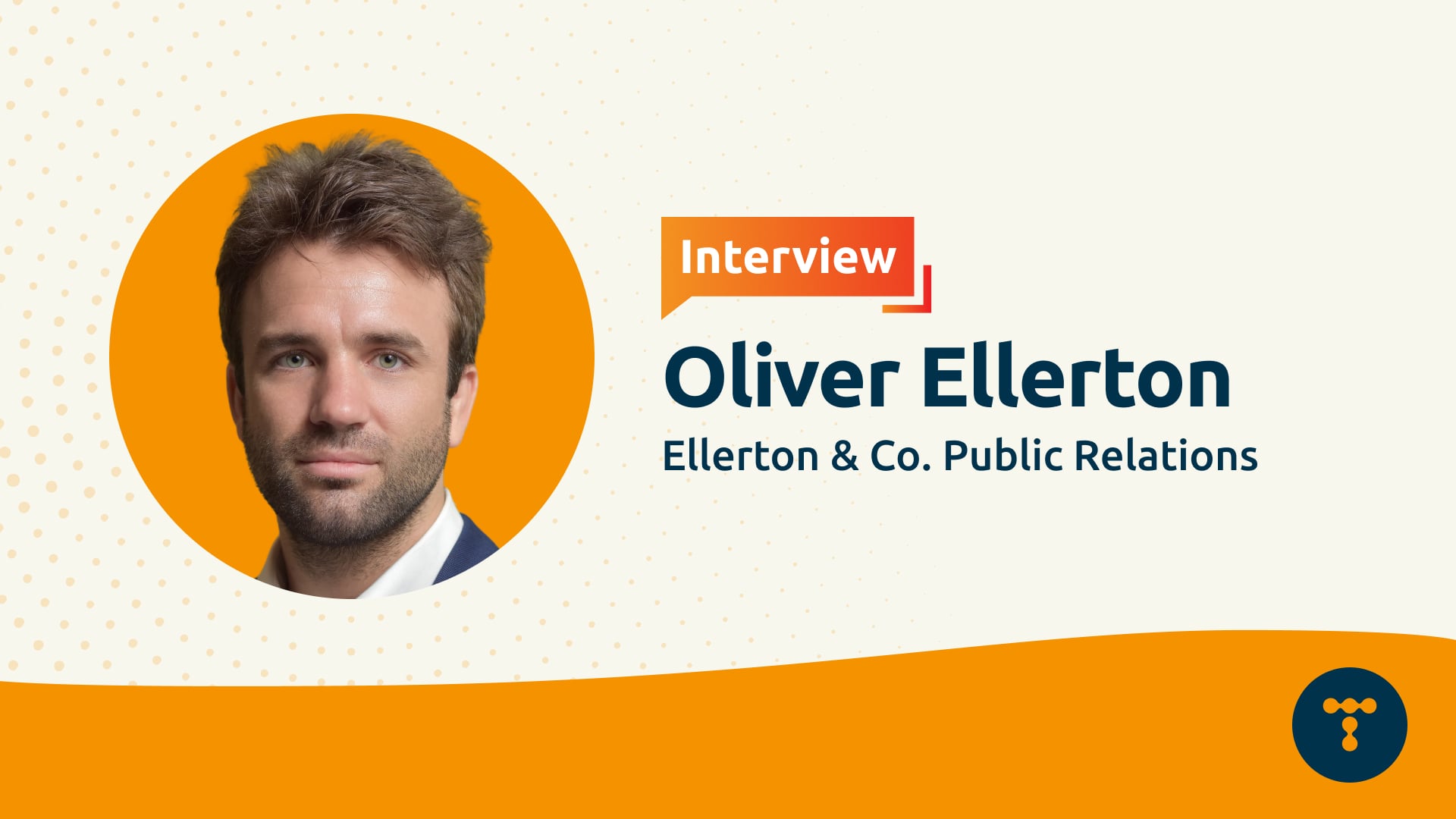
Cybersecurity incidents are no longer rare, isolated events. As organisations face growing threats from data breaches, ransomware and other cyberattacks, reputation is increasingly shaped long before a crisis occurs. From media engagement and thought leadership to stakeholder trust and organisational preparedness, communications can play a critical role in building credibility before a breach makes headlines.
Telum Media spoke with Oliver Ellerton, Director at Ellerton & Co. Public Relations, about the reputational challenges of cyber incidents, the value of pre-crisis credibility, and how communicators can help strengthen organisational resilience.
Cyberattacks and data breaches have become a recurring headline globally. From a communications standpoint, what makes cybersecurity incidents particularly challenging for organisations to manage in terms of reputation?
Security breaches are no longer a question of “if”, but “when”. For communicators, the challenge is not whether a cyber crisis will happen, but whether they are prepared to respond when it does.
A few things make cyber incidents different from most crises. The first is speed - or more accurately, the gap between when a breach occurs and when it is detected. According to IBM's Cost of a Data Breach Report 2024, organisations take an average of 258 days to identify and contain a breach. By the time communications begins, the organisation is often already on the back foot.
The second challenge is technical complexity. Most organisations struggle to explain what has happened in a way that is both accurate and accessible. The result is often either vague statements that say very little, or overly technical explanations that confuse rather than clarify.
There is also a stakeholder challenge. A breach can affect customers, partners, regulators, employees, and investors simultaneously - each with different expectations. Messaging that reassures one group can raise concerns for another, making it difficult to strike the right balance under pressure.
The regional dimension adds another layer. Asia was the most attacked region globally in 2024, accounting for 34 per cent of all incidents investigated according to IBM's X-Force Threat Intelligence Index. However, the approach to disclosure varies widely across markets. That gap between legal obligation and actual practice can itself become a reputational risk.
What does “pre-crisis credibility” look like in the context of cybersecurity communications, and why is it increasingly important in today’s threat landscape?
Pre-crisis credibility comes down to a single question: is your brand one that can be trusted? Everything else - from whether leadership has spoken publicly about cyber risks to whether journalists and analysts understand how the organisation operates - builds from that.
It is the cumulative result of how an organisation communicates before anything goes wrong. In cybersecurity, this foundation is particularly important because the default assumption after a breach is that the organisation knew more than it disclosed, or acted too slowly. You are starting the conversation at a deficit.
Much of this credibility is built through consistent, often unglamorous work - media relationship sessions, off-the-record briefings, and showing up before there is anything to announce or defend. Over time, this creates familiarity and trust that can shape how an organisation is perceived when an incident occurs.
What pre-crisis credibility looks like in practice: leadership engaging on cybersecurity topics in trade and business media before there is a headline. Companies proactively discuss their governance processes, which include board-level oversight, investment decisions, and training programmes as well as maintaining a visible presence in relevant industry conversations.
As cyber incidents become more frequent, stakeholders are no longer judging organisations solely on how they respond, but on whether they appeared to take the risk seriously beforehand. Those who have built that foundation tend to be viewed as more credible, while those who do not often appear reactive - even if their response is sound.
Many organisations only engage the media after a breach happens. How can communicators proactively work with journalists to build understanding and credibility around cybersecurity issues before a crisis unfolds?
Many organisations hesitate to engage with journalists unless they have something to announce. In cybersecurity, that approach can be counterproductive. Relationships built before a crisis are often what determine how an organisation is covered when something goes wrong.
Journalists are generally more responsive to organisations that are accessible and willing to provide insight without any product agenda. Offering subject-matter expertise - for example, having a CISO or Head of IT explain how certain threats work or share lessons from industry incidents - is genuinely useful to journalists and helps build relationships.
Providing data and original insight is also effective. Cybersecurity reporting is often driven by numbers and case studies, so organisations that can contribute research or analysis, even within a specific niche, are more likely to build ongoing engagement with media and be positioned as a source, rather than just a subject.
Participating in broader industry conversations also helps establish credibility over time. Whether through forums, panels or briefings, these interactions create familiarity, so that when a story breaks, journalists are more likely to approach organisations that have already demonstrated knowledge and openness.
Another approach is spokesperson briefings. Although walking journalists through a technical topic or industry trend with no immediate news peg is a significant time investment, it pays off. Reporters remember who helped them understand something, and when a story breaks, they are far more likely to reach out to those who have already demonstrated their expertise.
None of this requires disclosing sensitive information. It requires an investment of time, substance, and a willingness to engage meaningfully before a crisis occurs.
Beyond media outreach, how can thought leadership contribute to building reputational resilience around cybersecurity before an incident occurs?
Thought leadership is often discussed but not always executed well. A lot of what passes for thought leadership is essentially repackaged press releases and AI-generated op-eds. That is not what I am talking about.
Effective thought leadership demonstrates that leadership is actively engaged with cybersecurity as a business issue, not just a technical one. It shows a willingness to address difficult questions and, importantly, provides something useful to the audience, whether that is journalist, regulator, client, or investor.
This could take the form of a CEO writing publicly about why cybersecurity governance needs to sit at board level, not just under the IT function. It could also be senior executives sharing insights on industry-specific threats or contributing meaningfully to discussions around regulatory developments.
The value from a reputational standpoint is straightforward. When an incident occurs, stakeholders will ask whether the organisation took cybersecurity seriously. A visible track record of informed and consistent engagement helps answer that question. While it does not eliminate reputational damage, it provides important context that the organisation has been aware and engaged in cyber-related issues.
Cyber preparedness is often associated with well-resourced multinational companies, yet smaller organisations are increasingly targeted. How should communicators adapt their role and priorities across businesses of different sizes, and where can smaller organisations focus their efforts to have an effective reputational impact?
This is where the gap between perception and reality is most pronounced. There is a widespread assumption that attackers target large organisations because that is where the money is. In practice, Verizon's 2025 Data Breach Investigations Report found that ransomware was present in 88 per cent of SMB breaches, compared to 39 per cent for larger organisations, underscoring the scale of the risk for smaller businesses.
The challenge is that these organisations typically have fewer resources, less experience in crisis management, and limited media relationships. As a result, communicators need to focus on a smaller set of high-impact priorities.
The mistake smaller organisations often make is assuming that reputational strategy is only relevant once you are at a certain scale.
And when an attack lands, the financial exposure goes well beyond the initial demand. Verizon’s same report puts the median ransom payment for SMBs at US$115,000 - before you factor in downtime, recovery costs, regulatory penalties, and the reputational fallout that can take years to repair. That kind of impact does not discriminate by company size.
Basic preparedness is critical - having holding statements ready, clearly defined spokesperson roles, and an understanding of regulatory obligations. Beyond that, building a modest but credible presence in relevant industry communities can help establish context and familiarity. Owned channels, such as LinkedIn, can also play a role in signalling how the organisation approaches its operations, including its commitment to responsible practices.
The communicator's job, regardless of the size of the organisation, is to help leadership understand that the reputational dimension of a cyber incident is not a secondary consideration. It is central to recovery.
-2.jpg)
Petrie PR has been appointed as the communications agency for Bound & Beyond.
Under the partnership, the agency oversees the hospitality and lifestyle group's corporate communications and media relations, supporting its brand storytelling, leadership visibility, and media engagement across the luxury travel, lifestyle, hospitality, and business sectors.
Bound & Beyond's portfolio includes Capella Bangkok, Four Seasons Hotel Bangkok at Chao Phraya River, Zephyr, and Jul's. The group is also preparing to launch The Moken Club and its new hotel brand, KAIA Koh Phangan, later this year.