PR News
Tarek Hakim

Action Global Communications welcomes new hire

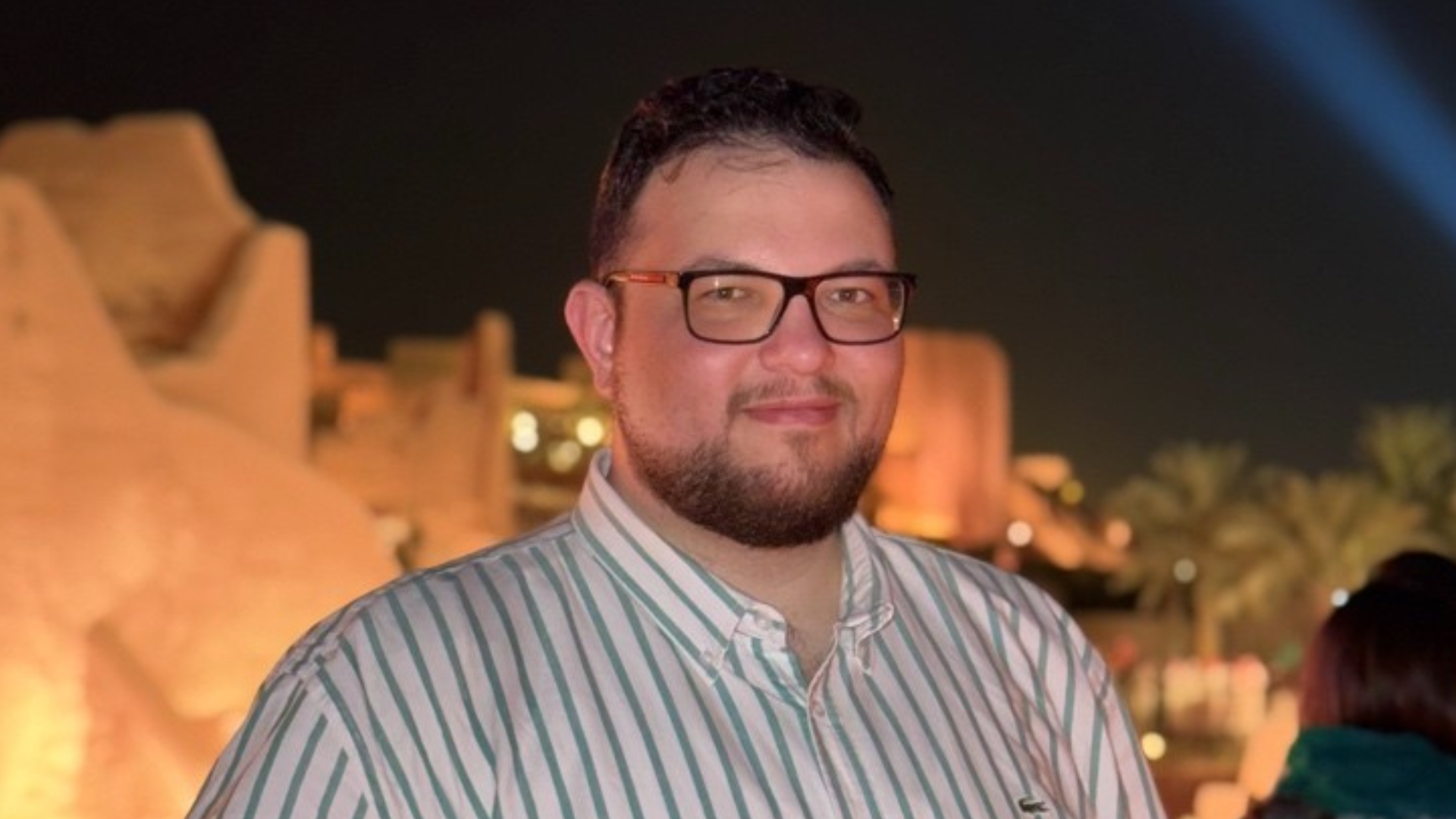
Tarek Hakim has joined Action Global Communications as Senior Communications Manager. Based in Dubai, in his new role, he's responsible for leading the PR and communications efforts for the Samsung MENA account.

Tarek joined the agency after completing his role at BPG Group, where he supported the team managing clients such as Amazon Devices & Services, ORA Developers, Titan Lithium, Wasl, and AMANA. Before that, he was with Active for more than seven years in several communications roles. 

Previous story

SOCIETY reports global growth spanning Australia and the US

You might also enjoy

SOCIETY
Industry update

SOCIETY reports global growth spanning Australia and the US

Independent female-founded marketing and communications company, SOCIETY, has announced growth in 2026 with a wave of client partnerships and strategic investments in talent.

The agency has expanded its client roster with new clients, including Rundle Mall, Navair, Hard Truth DistillingCo., and Do Good Crew.

SOCIETY has also updated roles across its Executive Leadership Team (ELT) to support its next stage of growth. Led by Dena Vassallo as Global CEO and Founder, the updated ELT roles include:

  • Will Lehnertz as General Manager ANZ
  • Mel Huggins as Group Director Transformation ANZ
  • Annike Morgan as Group Director Creative and Purpose ANZ
  • Katie Rosholt as Managing Director US and Global Marketing
  • Jarrad Basnec as Finance Director ANZ and US

The leadership team is further complimented by a series of new strategic hires and promotions across the agency.

Stephanie Ockenden has been appointed as Brand + Communications Director + Market Lead. Based in Adelaide, she joins the team with nearly 20 years' experience in PR, brand and communications strategy, and events. Stephanie will oversee the agency's operations and client partnerships across South Australia, Western Australia, and the Northern Territory.

Promotions within the team include:

  • Lucy Brewer as Senior Client Lead, Sydney
  • Sorcha Delaney as Manager, Sydney
  • Meriel Killeen as Senior Manager, Adelaide
  • Jess Sexton as Consultant, Adelaide
  • Maisie Callcott as Associate Director, US

Dena said: "We're fast out of the gate in 2026, and it’s our year of purposeful impact focused on work that actually moves the needle.

"Sparking meaningful conversations with partners navigating change creates real opportunities for fresh ideas and better storytelling." 

Culture
Feature

Culture before commerce: What it takes to build in the Gulf

When The Executive Centre (TEC) entered Dubai in 2018, flexible workspaces were still relatively niche in the Middle East market. For Chelsea Perino, a Marketing and Communications Executive based in Hong Kong and her team, the challenge was twofold: establishing brand awareness while learning how business is done in the region.

That changed after Covid-19. While many global markets stalled, the region rebounded swiftly. With the rise of hybrid working, the flexible workspace solutions provider fundamentally flipped its business on its head.

The pace of change in the Gulf region is something industry leaders have noticed. Georgina Woollams, Founder and Managing Director of Katch International and whom expanded her agency from London to Dubai more than a decade ago, explained how approaches to brand building and communications have changed over the years as the market transformed:

“The UAE is probably one of the fastest-evolving countries in the world, so we have to adapt to stay on pace continually. With the growth of the country and a recent influx of people from across the globe, we are always finding ways to reintroduce clients to a new audience while simultaneously storytelling to those in the UAE who already know the brand.”

Relationship building in the Middle East and pitfalls to avoid
Chelsea quickly observed that business culture in the Middle East is highly relationship-driven.

Unlike in many Western markets, meetings often begin with personal conversations about family, daily life, or current events before shifting to commercial discussions.


“Making small talk before discussing business details shows that you care about the bigger story behind an initiative. Not doing so can come across as pushy or insincere,” she notes.


Going hand in hand with relationship building is the grasp of cultural nuances and the exhibition of cultural sensitivity. Yet, an often-overlooked aspect for foreign communicators is the sheer diversity of the region, both in terms of language and personas.

Chelsea highlighted the common misconception of treating the Middle East as a homogeneous market. Each territory has its distinct characteristics and media landscape. Dubai and Abu Dhabi, despite being part of the same country, maintain different business personalities. Saudi Arabia, Qatar, Azerbaijan, and Oman each possess unique cultural, economic, and media environments, with varying dialects of Arabic. She added that success in regional communications requires understanding of both English and Arabic media ecosystems.

Georgina pointed out that a 'pay to play' dynamic is prevalent in certain territories, which might be hard to get around, especially if you are in the real estate or trade industries.

“A lot of international people forget that the majority of the wealth in that region is sitting within the Arabic family holding - it would be naive not to take that side of the demographics seriously,” Chelsea observed.

Tailoring communication to different demographics
Beyond building relationships in person, understanding audiences’ preferred communication platforms across Middle Eastern countries is crucial for successful engagement. Each market has distinct preferences shaping both B2B and B2C communications that brands must adapt to.

While longer-form storytelling and business outlooks would be interesting to audiences of traditional media, social media communication in the region is undeniably on the rise. “X (formerly Twitter) usage in the region is high - it’s actually one of the preferred communications platforms - which is why it is important to consider opening branded channels to drive more tailored engagement when an organisation is expanding into the region,” Chelsea exemplifies.

Georgina echoes Chelsea’s sentiment on the importance of localising communication channels and their content to different audiences. On numerous occasions, she has seen international brands enter the market and think one rule fits all, but that is simply not the case. “For our clients, this is a journey of education, understanding what competitors are doing and how they are doing it right. We then adapt one of their campaigns culturally to show them the great results we can achieve, so they let us continue with this strategy.”

On the other hand, young people aged under 30 constitute more than half of the population across the Middle East and North Africa region, with recent estimates from the OECD placing this figure at around 55%. In this context, Georgina also advises PRs to “be ready to adapt; Generation Alpha are tech-led, so find ways to communicate with them in a manner they will respond to. Generation Z want to know you care, so you need to speak with authenticity.”

Advice for first-timers
When asked what guidance she would offer to international communicators entering this market for the first time, Georgina honed in on localisation and authentic engagement.

“It is essential to localise the content, build genuine relationships with specific communities, not just by sponsoring something, but by truly finding a way to engage with the audience you are targeting.”

Chelsea encourages brands to inform their marketing and communications campaigns through a competitive audit. A test-and-learn approach is also highly beneficial, she has found. Rather than crafting an extensive year-long strategy immediately, she recommends focusing on shorter cycles:

“For Q1, focus on specific initiatives and channels, assess what works, and use those insights to inform your strategy for Q2. If you find success with certain activities, amplify them; if something doesn’t resonate, pivot and explore new options.”

She also urged brands to think carefully about where they launch within the UAE, rather than defaulting to Dubai.

“Each Emirate has its own identity,” Chelsea explained. “Some are known for luxury and glamour, some for financial strength and investment, and others are emerging as entertainment hubs.

“Don’t automatically assume Dubai is the best starting point for your initiatives just because it’s the most familiar to an international audience.” 

iD
Industry update

iD Collective grows client portfolio

Full-service communications agency, iD Collective, has welcomed two new clients - Quadrant and Kathryn Eisman.

Fashion and lifestyle brand, Quadrant, has tapped iD Collective to lead strategic communications and event management for its Melbourne pop-up. The agency will deliver a campaign to drive awareness and buzz, as well as consumer and community engagement. The multifaceted strategy will encompass strategic media relations, activation logistics and a VIP event, guestlist management, and storytelling.

"We're thrilled to be supporting Quadrant's full-throttle arrival into Melbourne and having the opportunity to activate in line with the Australian Grand Prix - such an epic sporting and cultural moment," said Amanda Booth, Executive Director of iD Collective.

"As experts in the fashion, sport, and the lifestyle space, we are uniquely positioned to bring this global brand to life for a local audience. Our depth of experience enables us to craft creative communications strategies that cut through the noise, drive impact, and build lasting brand equity."

The agency has also announced that it has been appointed as Australian communications partner for journalist, author, and Founder & Creative Director of High Heel Jungle, Kathryn Eisman. The partnership will see iD Collective lead strategic communications in Australia for Kathryn and High Heel Jungle, amplifying her profile across fashion, lifestyle, business and culture, while supporting continued brand growth, media visibility and creative collaborations.