PR News
<span id="hs_cos_wrapper_name" class="hs_cos_wrapper hs_cos_wrapper_meta_field hs_cos_wrapper_type_text" style="" data-hs-cos-general-type="meta_field" data-hs-cos-type="text" >Regional comms appointment at Kimberly Clark</span>

Regional comms appointment at Kimberly Clark

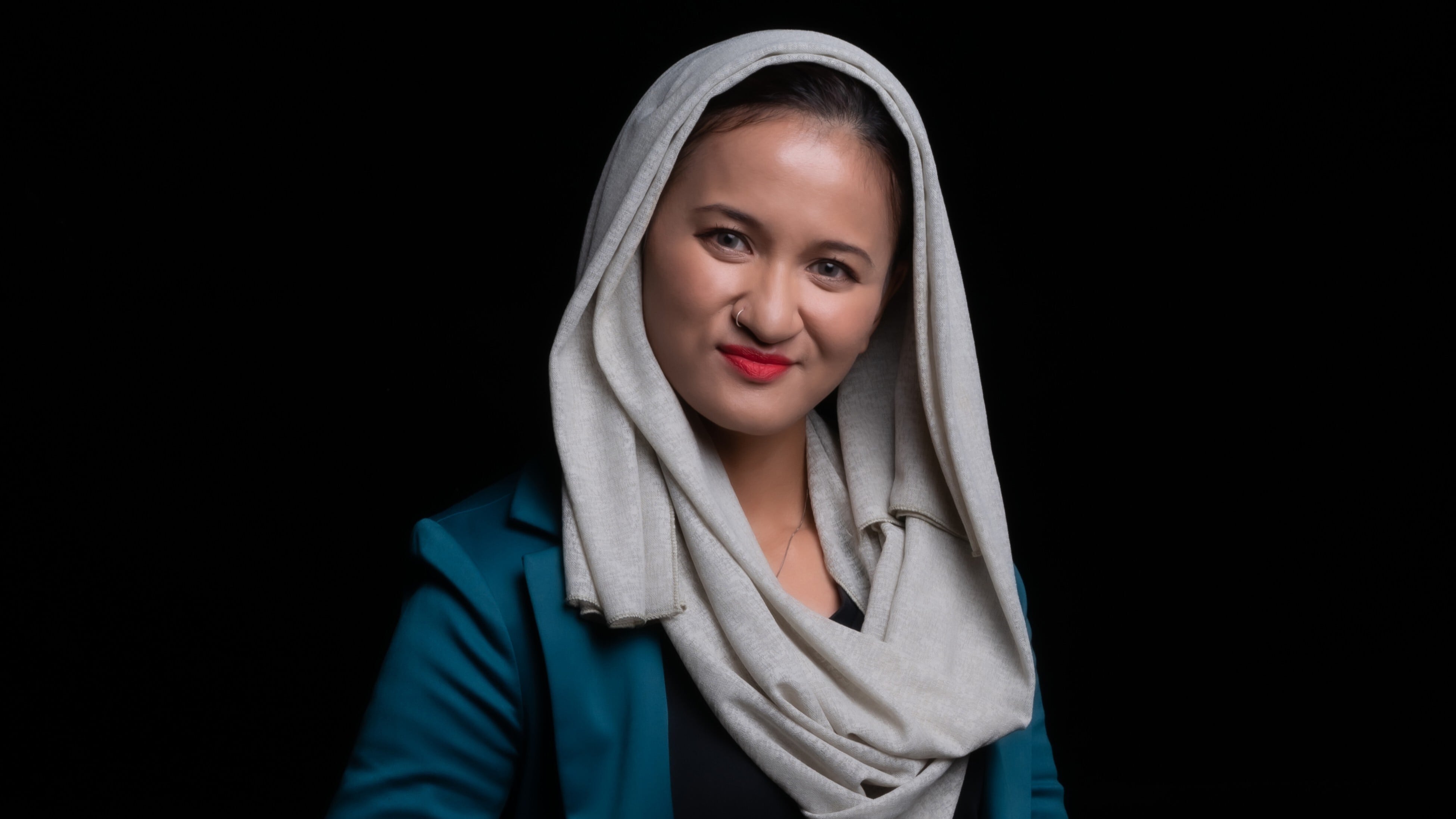
Zatalini Zulkiply has been appointed Head of Communications and Corporate Affairs for Asia and ANZ at Kimberly-Clark.

Based in Malaysia, she oversees communications activities across the region, including public relations, media engagement, government relations, digital communications, culture and internal communications, for the company’s international family care and professional business.

Zatalini brings more than two decades of experience from organisations including GE Vernova, General Electric, Honeywell, and Procter & Gamble. 

Previous story

Interview: Charissa Guan from bSIDE

You might also enjoy

Interview:
Feature

Interview: Charissa Guan from bSIDE

As brands increasingly look beyond campaigns and paid reach to foster deeper audience connection, community-building has become a growing focus across marketing and communications. Telum Media spoke to Charissa Guan, Founder and Managing Partner of bSIDE, about the role of PR in sustaining brand communities, the importance of authenticity in values-led messaging, and why long-term trust and belonging matter more than short-term visibility.

With bSIDE being an integrated marketing and communications agency, how do you see the specific role of PR and communications in building and sustaining brand communities, particularly alongside marketing and brand functions?
PR and communications have always been about building reputation and creating meaning. It's not just about coverage for coverage's sake or to merely hit arbitrary values like total reach or AVE. The goal of PR and communications has always been to help audiences understand why a brand matters, and to keep the story alive between the big moments.

To me, marketing drives discovery, while communications sustains emotional investment over time. When those two functions are misaligned, or worse, operate in silos - people notice. Especially for Millennials and Gen Z who spend a significant amount of their time online. They know inauthenticity when they see it. 

At bSIDE, we think of communications as the connective tissue between the brand and marketing funnels. It holds the entire community narrative together. It makes sure what a brand says publicly matches what people really experience on the ground. That coherence is what earns trust, and without trust, community is just another word on a brand deck.

For brands that have not historically leaned into values-led messaging, is it ever too late to start? And how should they begin this approach without appearing opportunistic or inauthentic?
I’d say it’s never too late, but brands need to tread carefully. The worst thing a brand can do, if it's never leaned into values-led messaging, is announce its values publicly. Our recent research on brand communities in Southeast Asia found that 27 per cent of respondents called out brands for using culture or social causes mainly as a branding exercise. That is community-washing, and people see through it immediately.

The rationale is that you can’t publish a manifesto and expect anyone to believe it if you haven't historically stood for something. So start internally and ask: What do you actually care about as a brand? Where is the evidence of it? For example, it could be reflected in how you treat your staff, who you partner with, or the decisions you make even when they come at a cost.

From there, surface those stories consistently without overclaiming. The brands that do this well don't necessarily sound the most polished, but their actions follow their words, and over time, that accumulation sticks and transforms. 

Once brands begin engaging with communities, participation in cultural moments and conversations often becomes inevitable. How can organisations contribute in ways that add genuine value rather than appearing performative?
When developing content, we should ask ourselves a simple question: are we adding something to the conversation, or just showing up in it?

I’d say the most common mistake is timing. Brands tend to enter cultural conversations at peak visibility - when the topic is already saturated and everyone has said the same thing. By that point, participation reads as opportunistic, not genuine.

The other issue I see is over-production. Community-driven cultural moments thrive on rawness. When a brand's contribution looks too polished and coordinated, it signals that it was made for the brand, not for the community.

What we tell clients is that restraint is a strategy. Not every cultural moment belongs to every brand. The brands we most admire have a clear point of view, which is informed by both branding and communications, and they are consistent about the conversations they choose to be part of. 

Community-building is often positioned as a long-term investment, yet many organisations still look for immediate, measurable results. How do you help clients understand the long-term value?
Building communities is a compounding investment, which means you cannot expect to see ROI in a day. However, the returns are real. Based on our research, people are 29 per cent more likely to visit a brand and recommend it when they experience a genuine sense of community with it. Do those numbers necessarily show up in the first quarter? Likely not. And that makes it a hard sell inside organisations where reporting structures reward short-term acquisition.

Here's what we’ve found actually shifts the conversation. Much like how the PR industry has had to reframe its impact, we do the same with building communities. We look at indicators alongside sales KPIs, such as repeat behaviour, referral patterns, and organic content. These are tangible results, in addition to commercial value. 

What role does storytelling play in fostering belonging, and how can organisations maintain that sense of belonging while still scaling and reaching new audiences?
Storytelling is how communities remember themselves. It is what transforms a series of individual experiences into a shared identity. When a brand tells the story of its community back to the members within it - whether through content, events, or shared language - it reinforces belonging without requiring everyone to be in the same room at the same time. 

Familiarity is one of the most underrated forces in community building. Not only does it lower the barrier to re-engagement, it creates emotional safety and turns interest into habit. The role of storytelling here is to make people feel genuinely seen through consistent voice, recurring formats, and small acts of recognition.

The scaling question is where most brands stumble. The instinct is to broaden - in order to reach more people, you diversify the message. But the brands that scale community successfully go deeper before they go wider. They strengthen their core, turn their most invested members into hosts and advocates, and let the community carry the expansion rather than force it.

Communications at that stage become less about broadcasting and more about equipping. Giving the community the language, stories, and moments it needs to grow itself. Because the best thing a brand can do for its community is to make it feel like it belongs to the people in it, not to the brand. 

Via
Industry update

Via strengthens senior communications capability with strategic appointments

Strategic communications and marketing firm, Via, strengthened its bench with the appointment of Jose Verbeek as Communications Director and Kate Evans as Senior Account Manager.

Jose joins from H+K, where she served as an Account Director in the corporate communications team, and previously held roles within the investor communications practice at WE Communications. She brings close to a decade of experience advising clients across financial services, fintech, professional services and ASX-listed companies.

At Via, Jose will focus on strengthening its corporate, financial and investor communications solutions and providing strategic media relations support to clients across all of Via’s client groups.

Kate Evans joins from Burson as a Senior Account Manager, bringing seven years of experience across financial services and corporate communications in Australia and the UK. At Burson, Kate advised clients on integrated communications programmes spanning corporate reputation, brand building, and digital and social media strategy across earned, owned and paid channels.

Kate's appointment will deepen Via's integrated global marketing and communications capabilities.

Tala Booker, CEO and Founder of Via, said: "We know our clients are increasingly looking for senior, high-touch partners who understand how to weave together commercial acumen with brand and reputation. We partner with our clients in high-stakes situations, where pace matters but judgement prevails. I’m confident that Jose and Kate bring discernment, bold thinking and passion to how we show up and deliver for our clients."

Commenting on her appointment, Jose said: "What drew me to Via is how it knits together communications, investor relations and marketing so commercially for its clients. These are moments where decisions carry real commercial and reputational weight for our clients so I’m excited for the opportunity to build on that, supporting clients in a way that is more integrated, more strategic, and aligned to how businesses are operating across borders today."

Kate Evans added: "Via has built a strong reputation for combining strategic thinking with high-quality execution across communications and marketing. I’m looking forward to helping clients deliver integrated communications programs that support long-term business growth, increase stakeholder confidence and build cross-border recognition for clients." 

Dylan
Moves

Dylan Quinnell takes up a new opportunity as Senior Associate

Dylan Quinnell has joined the team at the Global Strategic Communications Council (GSCC) as Senior Associate, Electrification. He has just wrapped up a short-term contract as Media Consultant at Beyond Zero Emissions and, prior to that, was Media Manager at ENGIE AU. 

Dylan has held a number of in-house roles at NFPs, including at World Vision New Zealand, Oxfam Australia and CARE Australia.