PR News
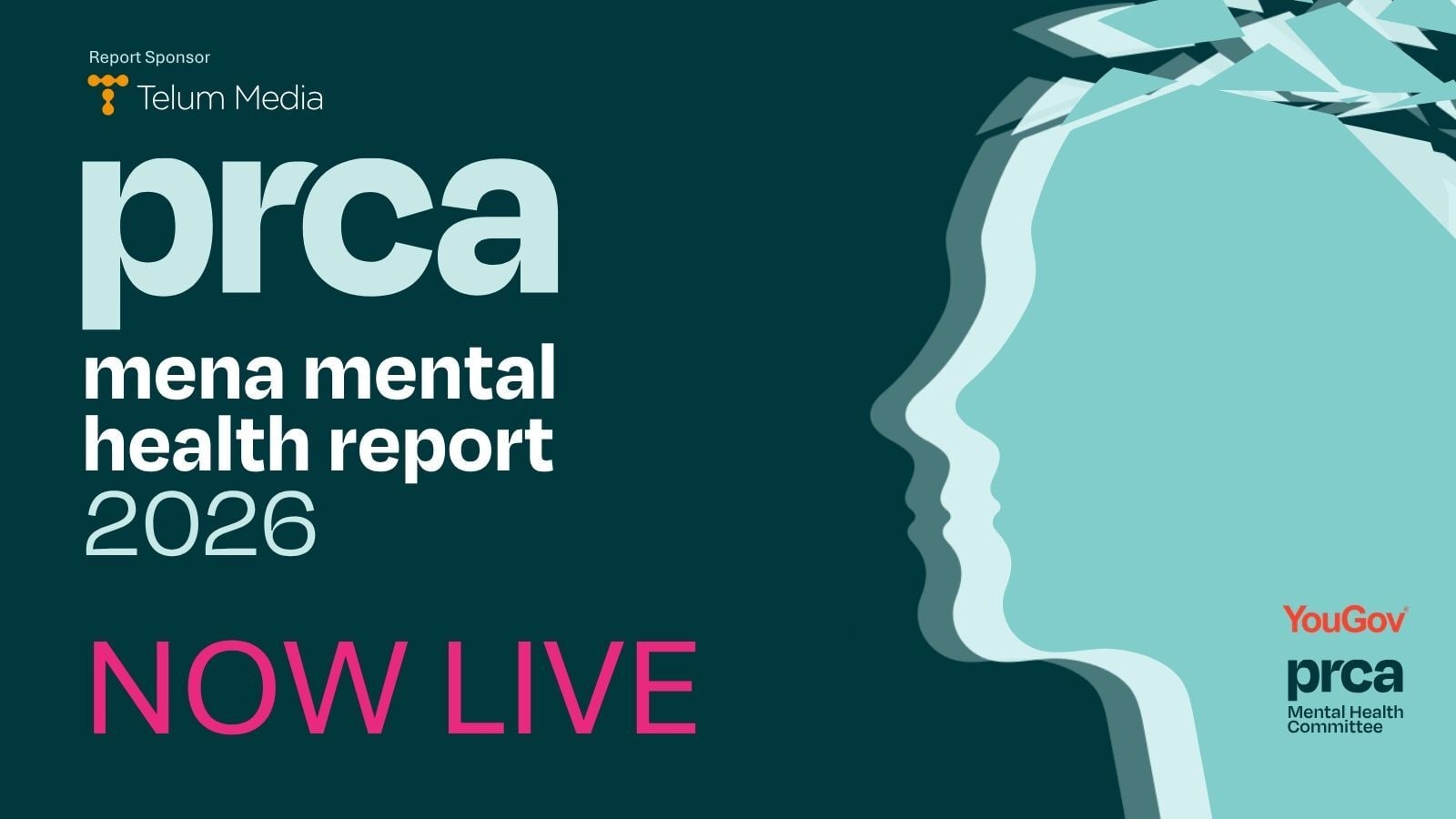
PRCA Mental Health Report 2026

PRCA MENA: The widening gap between mental health awareness and workplace reality

PRCA MENA has released the fifth edition of its MENA Mental Health Report, sponsored by Telum Media, highlighting a widening gap between mental health awareness and the everyday workplace reality of PR and communications professionals across the region.

Unveiled at the PRCA MENA Conference 2026 in Dubai as part of this year’s Reset the Mindset conference programme, the research drew on a sample of 261 respondents across the MENA region, with data gathered from 2nd June to 21st June 2026.

The study found 55 per cent of professionals experience stress, anxiety, or feelings of being overwhelmed often or all the time, while 41 per cent experience burnout often or very often. This comes despite mental health awareness across the industry continuing to rise.

While 76 per cent of respondents now consider themselves well-informed about mental health, up from 66 per cent in 2024, that progress is not being matched by employees' experience of workplace support. The proportion who feel completely or moderately supported by their organisation has fallen from 71 per cent in 2024 to 58 per cent in 2026.

Awareness is no longer enough

The report shows mental health is now firmly recognised as a workplace priority across the PR and communications industry.

Almost all respondents, at 97 per cent, consider mental health and wellbeing important to their overall quality of life. Three-quarters say they are well-informed about mental health and equally confident recognising signs of poor mental health in themselves and others.

However, PRCA MENA says the findings show awareness has improved faster than workplace behaviour.

More than half of respondents continue to experience stress, anxiety, or feeling overwhelmed often or all the time. A further 36 per cent report feeling this way sometimes.

Conrad Egbert, Head of PRCA MENA, said: "We've become much better at talking about mental health, but we haven’t been as good at changing the conditions affecting it. The industry doesn’t have an awareness problem anymore; it has an action problem.

"If people understand burnout but still feel unable to switch off, manage their workload or take time to recover, then another wellbeing campaign isn’t the answer. This now comes down to how we lead, how we manage people and, fundamentally, how we design work."

Workplace pressure remains the main driver

Work-related stress remains the leading contributor to mental health challenges, identified by 49 per cent of respondents in 2026. It has ranked as the most common factor in each of the three years covered by the research.

Other pressures have also become more pronounced. Financial concerns have risen from 37 per cent in 2024 to 48 per cent in 2026, while poor work-life balance has increased from 30 per cent to 42 per cent over the same period.

More than eight in 10 respondents believe their workplace has a moderate or strong influence on their mental health.

The most common workplace challenges include high workloads, at 38 per cent, long working hours, at 36 per cent, and poor work-life balance, at 35 per cent. The report also identifies lack of recognition, limited career growth, unclear expectations, and unsupportive management as additional sources of strain.

PRCA MENA says these pressures rarely operate in isolation. Heavy workloads can lead to longer hours, reduced recovery time, and weaker personal routines, turning what may begin as a demanding period into a sustained way of working.

The always-on news cycle is taking a toll

The report highlights the particular pressures facing PR and communications professionals in a fast-moving news environment.

Nearly two-thirds of respondents, at 63 per cent, believe recent global and regional events have increased stress within the industry. The report notes that these events often create immediate demands for monitoring, interpretation, crisis response, and stakeholder communication.

93 per cent of respondents say they find it difficult to switch off from news and current events because of their role, including 30 per cent who experience this to a great extent.

The report says staying informed is part of the job for communications professionals, but being permanently switched on should not be.

It also found 67 per cent say the nature of PR makes it difficult to disconnect more generally. Only 49 per cent rate their organisation positively for setting boundaries around working hours and communication.

Burnout is showing up in daily working life

The research found burnout is not only being experienced as a temporary response to busy periods, but as a regular feature of working life for many professionals.

41 per cent of respondents say they experience burnout often or very often, describing themselves as emotionally, mentally, or physically exhausted.

Changes in sleep or appetite are even more common, affecting 47 per cent often or very often. Difficulty concentrating or remembering, and excessive fear, worry or anxiety, each affect 39 per cent of respondents with the same frequency.

More than a third frequently report a loss of interest in activities or social interaction, while 35 per cent experience prolonged sadness or irritability.

The report says these findings are not clinical diagnoses, but they show how sustained pressure is affecting employees' energy, focus, and engagement.

Trust remains a barrier to support

The report found mental health is becoming more accepted in workplace culture, but psychological safety is still developing.

Employees overwhelmingly support colleagues taking practical steps to protect their wellbeing. More than nine in 10 respondents were comfortable with colleagues using flexible working, having deadlines eased, taking time off, or receiving a temporary reduction in workload.

However, 55 per cent still believe stigma is attached to mental health within the PR industry. Positive organisational ratings for reducing stigma have also fallen from 63 per cent in 2024 to 51 per cent in 2026.

The proportion likely to discuss a future mental health concern at work has fallen from 74 per cent in 2025 to 62 per cent in 2026.

The report states that privacy is the leading barrier. Nearly half of respondents, at 47 per cent, would prefer to keep concerns private, up from 35 per cent in 2024. 40 per cent do not trust that workplace conversations will remain confidential, while 33 per cent worry about a conversation having a negative impact on their career. Among respondents aged 18 to 24, that rises to 50 per cent.


Colleagues are becoming the first line of support

Among employees who discussed a mental health concern at work, 63 per cent approached a co-worker in 2026, up from 49 per cent in both 2024 and 2025.

Colleagues are now by far the most common source of workplace support. The experience is also largely positive, with 92 per cent of those who spoke to someone at work saying they were satisfied with the response they received.

However, the report says peer support should complement, not replace, trained managers and professional services.

Only 30 per cent of those who discussed a concern at work approached their immediate manager in 2026, although this was up from 21 per cent in 2025. Just 16 per cent say their organisation provides managers with mental health training.

PRCA MENA says managers are not expected to act as therapists, but they need to listen, understand confidentiality, make appropriate adjustments, and recognise when specialist support is required.

Employees want practical workplace change

The report found employees are increasingly looking for practical workplace changes rather than standalone wellbeing campaigns.

46 per cent of respondents want improvements to the working environment, 41 per cent want better workload management to prevent burnout, and 37 per cent want access to mental health professionals.

Employees also pointed to the importance of limits on after-hours communication, trusted leadership, manageable workloads, clear boundaries, and flexibility that improves control over work rather than simply extending the working day.

John Rynehart, Chair of the PRCA MENA Mental Health Committee and Managing Director, Middle East at Kekst CNC, said: "The communications industry no longer has a mental health awareness problem. It has an implementation problem.

"We know what drives stress, burnout, and poor wellbeing. The challenge now is whether organisations are willing to make the changes required to address them.

"Our collective goal should not simply be to help people cope with unhealthy ways of working. It should be to create healthier ways of working in the first place."

Flexibility has limits

Flexible working remains important to wellbeing in the industry.

Hybrid working is now the most common model among respondents, and 66 per cent of those working remotely or in a hybrid arrangement say flexibility has improved their mental health.

Nearly three-quarters, at 74 per cent, believe greater workplace flexibility is necessary to enhance wellbeing across the profession.

However, the report found flexibility alone cannot solve structural pressure. The proportion reporting that remote or hybrid working has improved their mental health has fallen from 72 per cent in 2025 to 66 per cent in 2026.

PRCA MENA says this does not mean flexibility has become less valuable. Instead, it shows that where people work cannot fully compensate for how work is designed.

High workloads, long hours, and constant communication can follow employees wherever they are based. The report says flexible working is most effective when combined with realistic deadlines, manageable workloads and clear expectations about availability.

AI is reducing stress for some professionals

Almost half of respondents, at 47 per cent, say the growing use of AI has reduced their stress or anxiety. Among respondents aged 18 to 24, this rises to 68 per cent.

However, 15 per cent of all respondents believe AI has increased pressure.

The report says the opportunity lies in using AI to reduce repetitive demands, including drafting support, summarisation, research, monitoring, and administrative automation.

It also warns that technology will not improve wellbeing automatically. Poorly managed adoption can create anxiety, unclear expectations or assumptions that efficiency should result in greater output.

The report states that AI should be introduced with clear goals and adequate training, and that time saved should contribute to healthier capacity, not only increased workload.

What communicators need to know

The MENA Mental Health Report 2026 points to a shift in the wellbeing conversation for PR and communications teams. Mental health awareness has improved, stigma has declined, and employees are more accepting of colleagues who need flexibility, time away or temporary adjustments. However, the report shows these cultural gains have not yet translated into a consistently healthier workplace experience.

For communications leaders, the next phase of progress will depend less on awareness campaigns and more on how work is led, organised, and measured. That means building trust around confidentiality, training managers to respond constructively, setting clearer boundaries around availability, and designing healthier ways of working where sustainable performance, recovery, and support are treated as part of the work, not separate from it.


Previous story

PRCA announces Gold Standard Awards winners

Next story

Adam Cresswell returns to research sector as Director of Communications

You might also enjoy

Telum
Industry update

Telum Media and Truescope in strategic partnership

Telum Media and Truescope have entered a strategic partnership that brings together Telum Media’s curated journalist and media relations platform with Truescope’s fully integrated AI-first media intelligence service.

The partnership will surface Truescope media intelligence inside the Telum Media platform, so communications teams can see which journalists are covering their issues and pitch them without leaving the workflow. 

Between them, the two companies now cover the five parts of media intelligence. Truescope brings media monitoring, social listening and media analysis. Telum Media brings the media database and distribution. For communications teams, that means one connected workflow, from finding the right journalist to measuring what the coverage achieved.

The partnership will initially focus on Australia, New Zealand, and Singapore, with additional markets to follow.

For Telum Media, the partnership reflects a sharp surge in journalists demanding greater relevance in the outreach they receive from PRs, and follows its recent launch of Distribution tools within the platform.

“The ‘spray and pray’ approach to sending media releases should be consigned to the past – that’s what thousands of journalists have been telling us through our Journalist Interest Surveys,” said Telum Media Executive Chairman, Michael Webster.

“The focus is on precision-led targeting and more relevant outreach, and this partnership with Truescope will help communications teams identify and select relevant media based on demonstrated coverage and current editorial interests."

“Having this integrated into the Telum Media platform means teams can research, plan, personalise and pitch without switching between disconnected systems.”

For Truescope, the partnership follows its entry into the Australian market on 1 October 2026, and conversations with more than 30 communications, PR and public affairs leaders across Australian government, corporate and agency teams about what they need from a media intelligence service. Truescope monitors broadcast, print, digital and social media, and runs Truescope AI as part of the service: Truescope Assistant, which answers questions about what happened in the coverage, and Truescope Analyst, which explains what it means, with citations on every output.

Truescope CEO, John Croll, said the integration puts coverage data and journalist data in the same place. Truescope and Telum Media solve complementary parts of the PR workflow, and clients increasingly want monitoring and journalist intelligence to work together without compromising quality.

“PR and Comms teams want the best monitoring and the best journalist data. Until now that has meant two systems and a lot of copying between them.”

“With this partnership, a comms manager can access specialist capabilities, data quality, and innovation of both Truescope and Telum Media. They can see who is covering their issue, understand how that coverage is moving, and pitch the right journalist without leaving the workflow. That is time back, and a better hit rate”, John said.

Find out more about the Telum Media - Truescope partnership.

Sandpiper
Industry update

Sandpiper promotes senior leadership across APAC and the Middle East

Independent communications, public affairs, and research group, Sandpiper, has announced the promotion of three senior leaders.

Elizabeth Chu has been promoted to Managing Director, Financial Services and Managing Director, Singapore. She will oversee the growth of the financial services practice and take on broader regional leadership responsibilities. Elizabeth previously served as Deputy General Manager of Sandpiper Singapore before being appointed to lead the Singapore business in 2024.

Kimberley Spear has been appointed Managing Director, Financial and to the newly created role of Head of Employee Experience. Previously General Manager, Hong Kong, for five years, she will now oversee employee experience, including consultant development, and workplace culture.

Unice Liu has stepped into the newly created role of Head of Growth Markets. She will lead Sandpiper’s efforts in supporting organisations entering, expanding, and investing in growth markets, with a focus on risk management, reputation, and stakeholder engagement across Asia Pacific and the Middle East.

"Our success has been built on two pillars: exceptional people and an unwavering focus on delivering results for our clients,” said Emma Smith, CEO of Sandpiper Group.

”As organisations continue to invest in growth across Asia Pacific and the Middle East, they need advisers who combine local insight with regional reach, specialist expertise, and deep stakeholder understanding. These promotions reflect our commitment to investing in the next generation of our leaders who will help shape Sandpiper's future, strengthen our capabilities and continue delivering outstanding outcomes for our clients. Developing talent from within isn't just part of our culture; it's part of our DNA.”

(Pictured, from left: Elizabeth Chu, Kimberley Spear, and Unice Liu)

Interview:
Feature

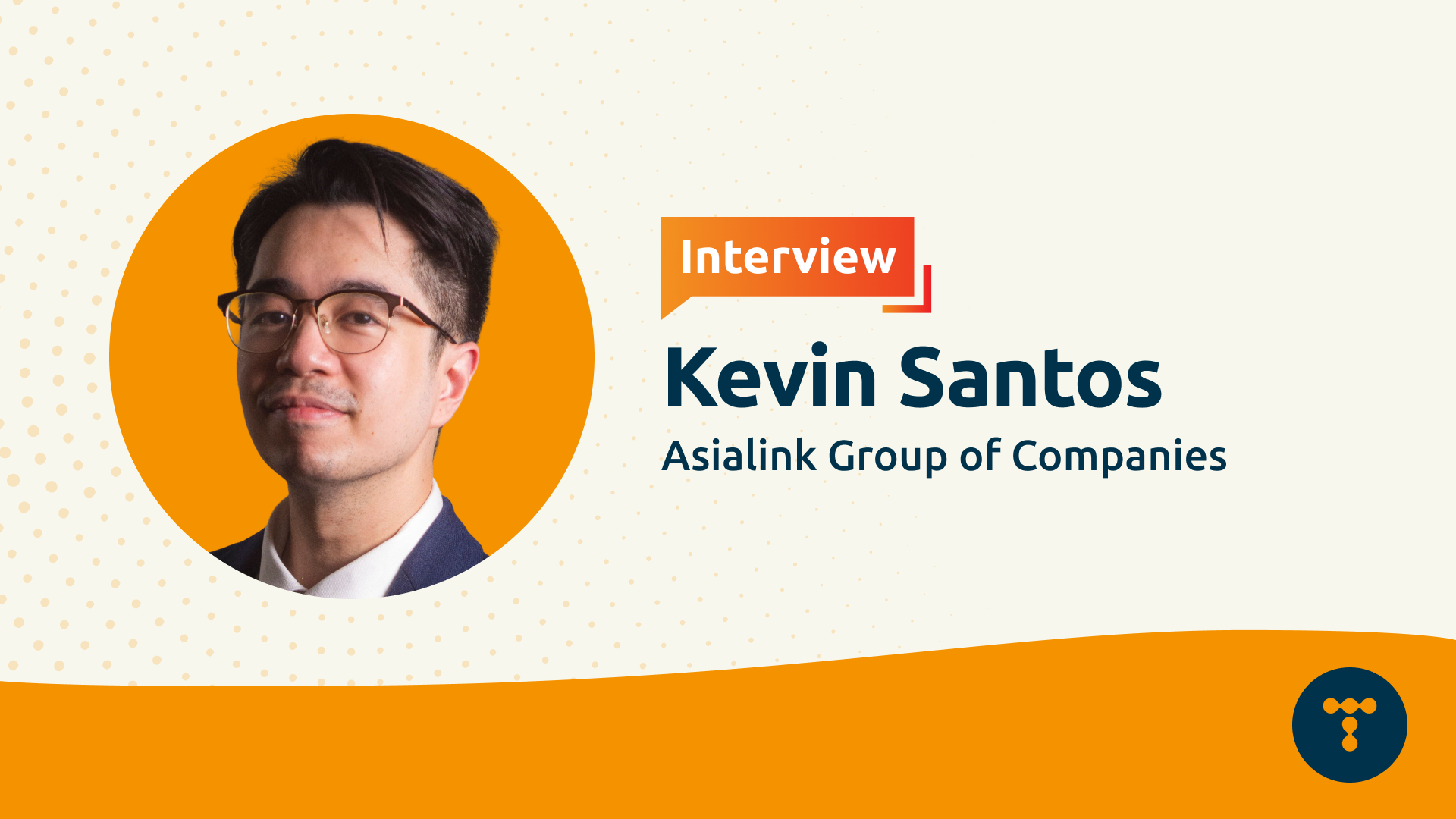
Interview: Kevin Santos on Philippine financial communications

Financial communications is not merely about helping people understand financial services, but also about giving them reasons to trust the organisations behind them. As misinformation spreads and public narratives take shape faster, communications leaders face growing pressure to build credibility, position senior executives as trusted voices, and identify reputational risks before they escalate into crises.

Telum Media spoke with Kevin Santos, Group Head of Communications at Asialink Group of Companies, about communications challenges in the Philippine financial services sector, approaches to executive thought leadership, and what effective financial communications could look like in the years ahead.

In the Philippines, is the greater communications challenge helping people understand financial services, or helping them trust the organisations providing them? How do you balance accessibility, clarity and credibility when speaking to both business partners and consumers?

Trust becomes even more valuable for organisations to build and preserve as our world becomes riddled with synthetic media, mis- and disinformation, and increasingly subjective interpretations. In the context of financial services, approaches to financial literacy depend on standard variables: client profiles, products, geographic areas, income groups, and education levels.

Strictly from a communications perspective, the ‘greater’ challenge isn’t a choice between trust-building and fostering understanding per se, but rather whether the two are done synergistically, especially for Philippines-based companies operating at a larger scale.

Financial education, for instance, should already be a recurring part of an organisation’s customer journey, not merely a post-transaction add-on or corporate citizenship initiative.

On our end, we employ a proprietary process that genuinely makes it a point to get to know our clients and their businesses, and to help them understand our product offerings, rates, and terms. It does take time, but it lays the groundwork for building trust and understanding while contributing to sound risk management and sustainable portfolio performance.

When communicating to business partners and consumers, I would argue that achieving the balance between accessibility, clarity, and credibility starts with an organisation fundamentally knowing what it is, what it’s offering to the public, and what it stands for. I am a strong believer in contextualised communications; internal and external teams working on this will most often achieve their goals.

For us, it means regularly training our people to know our services and how to properly market them, building a verifiable track record of performance, and amplifying these results in a way that aligns with our collective values and is understandable across our linguistically diverse landscape.

From your experience supporting thought leadership communications for senior leaders, how do you decide who is the right person to speak on a financial topic, what they are best placed to speak about, and when it is better to hold back?

Amongst other frameworks and variables, I first advise and classify senior leaders based on their “ABCs”: advocacies, business expertise, and communications clarity. For me, it’s imperative to know what they care about, get a solid idea of their acumen, and understand how they engage people. I then determine their ideal placements based on where they sit in that living matrix.

Ultimately, nothing beats substance, expertise, and a sense of purpose. It’s much more productive and efficient to collaborate with a seasoned and tested leader capable of original thought, who can credibly draw from their experience, including lessons learnt and "what-could-have-beens" from their own leadership journey, along with a clear persistence in explaining how they or the organisation keep going.

The ‘communications’ part of this demands leaders be exposed to opportunities to hone or enhance these skills. From there, it’s a matter of ensuring the leader’s competencies match those opportunities, providing systems-based training, and, most importantly, ensuring that where thought leadership is shared leads to actual short- and long-term outcomes.

Preparation minimises pressure, including in the realm of thought leadership. I would advise holding back if both the communications professional and the thought leader haven’t completed the necessary prep work.


In financial communications, a crisis often starts as a trust issue before it becomes a media issue. What early signals should communications teams in the Philippines be watching for, and how should they respond before the narrative hardens?

Crisis leadership is a pillar of corporate governance. Shifting towards this thinking from a reactive or “hands-off” posture when handling crises will save organisations reputational currency and long-term market capitalisation.

While anticipating “sudden” crises, communications teams should be on the lookout for “smouldering” crises, and, where possible or needed, provide the tools for non-communications functions to discern what exactly those are. Those are long conversations, sometimes recurring, but much-needed ones.

Habitual social listening, including client sentiment scanning, is similarly critical. Particularly, and considering that what “viral” means now can change in the next few years, we add more weight to information velocity and sources rather than strictly numerical vanity metrics.

In financial services, there is no question that product sentiment is also a trust indicator and a signal. A company can build a narrative about their products, but if they do not align with what clients are saying, that will remain challenged, credibility will remain dampened, and it can easily become a media issue.

Apart from communications, the operations side of the business also needs to seriously consider reputational risks when developing a product.

Considering the current realities of AEO (answer engine optimisation), and the larger shift towards the use of LLMs (large language models) for brand research, narratives are quicker to harden. This makes it imperative for teams to exercise sound yet swift judgment when preventing or responding to a crisis. Before any of that, what I tell people is to build those trust signals before institutions come to collect.

What will define effective financial communications in the Philippines over the next few years - clearer financial education, stronger trust-building, better use of data, or more human storytelling?

Considering the VUCA world we live in, along with the synthetism brought in by AI, I am leaning towards stakeholder-centric, evidence-based traceability as a key indicator of effective financial communications locally; it will prevail in terms of building lasting trust, regardless of the business model.

On the client or consumer front, with attention spans declining and claims increasingly easy to verify or compare, effectiveness is also an exercise in originality, creativity, and providing value to the market, rather than your usual awareness-raising of one’s financial products or mere busyness and frequency in execution.

Financial literacy initiatives, for example, become much more meaningful if an organisation takes the time to track how effective said initiatives were and how they translated to communities. That’s a better story to tell in my opinion.

There is also an abundance of content, and we continue to move towards interest-based media and hyper-personalised digital realities. Aside from ensuring alignment with their organisations’ long-term goals, communications teams worth their salt, arguably, also bring real long-term value if their strategies can create conversations that go beyond traditional channels.