PR News
North Seventy Five sets up Abu Dhabi operations

North Seventy Five sets up Abu Dhabi operations

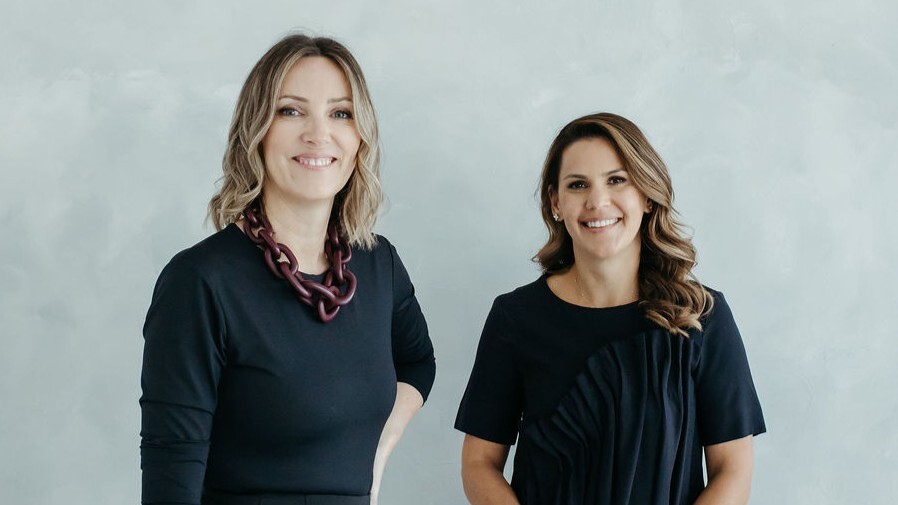
Paritee-backed North Seventy Five has expanded its operations into Abu Dhabi. The move marks a pivotal step in the communications agency's growth strategy and responds to growing demand from clients operating in the UAE capital.

"Abu Dhabi is a distinct and extraordinary market in its own right. Between us, Iman and I have advised its governments, institutions, and businesses for over two decades. The emirate demands communications expertise that is as deeply rooted in local context as it is globally connected, and we are proud to bring North Seventy Five's full capabilities to the clients building its future,” said Lisa Welsh, Co-Founder & Managing Partner, North Seventy Five.

The agency offers its full suite of integrated communications services to Abu Dhabi clients, including strategy, creative campaigns, design and identity, content and publishing, leadership training, corporate communications, crisis response, and data intelligence, all delivered by senior and bilingual advisors embedded in the region. 

Previous story

Bastion strengthens integrated strategy with new appointment

You might also enjoy

Bastion
Moves

Bastion strengthens integrated strategy with new appointment

Australasian independent marketing and communications agency, Bastion, has appointed Sharon Adams as Head of Operations. In the role, she will work closely with the agency's leadership team to strengthen operational efficiency, support cross-disciplinary collaboration, and further evolve the agency's integrated model.

Based in Melbourne, Sharon joins the agency with more than two decades' experience leading operations across agencies and creative businesses. She brings expertise in agency operations, workflow optimisation, resource management, and integrated delivery, with prior senior operational leadership roles at Plus Also Studios (Howatson+ Co), CHEP Network, and Clemenger BBDO.

Cheuk Chiang, Bastion Group CEO, said the appointment reflects Bastion's continued investment in building the infrastructure and capability required for its next phase of growth.

"Sharon is an exceptional operational leader with a proven ability to bring together people, process and capability in a way that drives stronger performance," he said.

"As Bastion continues to grow and deliver increasingly integrated solutions for clients, strengthening our operating model is critical. Sharon’s experience and leadership will help ensure we continue to scale effectively while maintaining the agility and collaboration that sets Bastion apart, putting both our business and our clients in a stronger position of strength for future growth."

Sharon said: "Bastion has built an incredibly strong reputation for delivering integrated thinking and modern marketing solutions that genuinely connect with audiences.

"What attracted me to the business was its entrepreneurial spirit, ambitious growth trajectory and commitment to collaboration across disciplines. I'm looking forward to helping strengthen the operational foundations that support great work, great people and continued growth."

 (Pictured: Cheuk Chiang and Sharon Adams) 

Interview:
Feature

Interview: Dave Worsley on the 2026 FIFA World Cup

Every four years, the FIFA World Cup brings together die-hard football fans, casual viewers, and national audiences around one of sport's biggest global moments. But the 2026 FIFA World Cup will be different. Held across three host countries and 16 cities, the tournament will operate at a scale far beyond recent editions, with audiences engaging both on the ground and online.

For PR and communications professionals, that creates complex challenges, including how to maintain a clear narrative when the event is being experienced across different markets, cultures, and platforms at the same time.

Telum Media spoke with Dave Worsley, a New Zealand-based journalist and contract sports media, marketing, and events consultant, who has worked on local and international major sporting events for organisations including FIFA, the International Olympic Committee, the International Basketball Federation, and the Association of Tennis Professionals.

He shares what communicators can learn from the scale of the 2026 FIFA World Cup, the risks of fragmented audience behaviour, the role of brands around major sporting events, and why human judgement still matters when plans change.

"Good communications" at the World Cup
The 2026 FIFA World Cup presents a communications challenge shaped by scale, geography, and public mood. Organisers and partners will need to manage more than the usual tournament narrative, particularly when audience expectations differ across host markets.

For Dave, the tournament is already entering a complicated communications environment. "There's a cautious amount of optimism or pessimism ahead of this FIFA World Cup, as a result of its sheer scale, current issues around the world, and the leadership in the United States."

The challenge for communicators is that the tournament's size could become part of the public narrative, rather than simply the backdrop to it.

"You could say it's a glass half full and that football will rule over any potential issues, or glass half empty and that real football and sports fans will be left behind by the scale and cost of the tournament," he says.

Dave further explains that the host markets will also shape the event's tone in various ways. The United States, Canada, and Mexico each bring their own sporting culture, media environment, and audience expectations. He points to Mexico as a market likely to bring strong fan energy and generate positivity around its games, as it is a football-loving nation with a strong culture.

That leaves organisers with a dual task - making the tournament feel global, while still allowing each market, team, and audience to see itself in the story.

"FIFA will have strong messaging which will be both global and tailored to each nation, using the positivity of football and the stars from each nation to bring the world together," he added.

He also points out that emotional connection is central to the communications task.

"Good communications entails the understanding that the game is more than just sport. For many, it is life.

"The message will be that no matter what issues there may be for fans - football overcomes any problems around the world and brings nations together and the world as one."

Keeping control when fans are on the move
A moving fan base does not automatically mean an unmanageable audience. Dave says that for many football supporters, especially in Europe, following a team across cities is already part of the culture.

For communications teams, the pressure lies in how the broader experience is perceived as fans move between host cities. Dave explains that the risk is that practical issues begin to shape public perception.

"Communications plans need to stick to the narrative and keep to a strong message. Any sign of weakness will be exploited by all who want to react negatively toward the tournament," he says.

That does not mean over-controlling every message. It means knowing the core narrative, who needs it, and how quickly it can be reinforced when attention shifts.

"Stick to the message. Control the narrative," Dave advises.

The sharper lesson comes in moments when something goes wrong. Dave's tip is to “front foot it”.

"Don't delay, as everything then looks suspicious. Take the heat and defeat. The longer any issues drag on, the worse they get. Be honest and as open as possible."

Brands face opportunities and constraints
The World Cup's reach gives brands and communities a chance to join a global conversation, but Dave cautions that scale does not automatically translate into freedom.

"There are big opportunities for brands to do well from the tournament, however it is tightly controlled and run as a business worth massive amount of money. In some ways, expansion doesn't necessarily lead to more opportunities - it can actually restrict them."

He explains that brands need to take market nuance into account, with each host country bringing different sporting cultures, audience behaviours, and expectations around the tournament. The opportunity, then, is not simply to attach a brand to the World Cup. It is to find a relevant role in the conversation without forcing the connection.

For official partners, that means working within the tournament’s structure. For non-sponsoring brands, Dave says, "It's an opportunity for them to be the most creative without breaching rules to get the best mileage."

Protecting trust when false narratives move fast
Rumours have always moved quickly in football, but AI-generated content poses a sharper credibility risk to organisations, media teams, and rights holders. During a World Cup, false quotes, misleading posts and poorly checked material can spread before official channels have time to respond.

For Dave, the concern is not only the technology itself, but how quickly unchecked material can enter the media cycle. He says that some organisations are already using AI tools without sufficient oversight, while journalists under pressure can also let poor-quality AI-generated copy slip through without proper checks.

For communications teams, the practical lesson is that speed cannot come at the expense of verification. In high-pressure moments, trust is protected by having clear approval lines, strong monitoring, and people who can distinguish between useful AI support and content that still needs human judgement. Dave says that tournament organisers understand this and will have specialist teams making the most of the available tools.

At a rights-heavy global event, credibility also depends on preparation. Organisations need to understand what they can say, use, and share before the tournament begins, rather than trying to interpret the rules during a reputational issue.

Dave believes that FIFA will have a strong list of requirements and rules in place around media and AI, saying they will "duly clamp down hard on those who breach licence or broadcast agreements."

A newsroom approach to event storytelling
Dave's journalism background has shaped his view that major event communications should start with the clearest version of the story, and the aim is not to overload the narrative.

"You can approach a major sporting event by keeping communications clean and letting respective nations add their own angles to it – this is how reporting for the IOC news team does things," he says.

"Give unbiased stories which can be added to by a particular nation."

For PR and communications teams, this is a reminder to think like an editor before thinking like a promoter. Dave explains that no matter which newsroom or events you work in, it's about understanding who the audience is and what they expect to read, watch, or listen to. It also means resisting the urge to tell audiences what to think.

"Try and keep the story to what happened, where and when, and let the audience put their own slant on it," he says.

The lesson mega-events keep teaching
The wider industry often talks about event communications in terms of plans, processes, tools, and scenarios, but for Dave, the most underestimated thing in communications during events is people.

"
Plans and processes are all very nice and look good on paper or online, but people do unexpected things. Passion and emotion override what AI or process want fans, spectators, or athletes to do," he explains.

"You can do all the planning you want, but you can’t control the emotions of people or the weather - that's been the biggest call in event management."

That is where flexibility becomes more than a useful trait. Dave advises that this is a core requirement for major event communications, especially when audiences are watching in real time, and stories can shift quickly.

Dave also points to the value of experienced media managers: those with flexibility, media knowledge, strong relationships, and established networks. In a high-pressure environment, he says judgement and relationships can be just as important as the plan itself.

Meilin
Industry update

Meilin Wong launches Malaysia-based advisory company

Meilin Wong, former Partner and CEO of Milk & Honey PR Singapore, has launched Ember42, a Malaysia-based reputation and growth advisory, designed to help leaders make decisions about how PR and marketing build visibility, trust, and commercial impact.

The advisory is built for businesses expanding into Malaysia or across Southeast Asia, where entering new markets or audience segments often exposes gaps in positioning, reputation, team structure, partner performance, or commercial alignment.

"Ember42 was created for that point when ambition needs sharper direction. Being based in Malaysia, with extensive experience from Singapore and across the region, is a key advantage for the leaders we work with. It means we can help them be better prepared for the changing local business realities as well as the expectations they face when expanding, attracting partners, entering new markets or competing across Southeast Asia," said Meilin.

"Most people would not buy or renovate a house without checking what needs to be fixed, upgraded, changed or removed, This will help them determine how much budget to set aside before making the big decisions. Yet many businesses invest in PR and marketing without applying the same discipline, even though these functions can have significant impact on reputation, trust and growth."

"That is the gap Ember42 is set up to address. We help leaders step back, understand what’s working, what’s in the way before deciding where their time, money and effort should go next,” Meilin added.

Meilin brings three decades of experience across PR, strategic communications, marketing, GTM and commercial strategy in SEA and APAC. She has partnered with and advised more than 500 CEOs, founders and senior leaders, and has worked with MSMEs as well as global brands. Most recently, she established and led an international B Corp-certified PR agency’s first office in Asia.

At launch, Ember42 has already secured two retained mandates. The first sees the advisory support of an established Malaysia-based plant nutrition company, as it recalibrates its marketing function to meet its business goals. The second focuses on setting up and managing the PR function for a real estate company in Malaysia as it prepares to reach new audiences across the region.