

Celebrated by billions across Asia and beyond, Lunar New Year represents one of the world's most significant cultural moments - and one of the most complex for global communications teams. With East and Southeast Asia driving the core celebrations, the festival's reach has extended far beyond its traditional heartlands, creating both opportunities and challenges for brands looking to put out authentic, resonant campaigns.
Cross-market communications strategies
Steeped in tradition, Lunar New Year celebrations have transformed alongside thousands of years of societal evolution and intercultural exchange, giving rise to significant regional variations. Today, what resonates in Greater China could land vastly differently in Singapore or further diaspora communities.
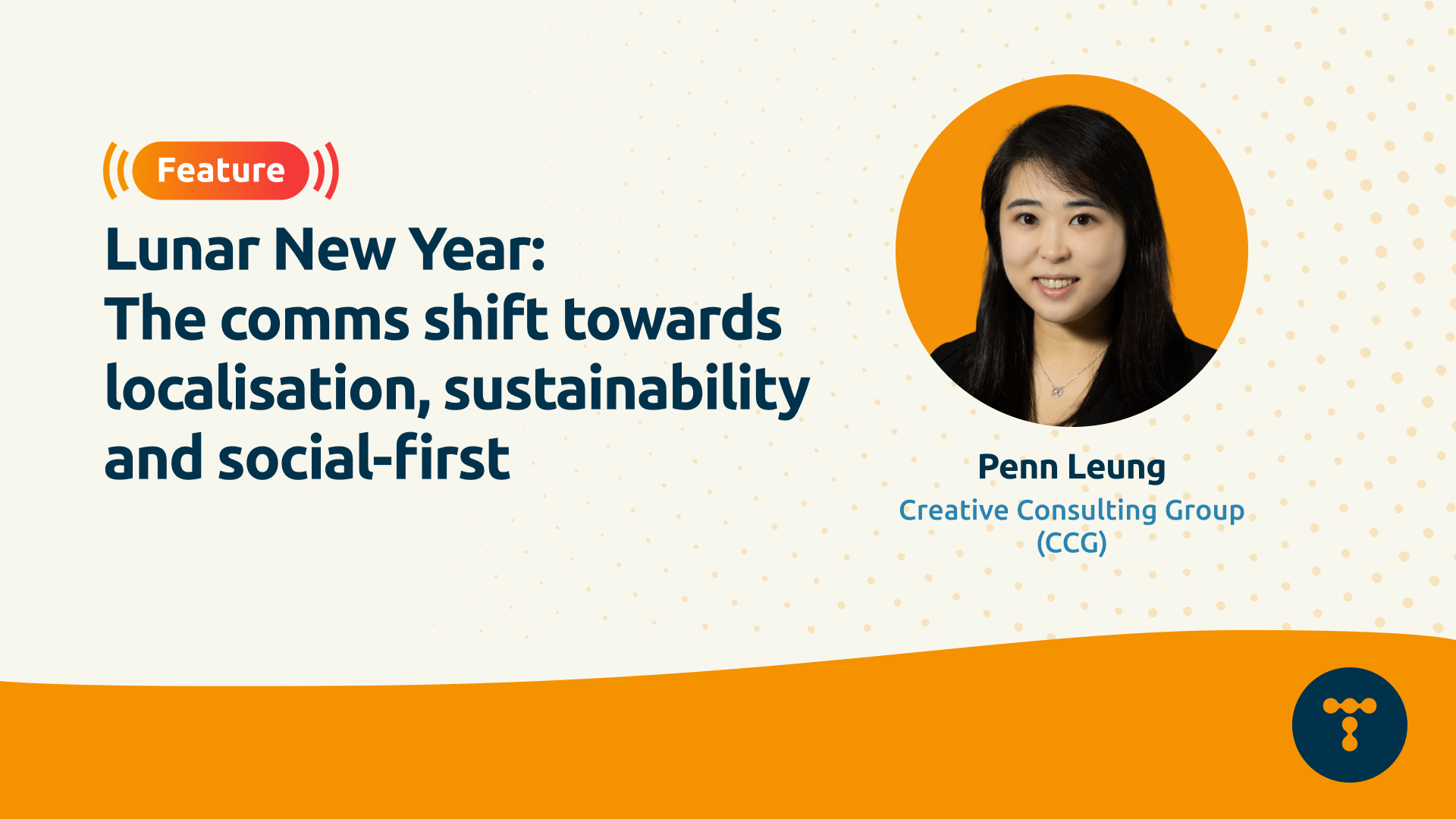
“In markets like Mainland China and Hong Kong, traditional values such as family reunion, prosperity, and respect for heritage are central,” said Penn Leung, Director of Creative Consulting Group.
“Meanwhile, in Southeast Asia, there is often a greater emphasis on inclusivity, multiculturalism, and community. Abroad, Lunar New Year is often reframed as a cultural celebration of new beginnings - a time to reflect, reset, and reconnect.”
For Penn, adapting communications strategies across markets by localising creative direction and messaging is essential to reflect cultural sensitivities and preferences. Tailored narratives go further in resonating with different audiences.
“For instance, brands could promote sustainable gifting in urban centres, while highlighting community outreach in developing markets,” she shared.
Another approach is to focus on universal themes like resilience, renewal, and gratitude, which Penn said can help maintain consistency while upholding brand values congruent with consumer expectations.
Overall, in today’s connected world, brands can consider holistic approaches that consider both localised planning and execution alongside global narratives and directions.
“A balance between localisation and a globally applicable strategy ensures Lunar New Year campaigns feel authentic and relevant in each location, while still upholding a cohesive global brand narrative.”
Changing values and consumer preferences
Consumer values are shifting, and brands must move with them.
In her work with brands over the past few years, Penn has seen a clear evolution in consumer expectations. Audiences, especially Gen Z and Millennials, are increasingly value-driven. As a result, there’s been an increasing number of clients moving beyond tradition and sales strategies, and towards storytelling that reflects a variety of modern values.
A palpable shift could be seen in environmental sustainability, which is becoming a key consideration for brands and consumers alike around the Lunar New Year. For instance, the promotion of digital red packets (e-laisee), zero-waste packaging, and other actions that aim to reduce festive overconsumption have become more commonplace.
"Brands are also increasingly emphasising social responsibility. Rather than the generic "giving back" messaging, campaigns that support minority communities, amplify local artisans, or champion inclusive celebrations can better demonstrate real commitment," Penn commented.
On the thematic end, she highlighted that more campaigns now reframe the holiday as a time to recharge emotionally, eat mindfully, and reconnect with one’s wellbeing, which opens up opportunities for brands to explore ideas aligning with global wellness trends.
“We have seen a spike in digital wellness content consumption, as people seek ways to manage holiday stress, improve relations, and set positive intentions for the year ahead,” she shared. “This opens up opportunities for brands - especially in lifestyle, food, and healthcare sectors - to align messaging with mental health, work-life balance, and self-care.”
Within the real estate and hospitality sectors, Penn has helped clients incorporate mindfulness workshops, green pop-ups, and healthy festive cooking content into their seasonal strategies. This is aimed at creating meaningful engagement beyond the traditional festive tropes.
She also brought up opportunities for workplace audiences. For corporates, team collaboration and connection are ways of finding resonance with employees and external stakeholders, adding authenticity to brand narratives.
Lastly, Penn emphasises that family values remain vital, particularly for older demographics and core family-oriented consumers.
Consumption patterns and news cycles
During this season, timing is key for communicators who want to place their brands above the noise. “Leading up to Lunar New Year, media cycles across Asia shift toward lighter, festive content,” noted Penn, “while editorial teams wind down operations earlier than usual.”
To navigate this shift, PRs must approach strategy proactively and responsively.
The first advice that Penn has for communicators is to engage with the media early on. This means securing placements and partnerships well before the peak festive season.
Secondly, it’s to place front and centre the social-first world we live in. “Prioritising visual, social-first content, short videos, festive health tips, and sustainability-focused stories that are easily shareable,” she said.
Finally, during this season, brands can leverage owned and earned media to tell brand stories that align with ESG values. This includes carbon-conscious celebrations or community wellness initiatives.
As one of the biggest regional and global celebrations, the Lunar New Year is a holiday founded on traditional values and built upon modernisation. For brands, the observance is a chance to create connections with audiences of millions, and for PR and communications professionals, the Lunar New Year becomes a flex of media relations strategy, market familiarity, and alignment with traditions and trends.

-4.png)
-1.jpg)