PR News
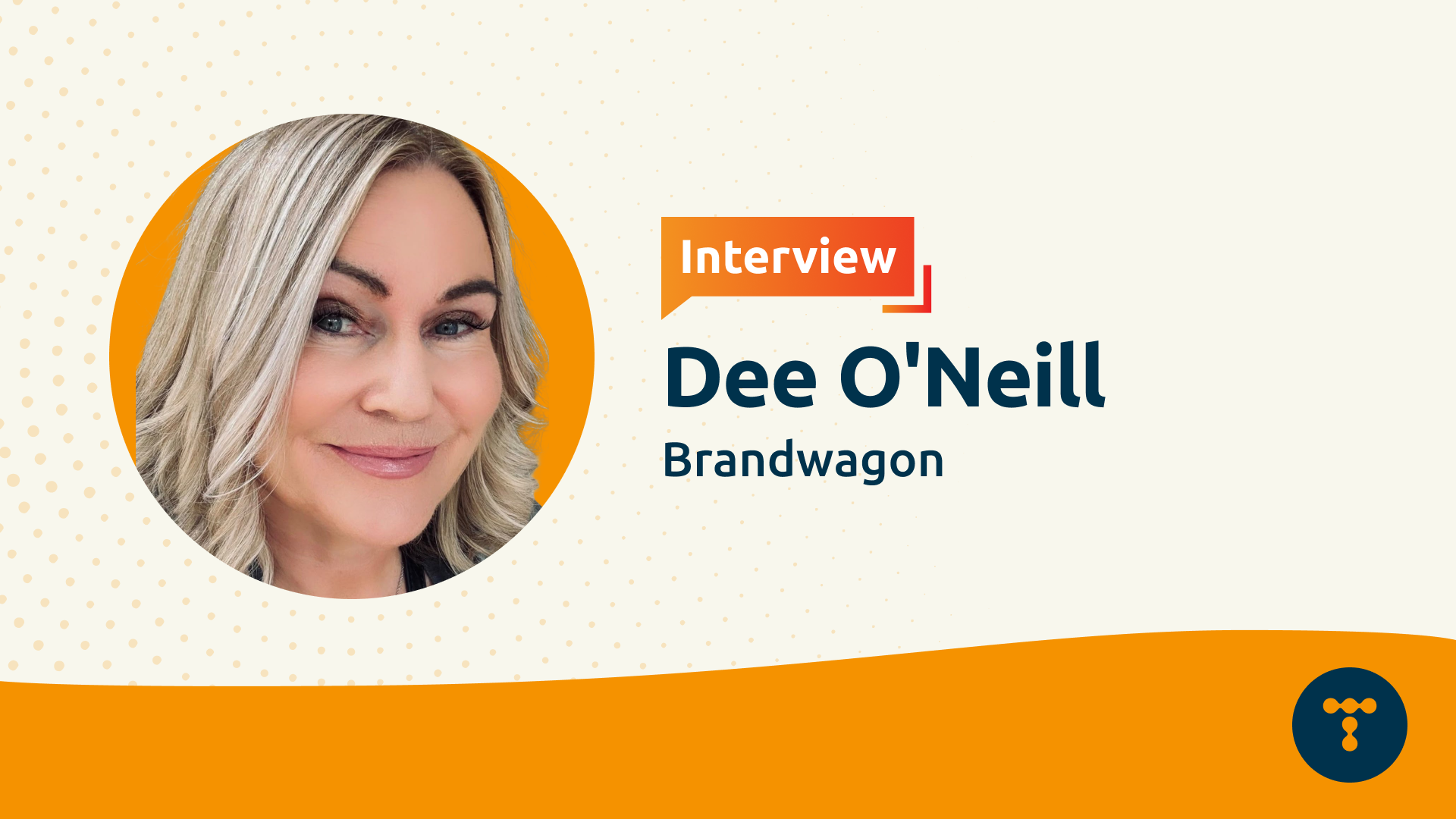
Dee O'Neill

Interview: 10 Years 10 Questions with Dee O’Neill

Ten years may not seem long to some, but in the fast-paced PR and communications industry, it is more than enough time for a multitude of changes. From a recruitment perspective, roles have become broader, more regional, and more closely tied to business decision-making, while hiring conversations are revealing what organisations now expect from senior talent and what candidates need to show beyond technical experience.

As Brandwagon marks its 10-year anniversary, Telum Media spoke with Managing Director, Dee O’Neill, to look back on almost two decades of communications recruitment across Asia-Pacific and the Middle East.

In this 10 Years, 10 Questions feature, Dee reflects on lessons from 18 years in the region, spanning
communications hiring, judgement, leadership influence, regional nuance, and staying visible in a tighter market.

1. How have expectations of communications candidates changed over the past 10 years?

I think the biggest change is that communications has gone from being a function that tells the story to one that helps shape business decisions.

Ten years ago, if I found a great writer, someone with strong media relationships and someone who knew how to manage a crisis, you were in a really strong position. Those skills are still incredibly important, but they’re now the baseline rather than the things that set someone apart.

What I hear from my clients is that what really differentiates communications professionals today is their ability to think commercially and strategically. They need to understand the broader context their organisations are operating in, whether that’s AI, geopolitical tensions, changing stakeholder expectations, or the speed at which misinformation can spread.

More and more, they’re sitting alongside leadership teams, helping them navigate risk, protect reputation, and make better decisions.

For me, though, the one thing that hasn’t changed is the importance of judgement.

Technology will continue to evolve, AI will change how we work, and the communications landscape will keep shifting. But organisations will always value people who can cut through the noise, understand people, build trust, and give calm, thoughtful advice when it matters most.

That’s what really defines the strongest communications leaders today.

2. What do companies often misunderstand when hiring communications and marketing talent?

This one is easy. I think one of the biggest misconceptions is that candidates need to come from the exact same industry to be successful.

I feel this has been disproved time and time again, but I’ve had to fight hard for these candidates. Industries can be learned; judgement cannot.

We have had some terrific success stories placing people from outside our in-house client’s industries.

Another misconception companies have when hiring communications and marketing talent across Asia-Pacific is that they recruit for execution rather than influence. They look for people who can produce campaigns, content, and media coverage, when the real competitive advantage lies in hiring professionals who can shape decisions, navigate cultural complexity across markets, and drive commercial outcomes.

In today’s APAC environment, technical skills might get someone hired; strategic judgement is what creates value.

3. Where do hiring briefs for senior communications roles often go wrong?

When a company wants a unicorn but has only budgeted for a very nice horse.

I see it all the time: a brief that asks for someone who’s strategic but hands-on, creative but commercial, digitally brilliant but an exceptional corporate communicator, has regional experience, can advise the CEO, manage a team, handle a crisis - and, ideally, has 15 years of experience with something that was invented five years ago.

Sometimes the perfect candidate doesn’t exist. But the right candidate does.

4. If you could improve one thing about how senior communications leaders are hired across Asia-Pacific, what would it be?

Get the level right if you really want impact.

This year, I have found myself consistently negotiating level with clients hiring senior communications leaders who are expected to advise the partners, CEOs, or boards.

My view is that, instead of being a partner to the leadership team, senior communicators should be on par with them to be really impactful. It is a key distinction.

We talk a hell of a lot about influence - being able to challenge thinking, build trust, secure buy-in, and shift the needle - but all of that is significantly harder when you are structurally positioned beneath the people you are expected to influence. That is just human nature.

So, I advise business leaders making these hires that being at a comparable level changes the dynamic: you are more likely to be brought into conversations early, your perspective is more readily considered as part of the strategic debate, and you have the credibility to challenge senior stakeholders when it matters. Put simply, if you want someone to operate at the leadership table, you need to give them a seat at the table.

That becomes particularly important during moments of complexity, crisis, transformation, or reputational risk - when communications judgement is fundamentally business judgement.

Good business leaders understand this, and I'm always pleased when a client recognises that the level of a role needs to reflect the influence they are expecting from it. For me, getting the level right isn't about hierarchy or title for its own sake (although I often have to defend this point) it is about giving a strategic leader the access, authority, and credibility to do the job you are hiring them to do.

If you hire someone to influence the room, don’t position them outside it.

5. Building on the importance of judgement, what makes someone genuinely effective at leading communications across APAC?

APAC is about half the world and contains an enormous number of markets, cultures, languages, and ways of doing business. So when I see a brief asking for someone to “own APAC communications”, I usually have a few questions.

What do you actually mean by APAC? Which markets? How centralised is the organisation? How much autonomy do local teams have? And, crucially, does this person need to be a strategist, an operator, a counsellor to the CEO, a crisis expert, and a magician?

Because sometimes “Head of APAC Communications” is actually five jobs wearing one very impressive title.

The great ones I know, and have been lucky enough to place, are endlessly curious and understand, on a deep level, the nuances of different markets. The best regional leaders understand that nuance without losing sight of the bigger picture.

They can operate globally but think locally. They can advise a CEO but still listen to the person on the ground. And they know when to push back on a global strategy because what looks beautifully consistent from London or New York can look completely tone-deaf in Singapore, Tokyo, or Mumbai.


6. Across the markets you work in, where do you see the biggest differences in what employers expect from senior communications talent across Asia-Pacific and the Middle East?

You need the strategic brain in both, but the way this looks in each market is different.

The UAE can be a very “big stage” communications environment. There’s a huge focus on reputation, visibility, executive positioning, and being able to operate with very senior stakeholders - often at extraordinary speed.

By contrast, APAC is more like conducting an orchestra where everyone has been given a different piece of music. A key thing to note about APAC is that cultural intelligence becomes absolutely critical.

You can’t just take something that worked beautifully in Dubai and say, “Right, let’s roll that out across Asia.”

Good luck with that folks.

7. After a decade of recruiting communications and marketing talent, what have you learned about the difference between confidence, capability, and career readiness?

I’ve learned that confidence and capability are rarely the same thing.

One of the biggest surprises has been how often exceptional people underestimate themselves, while others are incredibly good at selling their strengths. My job isn’t just about assessing capability - it’s about helping people recognise it in themselves.

Some of the best career conversations I’ve had haven’t been about convincing someone to take a role; they’ve been about helping them believe they were ready for it.

People often know the answer. They just need someone to give them permission to trust it.

8. When a role looks strong on paper, what should communications and marketing candidates consider before deciding whether it is the right move?

This is going to sound weird, but “Don’t take this job” is something I’ve said many times. Over the ten years, I’ve advised many candidates to walk away from roles that looked brilliant on paper.

Usually, there’s a disconnect somewhere: the role doesn’t match the brief, the leadership style isn’t right, the expectations aren’t realistic, or the candidate is making the move for reasons that won’t necessarily make them happier.

Or sometimes, the candidate is at a point in life - with young children, a partner who travels extensively, health concerns or other personal considerations - where you have to be honest about the bigger picture.

I’m dealing with human beings first and foremost, always.

I think good recruitment requires a degree of courage. You have to be prepared to say, “I don’t think this is right for you” - even when everyone else is excited about the opportunity.

For me, success isn’t measured by how many offers I get accepted. It’s measured by how many people come back to me years later and say, “You were right.”

9. What career advice do you find yourself giving communications and marketing candidates most often?

I have to answer this in two parts.

Firstly: follow great leaders.

Sometimes you need to think about the bigger picture. It isn’t always about the dollars or the title; it’s more about who is driving the bus.

Secondly, everyone who knows me knows I’m Irish, and I can’t help using a few old Irish sayings when coaching candidates through really challenging times in the workplace.

I believe strongly in the importance of building resilience, so a favourite of mine is:

Ní féidir an ghaoth a athrú, ach is féidir na seolta a athrú.

“You cannot change the wind, but you can adjust your sails.”

10. In a tighter hiring market, what should communications and marketing professionals do to stay visible, relevant and ready for the right opportunity?

Don’t disappear just because you’re not looking.

Keep talking to people, keep learning, keep your relationships warm and never underestimate the importance of constantly developing your network.

You never know when the right opportunity is going to come along - and it’s much nicer when it comes from a conversation rather than a desperate 11pm LinkedIn update saying, “I’m excited to announce that I’m open to new opportunities!”

And finally, don’t underestimate the importance of being a good human.

Be curious, be helpful, stay in touch and look after your relationships.

The market will turn again - it always does - and you want people to think of you when it does.

Previous story

Stephanie Palmer-Derrien joins NFP as Comms Manager

Next story

Campbell Fuller announces the launch of Fullpoint Advisory

You might also enjoy

Tom
Moves

Tom Watson is promoted to External Affairs Lead

Tom Watson has been promoted to the role of External Affairs Lead at WaterNSW. He has been at the company for more than six years and was most recently Executive Officer - Office of the CEO. Prior to this, Tom held policy roles within the NSW government.

Narrative
The Earned View

Narrative isn't dead, it's moving with the times

Digital culture hasn't killed narrative: our need for stories that make sense of the world endures. Timeless techniques still create opportunities - including in financial communications - and the greater power that technology gives us also creates greater responsibility.


We like reading at Ashbury, which delights me because I've always believed that the best communicators are also people who read widely and regularly. Advisers and writers need to consume much more than news; they also need to be learning about influence, engagement, and meaning in the broadest sense through immersion in culture in all its forms.

So I was intrigued when a colleague mentioned in the office that she had read a book called The Crisis of Narration by the Korean-German philosopher, Byung-Chul Han, and I decided to read it. Han argues that what he calls "Phono Sapiens" has lost the ability to create narratives that connect people and give meaning to the world.

It's hard to disagree with the notion that rich narratives have declined in our screen-addicted society. Many of us prefer curating our image on social media to telling, or listening to, a real narrative. I'm sure fewer of us have the attention span to listen to a long tale than in the days of ancient Greece, for example, when teams of performers would recite the whole of the Iliad and the Odyssey from memory. Some academics think that the Iliad alone would have been performed over three nights in sessions of four to six hours each.


Homo Fabularum

That doesn't mean narrative is dead, though, or that good narratives have lost their power. Whether we like it or not, we still need their structure to make sense of reality. Or, as Han puts it, "turning being-in-the-world to being-at-home-in-the-world." While we may be addicted to being Phono Sapiens, I think that we're frustrated Homo Fabularum, or story people. Real, deep, and fulfilling stories are what we're looking for - but rarely find - when we're scrolling.

Han thinks that real narratives are quite distinct from mere storytelling, which he sees as a tawdry, superficial, and commercialised activity.

"Through storytelling, capitalism appropriates the narrative and submits it to consumption. Storytelling produces narratives in a consumable form. It charges products with emotion. It promises unique experiences. We buy, sell, and consume narratives and emotions. Stories sell. Storytelling is storyselling."

I think Han is dead right in one way here, but is also ignoring one colossally important fact that makes his distinction between narratives and stories meaningless.

He's right that stories sell. They always have and they always will. Our minds are designed to hold on to stories and use them as an interpretive key to more complex realities. Philosophy and psychology may seem distant from everyday financial communications, but they are not. Storytelling is in fact essential to commercial influence. Let me give you some simple examples.

I listened recently to Rwandan officials talking to prospective investors about the new Formula One circuit they are building near Kigali for the African Grand Prix. There's a planned luxury hotel that will look out over the track. You'll be able to look out over it from the hotel's infinity pool. Because of the area's landscape - rolling hills around a lake - you will have the impression while sipping your cocktail in the pool that the Formula One cars are heading straight at you, before they dip down and turn away. It's a lovely, simple story that I'd bet has been repeated by many people who heard it. That story will surely help to attract investment to the project.

A friend who attended a presentation that a world-famous asset management CEO gave to a group of private investors told me how this individual reacted when one investor asked why he'd never heard of the company and what they really did. The CEO replied with something like: "All you really need to know about us is this. From the moment you wake up, you're using assets that we own. The electricity from your kettle comes from power stations we own. We own the cellphone network you use to make calls. We own the railway you use to go to work. If you invest in our fund, you can own them too."

Even well-chosen metaphors are simple stories that stay with audiences as cognitive keys. Another asset management CEO I know introduces her firm - which owns a number of different brands - as the Louis Vuitton of asset management. It always gets a laugh and it's immediately memorable.

Changing conditions

What Han misses, though, is just how much the world has changed since communities were held together by narratives told by firesides and charged with mysteries, gods, and otherness. There were no brands or multinational corporations in Homer's day (or were there, if you consider the polities, rulers, and pantheons of the time? Answers on a postcard, please). Very few people could read. The technology available for publishing narratives was therefore simple: communication was in person and oral.

Yet these conditions were changing centuries before smartphones arrived, thanks to the movable printing press (around 1440) and its successor technologies: newspapers (1605, depending on what you call a newspaper), radio broadcasts (1906), TV broadcasts (1926), and the Internet (the first website went live in 1990).

Economic structures were transformed by joint-stock companies (since 1553), publicly-traded companies (1602), banks (early 1400s), central banks (late 1600s), and limited liability companies (early 1800s) among many other developments. Printed advertising itself may be a thousand years old: a copper printing plate advertising a Liu's needle shop in Jinan, including a rabbit logo and slogan, dates back to China's Northern Song dynasty (960-1276).

What this meant, first in Europe and then over centuries in the world beyond, was that business became bigger and often more international, brands became more prevalent, and societies became more urbanised.

In 2026, many of us will see dozens, if not hundreds, of advertisements a day. And while research on this is patchy and dated, it's possible that over half of the editorial media coverage we consume has been influenced by public relations professionals. I'd be surprised if it wasn't more in business and finance news.

So Han may be right about the decline of classical narrative, but the fact is that the conditions that supported the kind of communication he valorises have been disappearing for centuries. For better or worse, we storysellers have replaced the bards. We intermediate a big part of what counts as narrative in today's world. So what does that mean for us?


Story lessons

First, we shouldn't forget what we can learn from the great traditions of narrative. How did bards manage to hold people's attention night after night for six hours at a time? Strong characters, whether relatable or extraordinary. Dramatic tension. Memorable tropes. Surprises. All these techniques are available to us today.

This is why we do executive profiling and encourage CEOs to develop their presence on LinkedIn. It's why we might juxtapose a bold strategy or idea with the consensus view. It's why we reassure audiences with familiar wording (growth opportunities in Asia, anyone?). It's why we love stories about 150-year-old banks launching products based on cutting-edge technology. The scene changes and the centuries roll past, but a lot about narrative remains the same. That's hardly surprising: channels and formats may change, but our neurological make-up and essential psychology don't.

Second, we shouldn't lose sight of the power that comes from creating an image in the mind's eye. Stories that can do this stay with people, like the racetrack and the cars heading straight into the infinity pool, or being the Louis Vuitton of asset management.

Finally, companies with long histories also have a particular advantage in fulfilling the traditional purpose of narrative, which is to give people a hold on the world. When any organisation has been around for centuries, its particular story maps onto a recognisable arc of history more generally. It can be a constant over generations, part of a shared patrimony. And longevity itself can acquire an aura: if a company has been in business for so long, there must be a reason for it. Long histories can have drawbacks too, but on balance they are invaluable reputational assets.

Power and responsibility

We should recognise that intermediating reality to audiences is a serious responsibility. Communicators' duty to act responsibly has only increased along with our relative power. Narratives used to take years to spread, constrained by the tyranny of dangerous seas, bad roads, and illiteracy. Abundant data and the analytical power of artificial intelligence (AI) mean that we can now be more targeted, more relevant, and more influential than ever before, while achieving impact in seconds.

If we're honest, communicators have not been very consistent in acting with integrity throughout history. Too many have succumbed to the temptation to use the power that comes with creating narrative to mislead and manipulate others. Today's data- and AI-enabled communicators need to do better, for all our sakes.

I'm confident that the author of The Crisis of Narration would dismiss the idea of responsible storyselling in financial communications as an impossibility. Han gives the impression that we humans are powerless to resist the way that digitalisation is reducing us and robbing us of meaning. I think he's seriously underestimating people's ability to create narrative and the extent to which we continue to seek out real narrative in spite of digitalisation. And I think he's underestimating the immutability of narrative power, and its ability to transcend new channels and formats.

Smartphones and social media aren't likely to be the final word in the way we communicate in the financial context or any other. New forms and mechanisms will emerge - and I see no reason why narrative won't adapt to these too.

Narrative isn't in crisis; it's just moving with the times. That's in its nature because narrative is deep in ours. Financial communicators need to grasp this, make intentional use of techniques developed over millennia and sell stories responsibly.

Key takeaways

  • Narrative is adapting, not disappearing. Channels and habits change, but people still seek stories that connect them and help them make sense of the world.

  • Traditional storytelling techniques still work. Strong characters, dramatic tension, familiar tropes, and surprises remain valuable tools for corporate communicators.

  • Make complex ideas memorable. Vivid mental images and simple, relatable examples help audiences understand, retain, and share a story.

  • Put organisational history to work. A long history can connect a company to a shared past, offering continuity and strengthening its reputation.

  • Greater influence demands greater responsibility. Data and artificial intelligence increase the speed and precision of communication, making integrity and the avoidance of manipulation more important than ever.

Adam Harper founded Ashbury in January 2020. He was previously Head of Communications for Greater China at HSBC, where he was also Regional Head of Communications for Global Banking and Markets, Asia-Pacific.

Before joining HSBC, Adam was a Vice President in Credit Suisse's Asia-Pacific Corporate Communications team and Asia Editor at EuroWeek. He has worked in Asia since 2004 and is a graduate of the University of Cambridge.

Read more from our columnists in The Earned View

New
Moves

New Communications Lead at EDP APAC

Andrew Ho has joined EDP APAC as Communications Lead, supporting communications across the region.

His role spans media relations, brand engagement and internal communications, working with teams across Asia Pacific to deliver on the organisation’s communications priorities and strengthen its regional profile.

Andrew’s prior communications experience includes roles at PRecious Communications and Ellerton & Co.