PR News
<span id="hs_cos_wrapper_name" class="hs_cos_wrapper hs_cos_wrapper_meta_field hs_cos_wrapper_type_text" style="" data-hs-cos-general-type="meta_field" data-hs-cos-type="text" >Edelman strengthens leadership bench, names three appointments in the UAE</span>

Edelman strengthens leadership bench, names three appointments in the UAE

Edelman has announced new leadership appointments across its UAE team, reinforcing its specialist capabilities in health, crisis & risk, and brand.

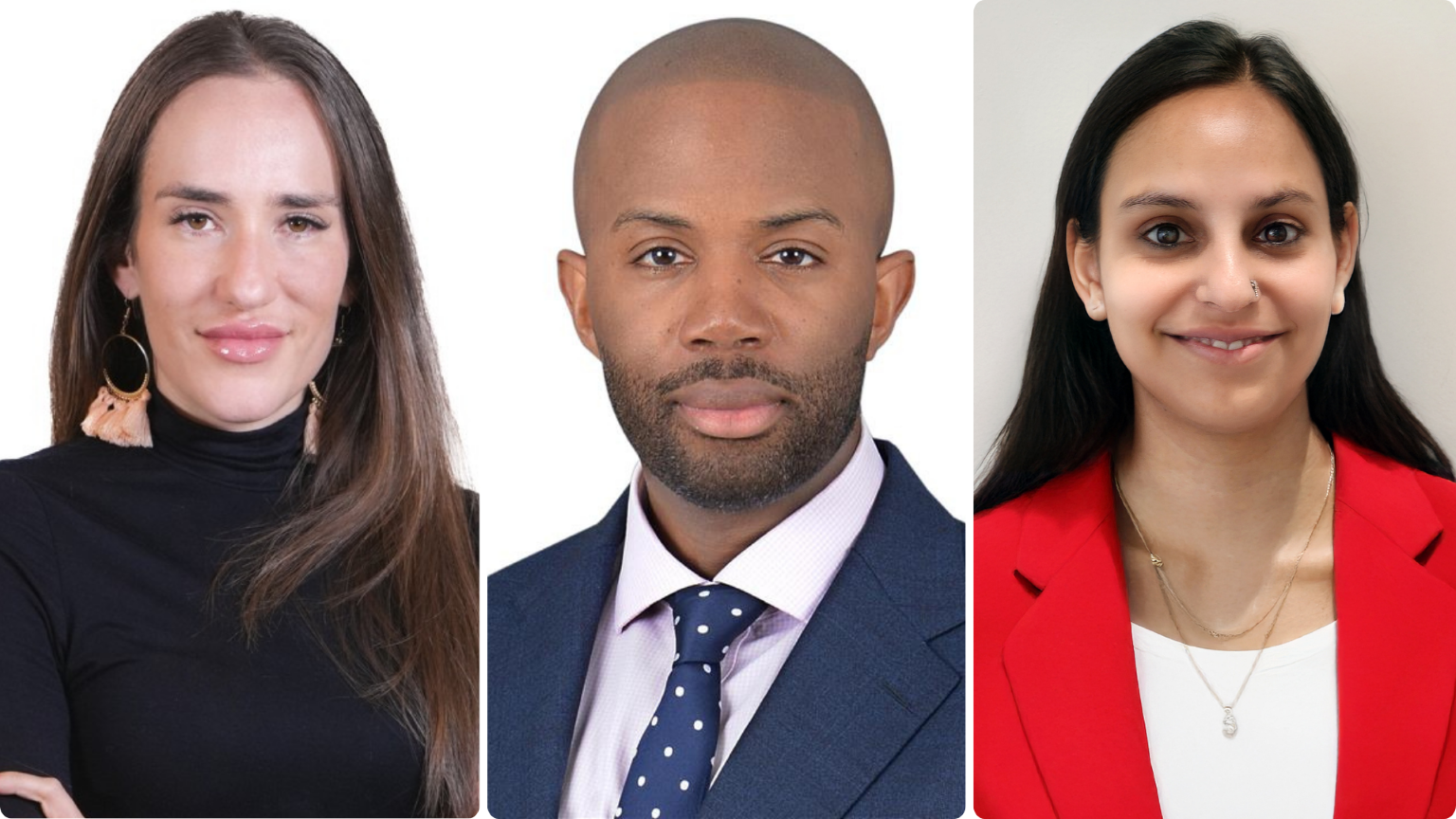
Lauren Brush ( pictured, left) has assumed the role of Head of Health to lead the development of the firm�s health offer in the region. She plays a key advisor role in Edelman�s partnership with M42 and its portfolio, bringing experience of working with global stakeholders, including the Saudi Ministry of Health and U.S.-based medical associations. Her work spans pandemic response, BRCA testing, and the launch of the UAE�s first telemedicine portal.A

Chase Burns ( pictured, centre) has been appointed Head of Crisis & Risk, expanding his role within Edelman�s Corporate Practice, where he leads the work for the Abu Dhabi Investment OVice (ADIO), Hub71 and ATRC. With over 15 years of experience both in-house and advising clients through reputationally sensitive situations across aviation, advanced technology and sovereign investment, Chase has overseen responses to aircraft groundings, geopolitical attacks, and pandemic-related disruptions. He will lead the development of Edelman�s integrated crisis and risk advisory services in the region, while also representing the region within Edelman�s global crisis leadership team.A

The team has also named Deepanshi Tandon ( pictured, right) as Head of Brand for Edelman UAE.A She brings over 15 years of experience and has led several global brands across markets and sectors, spearheading strategic, creative, and culturally resonant work. Deepanshi currently leads work for clients including PepsiCo and Nissan Middle East.

Omar Qirem, CEO, Edelman Middle East, said �These leadership updates reflect both our investment in specialist talent and our commitment to developing leadership from within. Lauren, Chase and Deepanshi bring a powerful combination of subject matter expertise, client trust, and integrated thinking that will be instrumental to our next chapter of growth in the region.�A A

Previous story

Pamela Pung makes the move to insurance company

Next story

LUNA PR welcomes former journalist

You might also enjoy

PixVerse
Moves

PixVerse appoints Head of Global PR

Robyn Tan has been named Head of Global PR at PixVerse, an AI video generation platform. Based in Singapore, she leads PR and media relations across international markets, and serves as Chief Representative of Singapore, overseeing on-ground presence and community relations in the region. 

Sefiani
Research

Sefiani unveils new research on AI visibility ownership

Strategic communications consultancy, Sefiani, part of Clarity Global, has released a new study indicating that 84 per cent of Australian marketing and comms leaders disagree on who "owns" AI visibility, while the remaining 16 per cent take an integrated approach.

Conducted by OnePoll on behalf of Sefiani, the research surveyed 150 marketing and communications leaders at Director level and above from organisations with more than 50 employees, exploring how strategies have been adapted in response to AI search.

According to the report, 91 per cent of cross-departmental leaders are revising their strategies to influence AI-driven discovery, although an internal "turf war" is emerging over who controls brands' AI search visibility. The research found that ownership currently sits across five functions: data / analytics (23 per cent), comms / corporate affairs (20 per cent), brand (19 per cent), digital (17 per cent), and performance (16 per cent), which the agency said reflects a structurally fragmented approach within many organisations.

The "silo" challenge
To complement its findings, Sefiani collected qualitative insights from leaders through a series of executive GEO-focused sessions and a recent panel moderated by Mandy Galmes, Managing Partner at Sefiani. Speakers included Johanna Lowe, Chief Marketing and Communications Officer at the University of Sydney; Brad Pogson, Head of Communications at Lendi Group; and Tom Telford, Chief Digital Officer at Clarity Global.

Based on these discussions, several themes emerged around managing reputation in AI-driven environments:

  • Internal silos as a key barrier: Participants noted that while some leaders are encouraging cross-functional experimentation, others remain 'nihilistic' about breaking down traditional departmental walls, leading to stalled effort and wasted budgets. The panel identified the rise of AI as a 'shadow task' layered on top of existing senior role requirements without removing previous duties, which further delays progress.
  • The forever life of reputational issues: According to panellists, LLMs draw on long-term patterns across coverage, reviews, forums, and owned content, meaning historic issues may continue resurfacing in AI-generated responses. This suggests that organisations might need to take a more data-led, cross-channel approach to finding, correcting, and rebalancing inaccurate information.
  • Quality content remains critical: Insights from the discussion indicated that AI models do not discriminate by content format, but they do reward depth. The findings suggest that high-quality, thought leadership content performs better within LLM training sets, so it should be considered as central to strategies across channels moving forward.

The cost of siloed GEO: Misinformation and reputational risk
The agency stated that a lack of clear ownership over GEO is already having tangible consequences. Based on the research, AI search was cited by leaders as the most structurally siloed channel, with 77 per cent reporting problems in the last 12 months. This included a slower response to issues, conflicting messages across channels, and AI tools amplifying yesterday's problems instead of today's narratives.

The study also found that the risk is compounded by the speed at which AI-generated misinformation can spread, with 25 per cent of leaders reporting that incorrect, inconsistent, or outdated brand information has already appeared in AI answers.

"Reputation used to be managed channel by channel, but AI search has changed the rules. Because these systems read across everything - earned coverage, on-site content, social signals, and search authority - siloed marketing and communications are quietly muting your AI visibility," said Tom Telford.

"When your channels don't tell the same story, or teams are chasing independent KPIs with separate budget pots, these silos also become a major reputational liability. It is only when functions are truly connected that the models become trained on a consistent brand message and compound visibility across AI services over time. This is the crux of GEO, Generative Engine Optimisation, and done well it becomes the multiplier on everything you already invest in brand, PR and digital."

The "citations race": PR and earned media take centre stage
The report also suggested that a shift toward AI-first discovery is changing budget priorities.

According to the findings, 49 per cent of leaders have already allocated five to 10 per cent of their marketing and communications budgets to AI visibility, with 90 per cent of that spend being reallocated from traditional channels like paid digital and brand. A further 30 per cent reported allocating up to 20 per cent of their budgets.

Citing external analysis from Gartner, the agency noted that the majority of sources referenced by AI systems are non-paid, which the report argues increases the strategic importance of PR and earned media in AI-driven discovery.

Mandy Galmes said: "When LLMs answer a question in your category, they’re drawing overwhelmingly on non-paid, third party sources. If your spokespeople, experts, case studies and proof points aren’t in those sources, you’re invisible at a key moment in the buyer journey." 

Royal
Moves

Royal Plaza on Scotts names marcomms director

Irwin Lim has been appointed Director of Marketing Communications at Royal Plaza on Scotts. In this role, he oversees brand, communications, content, campaigns, media relations, and marketing initiatives across the hotel’s key business areas.

Most recently, Irwin was Director of Marketing at Pan Pacific Orchard, Singapore.