

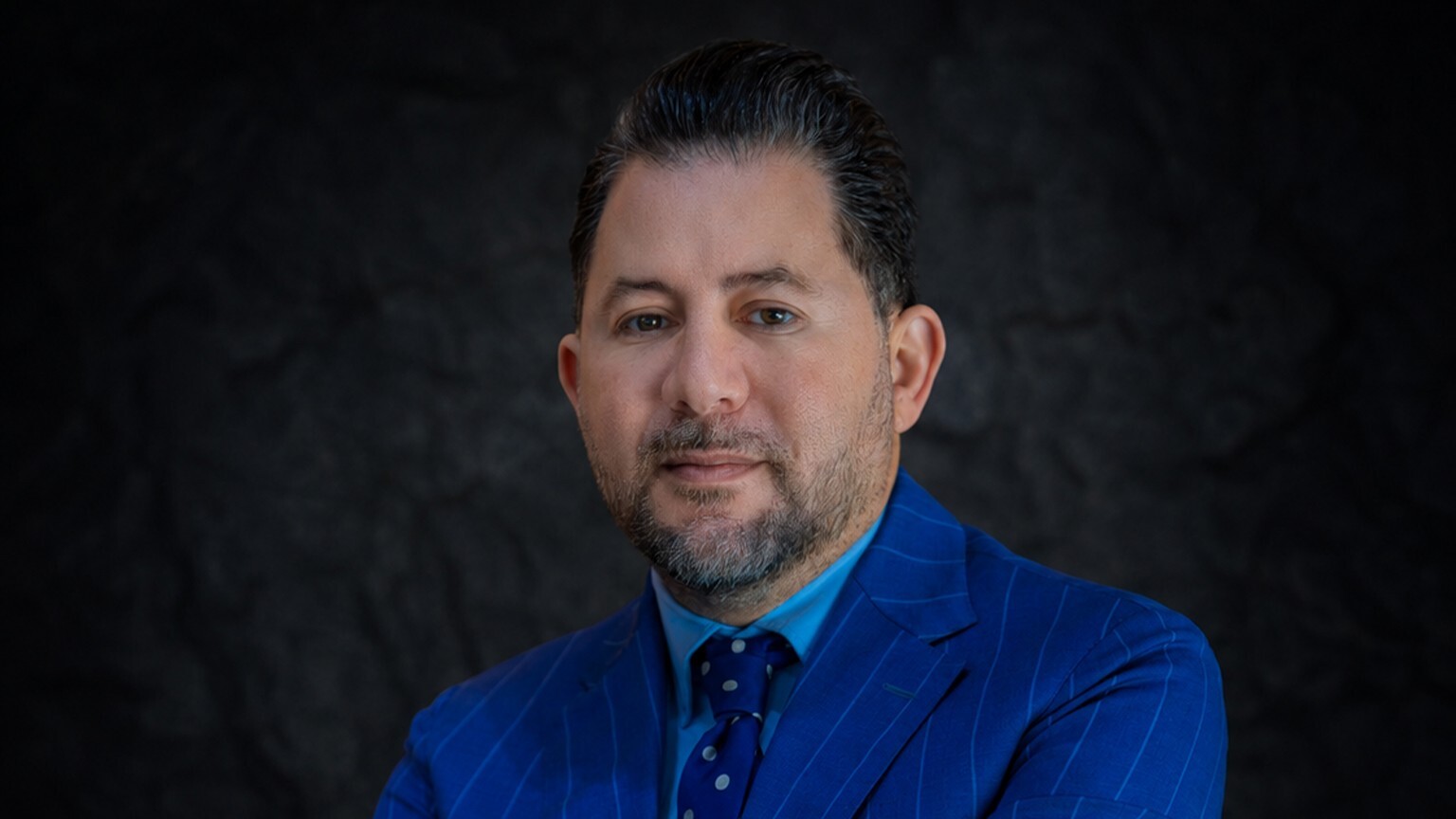
Abu Dhabi-based marketing and media agency 9Yards Communications has appointed Omar Sarieddine as Chief Executive Officer.
With more than 28 years of experience in business leadership, operations, and strategic marketing, Sarieddine assumed the leadership of 9Yards Communications following his tenure as the agency’s Deputy CEO and previous service as Chief Operating Officer.
Since joining the company in 2020, he has played a pivotal role in driving its growth, leading the expansion of its commercial and operational strategies, and strengthening its market position.
As CEO, Sarieddine will have full operational ownership and direction of the agency, with key and immediate responsibilities including ongoing regional and international expansion efforts. This includes managing existing operations in the MENA region, and its hubs in London, Cairo, and New York.
Commenting on this new role, Hussam Almulhem, Group CEO of 9Yards Holding, said, "Since joining 9Yards, Omar’s strategic acumen, vision, and relentless commitment to our core mission have all played a crucial role in our ongoing evolution as an agency.”
"To this end, I have every confidence that Omar is the perfect choice to lead the agency forward and ensure we remain at the forefront of the integrated communications industry, both regionally and internationally."
In response to his appointment, Sarieddine commented, " 9Yards Communications witnessed an extraordinary journey, which took it from a local start-up into a global competitor."
“I look forward to adding new achievements and milestones, which will be announced before the end of this year. This will be supported by furthering the founding vision and mission of the firm – to create, disrupt, and challenge industry norms, in the best interests of our clients – in every global location, and in every local community we serve.”
9Yards Communications names CEO
Telum Media creating connections
Get in touch to learn more
Sarah Murray takes top comms job at Aussie AI start up
You might also enjoy

In times of crisis, how and when you communicate is as important as what you say. Is a medium fit for purpose yesterday, before the crisis, right for a crisis today? You must be able to answer that question before you set sail on the crisis communication journey.
The medium you choose and your speed to communicate send a very clear message. Crises can get out of hand quickly with the 24-hour news cycle, AI, the internet, or social media. While these change the speed at which information spreads, they don’t change the fact that you must understand what is happening here and now.
That has always been the case with crisis communication. You must know what is going on around you and what is affecting your stakeholders. Importantly, know where impacted people will be heading for information, and how to reach them at any given time.
In his book Understanding Media: The Extension of Man, communication theorist Marshall McLuhan famously wrote: “the medium is the message.”
He used a light bulb as an example of a medium, surmising that the electric light is pure information. It is a medium without a message. It is a medium that has a social effect in that it enables people to create spaces during bleak times that would otherwise be shrouded in darkness.
When the crisis occurs, you need to know whether the light will be turned on or off by the medium you choose. That medium differs for stakeholders at different times. You can’t be everywhere for everyone.
You need to determine who you must reach, when you must reach them by, and what medium will send the right message at the right time. The right choice of medium is vital to deliver the message that you are concerned enough to make contact.
Anyone who has heard me speak or read any of my writing will know that I am a fan of "the medium is the message" theory as a critical strategic approach to crisis communication. If you know your stakeholders as well as you should, you will know how they get their information at different times on different days, and can therefore effectively communicate with them.
Choosing the right medium at the right time
One of the problems of working in crisis communication is that using real case studies invariably breaks confidentiality, so my examples are 100 per cent fictitious.
Say you are a promoter of a music festival, and on the first morning, you are informed that several patrons have collapsed at the event from what appears to be a potentially fatal reaction to a pill they may have taken. The police inform you that recently, a bad batch of drugs was brought into the city. You have a crisis.
Your key stakeholders in the first instance are those on their way and at the festival. You must get to them, the other patrons who may take these pills, before you try to manage the potential reputational fallout.
At the venue, you stop the video feed to the big screens and post a message. You hijack the social media feeds, hashtags, and online commentary surrounding the festival. You post a picture of the offending pills online, on Reddit, TikTok, and on the event’s owned channels.
All this must be done before you worry about the impact of this news on your reputation. Remember the golden rule of crisis management: people first, then reputation, and then dollars.
By using the media that matters most to your most important stakeholder in this situation - those at risk of taking the pills - you are well down the path to managing the crisis. Now you can attend to reputation, but you have already taken the first big step in managing the event’s reputation by prioritising people, understanding your audience, and communicating with them immediately through their preferred medium.
When people look back on how you acted, they will see a responsible, knowledgeable, and caring organisation. That goes a long way in protecting a reputation and ensuring the best chance of survival for the event.
Now, let's take a corporate example. A major telco goes down. Obviously, customers can’t be contacted by phone, and when the phones go down, some people are imperilled. They are out of contact; they have devices that rely on being connected. They are scared to be isolated. How does the telco react?
It could happen to any telco, but fortunately, there are three major suppliers in Australia. If one goes down, the obvious best medium is the other two.
Work with them to contact their users and inform them of the details surrounding the other telco outage. The word will spread. People who know vulnerable people will try to contact them. Using word of mouth is not ideal, but it is the fastest and most effective medium in this scenario.
Again, the medium is the message. You reached out quickly through the best way possible in an emergency. A general blast to all media and fast updates to ensure all owned media have up-to-date information prominently displayed, will demonstrate your commitment to customer safety.
Your medium and speed have put people first and are the first steps in protecting reputation. If your competitors are unwilling to cooperate, the media have an even bigger story that doesn’t revolve around you.
Let’s go to a final fictitious example.
Your organisation has been accused in the media of covering up bullying and harassment by a highly ranked executive. This is an example of people in power behaving badly.
Does this crisis affect the organisation or only the individual? Is the individual given the presumption of innocence as prescribed by law? Does the organisation absorb the blows to protect the individual and risk the consequences, which are invariably accusations of ignoring the victim?
Everything is alleged, and nothing is proven. This is an all-too-common occurrence for people and culture professionals and boards. It invariably is left to the communication professional to “do something.”
How can the medium be the message in this circumstance? The number one stakeholder is the workforce. People first. Nothing short of a commitment from the top to get to the bottom of the matter, without staging a witch hunt, will suffice.
Every organisation should have an effective way to connect quickly with employees during working hours, and in many cases, after hours when needed. In this case that’s your medium of choice. It shows you are trying to get ahead of the issue.
What is the most accepted way for top management to communicate with staff? Where do they expect to hear from the top brass? That is your medium of choice. At a time when employees need to hear from the top, reach out to them through the medium they expect you to. Don’t change and don’t improvise. Rely on muscle memory.
In prioritising employee communications, you are respecting that this is an issue which impacts them and that they are the most important stakeholders. Everything else can wait. Remember, people first, reputation second, and dollars last.
People first, always
You have established that you understand that this is about your people, and you care about and respect them.
In each of the examples above, I have touched only on initial moves that not only put people first but, in doing so, lay the groundwork to protect the reputation of the organisation when the inevitable inquisition begins.
The medium you choose to communicate with your most important stakeholders, and the time it takes for you to react to a situation, will be scrutinised just as closely as the words you use.
Douglas Wright is Chief Executive Officer of Wrights, providing strategic counsel to boards and executives navigating complex reputational, stakeholder, governance and public policy challenges.
With more than four decades experience, he has advised leading corporations, industry bodies, government agencies and not-for-profit organisations across Australia and internationally. Prior to establishing Wrights, he founded and led Ogilvy PR Australia.
Douglas is Deputy Chair and a Fellow of Communication and Public Relations Australia (CPRA), a Chartered Public Relations Practitioner (UK), a Fellow of the Australian Institute of Company Directors and a Certified Practising Marketer.
He combines commercial judgement, strategic insight and an ability to shape outcomes in complex environments.
Read more from our columnists in The Earned View
.jpg)
APRW Pte Ltd (APRW) has secured a series of new and renewed appointments in Singapore's entertainment sector.
The agency has been appointed to lead publicity and media relations for Malaysian music group, EMPAT's upcoming concert in Singapore.
Following collaborations in 2022 and 2025, APRW has also been reappointed as the public relations agency for SRF2026, the 10th edition of the festival celebrating the Singapore River, its growth, and its cultural vibrancy.
The team has also continued its partnership with child pianist, Mikkel Myer Lee. As his official publicity partner since 2021, APRW has supported publicity efforts through strategic media relations and influencer engagement.
Cho Pei Lin, Managing Director at APRW, said, “At APRW, we are drawn to artists and experiences that move people, and both EMPAT and Mikkel embody exactly that. We are proud to be supporting FriedRice Entertainment as their publicity partner to bring EMPAT to Singapore for the very first time; this is a concert that fans will carry with them long after the curtain falls. And watching Mikkel's musical journey to a world-class performer, reminds us every day of what great music can do: it brings people together in ways that little else can.”

Limited AI skill may be making communications professionals blind to their own gaps
Feeling more confident about how you use AI?
The rising confidence many communications professionals feel about artificial intelligence is not hard to explain. The tools have improved quickly. They are easier to use, more widely available, and increasingly embedded in the apps people already rely on, including search, email, documents, meeting notes, and the daily systems of work.
But ease of use is not the same as skill. With generative AI, that distinction is becoming more important and more easily missed.
For the past two years, Sequencr AI has worked with communications teams to empower them to understand, adopt, and scale the use of the technology. At the start of every engagement, we ask participants how they use AI, how proficient they believe they are, how confident they feel about their skills, and where they hope to apply the technology next.
The answers point to a troubling pattern. Communications professionals are becoming more confident with AI, but they are not becoming more proficient. In fact, proficiency has stagnated.
When confidence outpaces capability
Across dozens of Sequencr AI surveys, with more than 1,000 substantive responses, self-reported proficiency has not changed significantly over the last two years. The largest group continues to sit in the middle. In surveys where we asked a comparable proficiency question, 56 per cent of respondents identified themselves as Explorers, one level above beginners. Another 20 per cent identified as Adopters, 12 per cent identified as Skilled Users, and just two per cent qualified as Power Users.
Confidence tells a different story. In recent surveys, it has risen from an average of 4.2 a year ago, to the mid-6s on a 10-point scale.
In some teams, we are seeing a clear divide. Half of the people with similar proficiency scores reported low confidence in their AI skills. The other half rated their confidence at 7 or 8 out of 10, even with the same reported proficiency.
People are more confident of their AI skills even though their proficiency has not changed.
This dynamic resembles the Dunning-Kruger effect, the cognitive bias in which people with limited knowledge or ability in a specific area overestimate their competence.
For communications teams and agencies, that confidence gap has consequences. It affects what teams try, what they ignore, and what risks or opportunities they fail to see, including:
1. Teams mistake basic use for real capability
Most communications professionals already use AI to draft, edit, summarise, brainstorm, and rewrite. Those are useful applications. They are also the easiest ones.
The larger opportunity is not to make the old workflow a little faster, it is to rethink the workflow itself. AI can help teams test messages across audiences, map stakeholder concerns, identify reputational risks, synthesise competing signals, draft response scenarios, and adapt content across channels with far greater speed and consistency.
A team that believes it is already proficient may never ask the more important question: What could this work become if AI were designed into the system, not simply added to the task?
That is missed opportunity.
2. Teams let AI do the thinking they still need to own
Overconfidence changes how people use AI. When teams believe they are more proficient than they are, they are more likely to accept the tool’s framing, structure, and recommendations without challenge.
That is where confidence becomes a liability. Teams may feel more capable because they are producing more, while becoming less practiced at the thinking that creates real communications value.
3. Teams skip the context layer
Overconfident users often assume the problem is the prompt. If the output is generic, they try a sharper instruction. If it lacks nuance, they ask for another version. If it misses the audience, they rewrite the ask.
But communications work depends on context that a generic prompt cannot supply on its own: the organisation’s history, stakeholder relationships, source environment, issue dynamics, risk tolerance, brand voice, and strategic priorities.
Without that context, AI produces plausible work, not useful work.
That is why the next level of proficiency is not just better prompting. It is building the systems, knowledge bases, and workflows that give AI the right information to work from.
4. Teams fall behind the competitive curve
The biggest risk of misplaced confidence is complacency. If teams believe they are already good at AI, they are less likely to keep pace as the technology changes.
AI is no longer just a prompt box. Agents, automated workflows, and connected tools are beginning to handle more complex tasks: monitoring signals, retrieving context, drafting outputs, and coordinating multi-step tasks.
Teams that overestimate their proficiency may keep using AI in basic ways while assuming they are keeping up.
In a fast-moving technology cycle, that is how confidence turns into competitive disadvantage.
The real confidence issue with AI
That is why the Dunning-Kruger effect with AI in communications is not quite what people assume.
The obvious concern is that AI makes people overconfident about other subjects. Someone asks a tool to explain a legal issue, a financial trend, or a policy debate, then mistakes a fluent summary for real expertise.
Our data points to a different problem.
Communications professionals are not necessarily becoming overconfident because AI makes them feel like experts in everything else. They are becoming overconfident because AI makes them feel more capable at using AI itself.
Our proficiency data suggests there is more to learn and more upside to take advantage of.
Matt Collette is CEO of Sequencr AI, a technology consultancy dedicated to unlocking the full potential of AI for marketing and communications teams. Before founding Sequencr, he was Head of Digital for Edelman Canada and later Global Head of Digital Growth, where he led efforts to embed generative AI across Edelman's global operations.
Matt created the firm's AI task force, launched its first campaign powered by generative AI, and developed tools, prototypes, and training initiatives for clients and internal teams.
Read more from our columnists in The Earned View